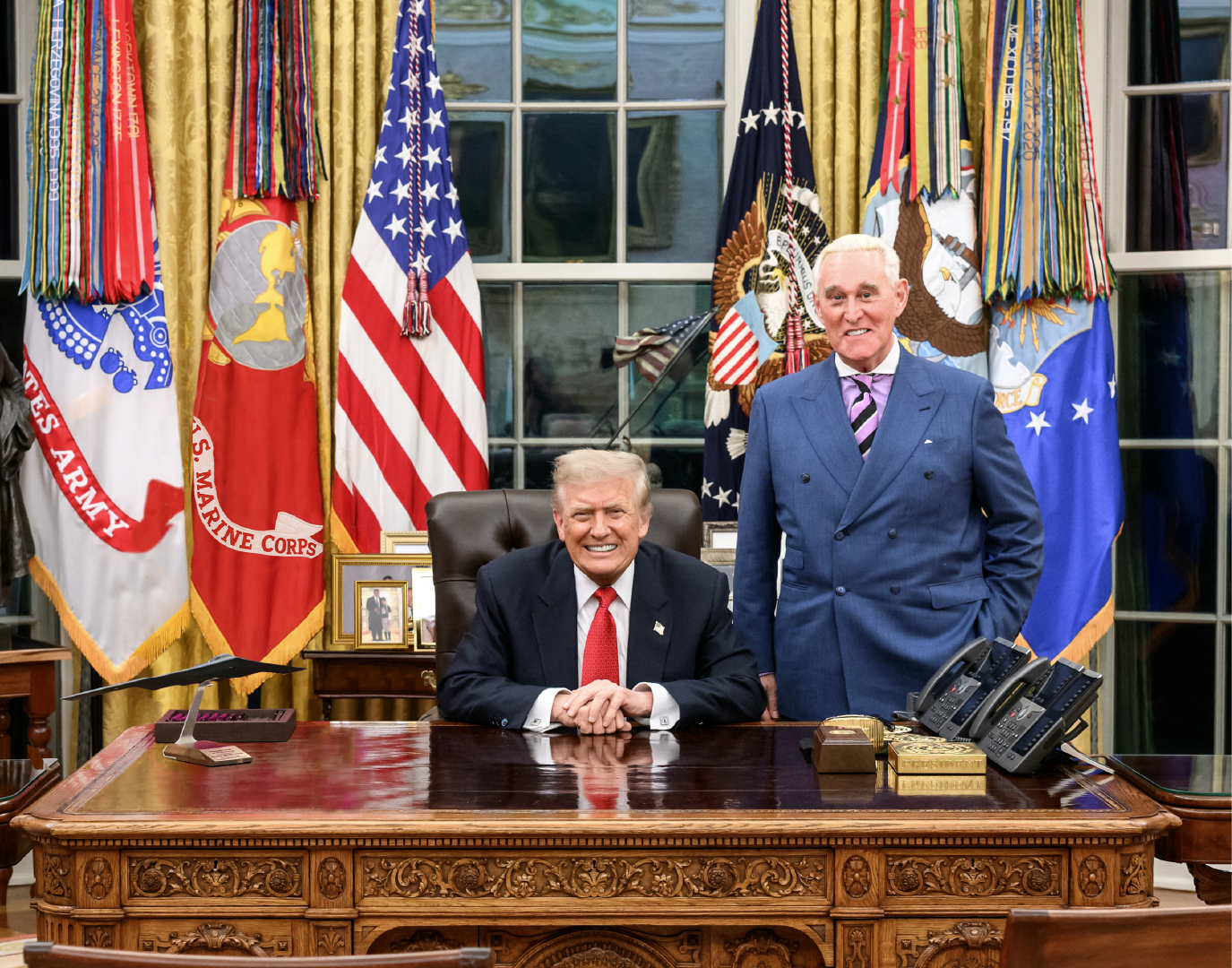

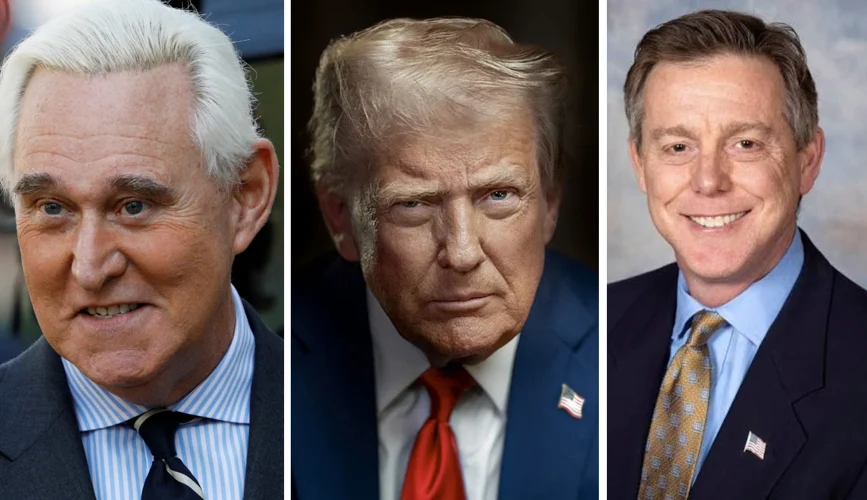
STONEZONE NEWS

‘I Joined When He Was at 2%’ The strategist behind five decades of Republican victories brought his Trump playbook to Oklahoma.

NORMAN, Okla. — Roger Stone has a simple measure of success in a campaign: Does the candidate end up closer to the White House, or further from it?

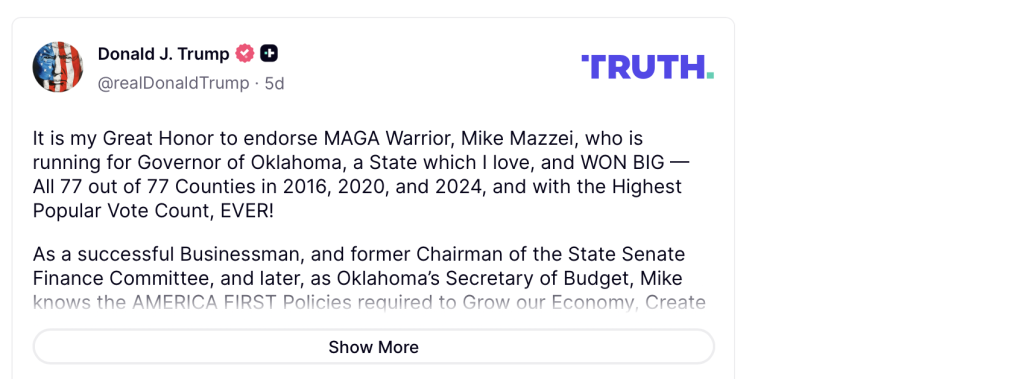
When Stone took on Mike Mazzei as a client, the former Oklahoma state senator was registering 2 percent in Republican primary polling, well behind a crowded field of better-known candidates. On May 29, 2026, President Donald Trump posted on Truth Social: “It is my Great Honor to endorse MAGA Warrior, Mike Mazzei, who is running for Governor of Oklahoma.” Trump gave Mazzei his “Complete and Total Endorsement,” citing Mazzei’s record as a former chairman of the Oklahoma Senate Finance Committee and the state’s Secretary of Budget.

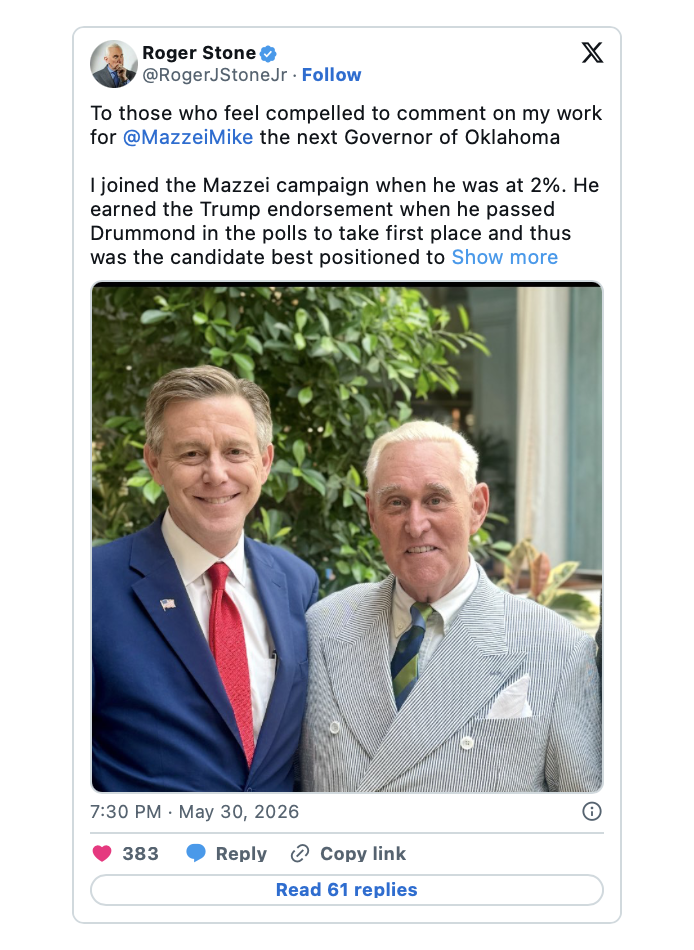
Stone offered his own accounting on X: “I joined the Mazzei campaign when he was at 2%. He earned the Trump endorsement when he passed Drummond in the polls to take first place and thus was the candidate best positioned to beat that Democrat in November.”

The gap between 2 percent and the front runner in an Oklahoma Republican primary was steep and, at the time, appeared insurmountable. Mazzei was competing against some of the most recognizable names in Oklahoma public life: Attorney General Gentner Drummond, who entered the race as the presumptive favorite with strong law enforcement support; former Oklahoma House Speaker Charles McCall; Chip Keating, a retired Oklahoma Highway Patrol officer turned businessman; and Jake Merrick, the grassroots favorite with a loyal and energized conservative following — all in a nine-candidate Republican field.
A NonDoc survey of 457 Republican voters conducted in mid-May found Mazzei leading the field with 22.1 percent, followed closely by Drummond at 21.7 percent, Keating at 21.4 percent, and McCall at 18.4 percent. That Mazzei had climbed to the top of that field ahead of the June 16 primary was a testament to how much the ground had shifted.

However, the NonDoc numbers tell only part of the story.

A Club for Growth Action poll, conducted by Pulse Decision Science across 608 likely Republican primary voters from May 26 to 28, found that Drummond’s favorability rating had swung 31 points in six weeks: from 18 points net-positive in early April to 13 points net-negative by late May. His favorable ratings dropped 16 points, from 49 percent to 33 percent, while his unfavorable ratings climbed 15 points to 46 percent. “Drummond’s once-commanding ballot lead has evaporated,” the Club for Growth memo concluded, “leaving him just two points ahead of challenger Mike Mazzei.” The timing of that collapse, running parallel to Stone’s work shaping Mazzei’s message and press profile, was not coincidental.

The relationship between Stone and Mazzei began in July 2025, when Stone agreed to a meeting arranged by conservative pastor and political figure Jackson Lahmeyer. Mazzei described the conversation publicly as “fascinating” and praised Stone’s decades of political insight. What began as an introduction became a full consulting engagement, with Mazzei’s campaign paying Stone’s consulting LLC $67,500 through March 2026.

Stone’s compadre in the effort was Barney Keller, a savvy Republican media strategist and producer who shaped Mazzei’s message as opponents trained their fire on the candidate across multiple televised appearances. Together, Stone and Keller built the communications architecture that would carry Mazzei from afterthought to front-runner. Sources close to the campaign say the two men moved Mazzei from 2 percent to 22.1 percent, the climb that made the Trump endorsement not just possible but inevitable.
Stone’s relationship with Trump is forty years old and was forged through federal prosecution, a presidential pardon, and the full arc of the MAGA movement. When Stone believed Mazzei had earned Trump’s attention, he had the standing to say so directly. Shortly before Trump’s endorsement, multiple private and public polls confirmed Mazzei had edged ahead of Drummond, crossing the threshold Stone needed to make the case to the president that Mazzei was the candidate best positioned to win. By the time Mazzei passed Drummond in the polls, Stone had the evidence he needed.

Stone’s credentials in presidential and statewide campaigns are unmatched in Republican politics. He began his career on Richard Nixon’s 1972 re-election effort and went on to work on Ronald Reagan’s victories in 1980 and 1984 and George H.W. Bush’s 1988 presidential win.

In 1980, he co-founded Black, Manafort, Stone and Kelly, a Washington lobbying and consulting firm that became one of the most consequential in the Reagan era. The Washington Post, sizing up Stone at age 33, described him as either “the hottest political consultant or the slickest self-promoter in town.”

Stone encouraged Trump to consider a presidential run as early as the late 1980s and managed his 2000 Reform Party exploratory committee. When Trump launched his 2016 campaign, Stone was among the earliest strategists who helped shape its populist framework, a bond that four decades of political combat had only strengthened.

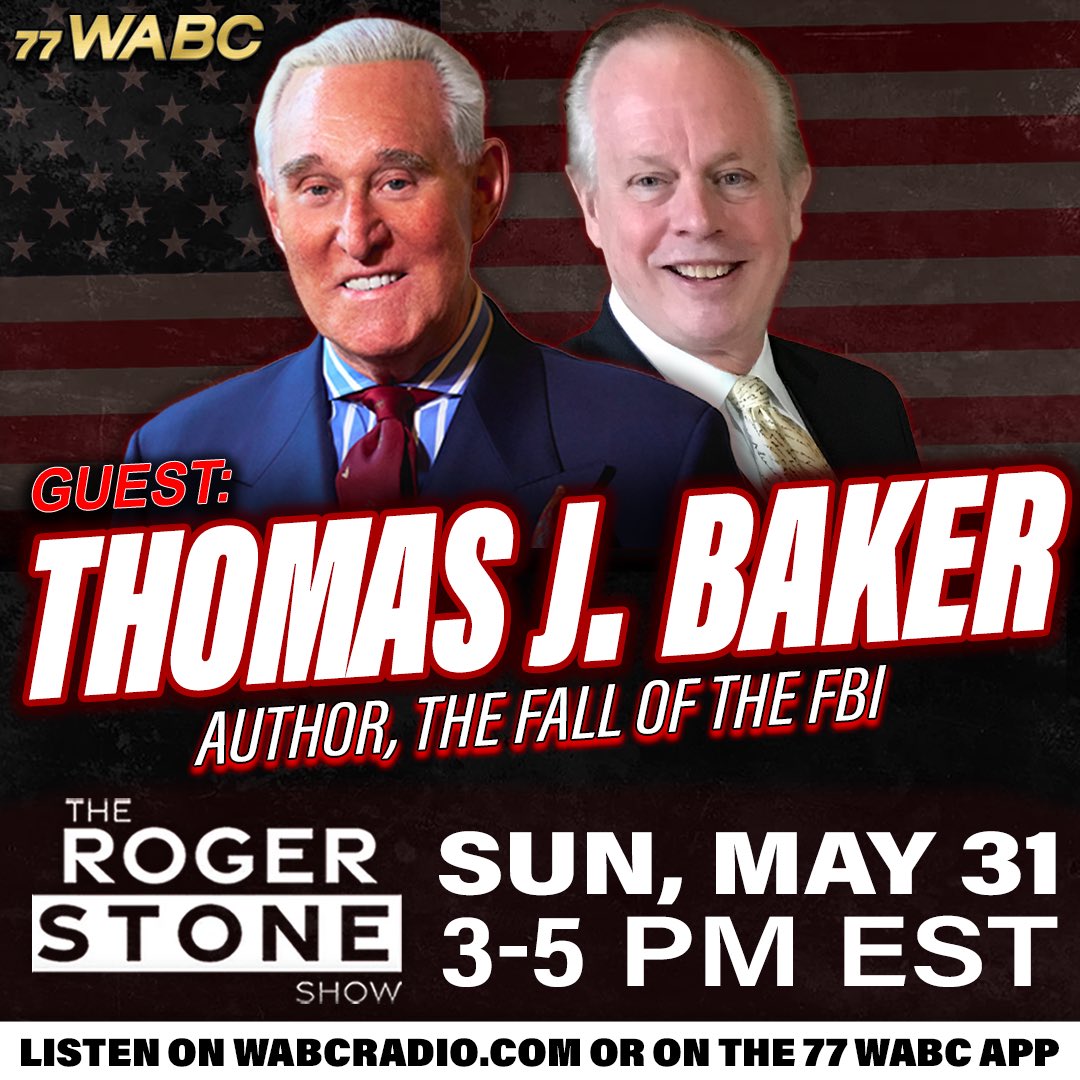
Today, Stone also hosts The Roger Stone Show on WABC radio in national syndication, where he remains an active voice in conservative media.

Stone’s value to a candidate comes down to three things: access, positioning, and timing. Access is the most straightforward, but positioning is the longer game. His long relationship with Trump means he understands what the president looks for before lending his endorsement to a down-ballot race. In Oklahoma, that meant building Mazzei’s profile as a credentialed fiscal conservative with a verifiable record in tax and budget policy, former chairman of the state Senate Finance Committee, and Oklahoma Secretary of Budget. Trump’s Truth Social post mirrored that profile word for word.

Stone operates by what he calls “Stone’s Rules,” a set of strategic maxims built around relentless offensive pressure and defining a race on your own terms rather than an opponent’s.

Applied to a primary, that means staying on message, forcing contrasts on favorable ground, and making rivals respond to your issues and your timeline. Timing is where execution matters most, and Trump’s endorsement arrived precisely when Mazzei had climbed to first place and the field was paying the most attention. It dropped the day after the four-way GOP gubernatorial debate in Lawton, immediately dominating the post-debate discussion and foreclosing any momentum the event might have generated for other candidates.

Stone paid a significant price for his loyalty to Trump. In 2019, Stone was convicted on charges stemming from the Mueller investigation, a prosecution that President Trump later called a miscarriage of justice and corrected with a full pardon in December 2020. Then-DNI Tulsi Gabbard subsequently declassified documents revealing “overwhelming evidence” that Obama administration officials “manufactured and politicized intelligence” to sustain the Trump-Russia collusion narrative, with the DOJ forming a formal strike force in July 2025 to assess the evidence she produced.

The declassified records named Obama, then-DNI James Clapper, then-CIA Director John Brennan, then-NSA Susan Rice, and then-AG Loretta Lynch among those involved in constructing a narrative the intelligence community’s own analysis did not support. It was a recognition that the process itself had been corrupted. Stone emerged from that ordeal with his standing in Trump’s circle not diminished, but reinforced.

Stone has shown little inclination to soften his methods. He has described his approach to political conflict in characteristically blunt terms: “Admit nothing, deny everything, launch counterattack.” In political “warfare” speak, he reiterates that a candidate who stays on offense, defines the terms of debate, and treats every news cycle as an opportunity to press an advantage will win.

Oklahoma Republicans are choosing their next nominee from a serious field of candidates, all running on conservative priorities. Trump’s endorsement has given Mazzei a clear advantage in visibility and momentum, but it has also intensified scrutiny on how each campaign is being run and who is shaping it behind the scenes.

Oklahoma voters will have the final word. Roger Stone has made sure they will cast it with Mazzei’s name at the top of the conversation.

By City News – https://www.citynewsokc.com/opinion/how-roger-stone-engineered-mike-mazzeis-trump-endorsement-i-joined-when-he-was-at-2/article_564a39d3-0839-41da-8dad-746106a7fd7c.html

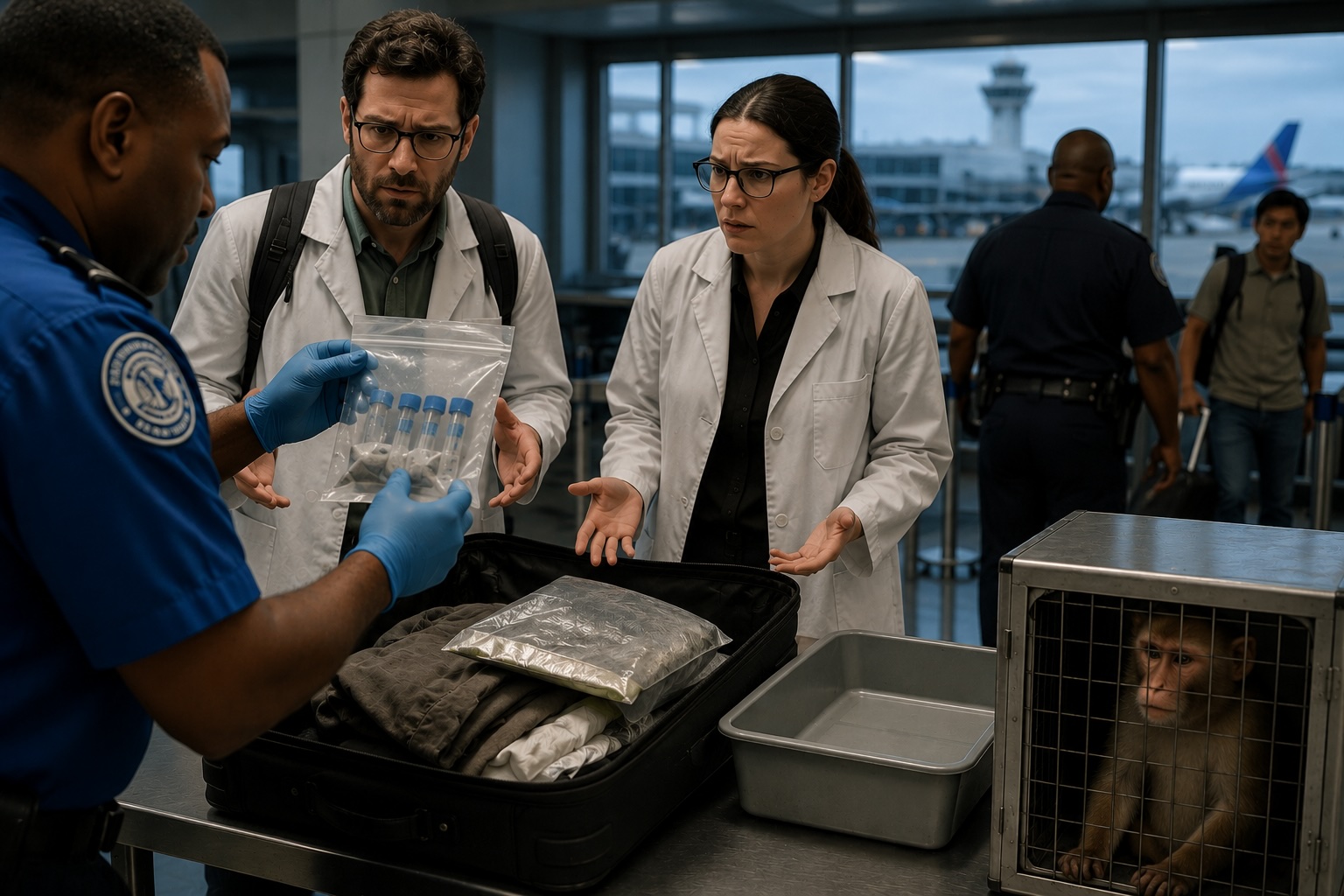
The U.S. Department of Justice has charged two foreign nationals working at the National Institutes of Health’s Rocky Mountain Laboratory in Montana with illegally smuggling deactivated monkeypox virus samples into the United States and with lying to federal agents.

Vincent Munster, a 53-year-old Dutch citizen and Chief of the Virus Ecology Section at NIH’s Rocky Mountain Laboratory, and Claude Kwe, a 38-year-old research fellow from Cameroon, were indicted following their arrival at Detroit Metropolitan Airport on January 25, 2026.

The pair had flown in from Brazzaville, Republic of the Congo, where a monkeypox outbreak was ongoing, carrying a large black plastic case. They told Customs and Border Protection officers that it contained only “diagnostics and testing equipment.”

FBI and CBP searches revealed 113 vials stored inside Styrofoam coolers. Of the 20 vials tested so far, 17 contained deactivated monkeypox virus, one held chickenpox virus, and two contained only human DNA. 

Both researchers work in the high-containment BSL-4 laboratory at Rocky Mountain Laboratories, where they study emerging viral pathogens and species crossover.

They now face federal charges of conspiracy to smuggle goods and making false statements to authorities, each carrying a maximum penalty of up to five years in prison. Officials have emphasized that the samples were deactivated and posed no immediate public health risk. Nevertheless, the case highlights serious gaps in compliance with U.S. biological import protocols.

This is not an isolated incident. A troubling pattern has emerged in which foreign researchers have repeatedly attempted to circumvent U.S. biosecurity regulations, with multiple cases funneled through Detroit Metropolitan Airport, roughly 1,226 miles from NIH’s Rocky Mountain Laboratories in Hamilton, Montana.

In 2025, Chinese nationals Yunqing Jian, a postdoctoral researcher at the University of Michigan, and her boyfriend Zunyong Liu were charged after attempting to smuggle the crop pathogen Fusarium graminearum into the United States through Detroit Metropolitan Airport.

This fungus causes head blight (scab) in wheat, barley, and other cereals, leading to major crop losses and producing harmful mycotoxins. It is sometimes viewed as a potential agroterrorism agent.

Jian pleaded guilty to smuggling and making false statements. She attempted to flee before sentencing and was caught at JFK International Airport. She was ultimately sentenced in November 2025 to time served (approximately five months) before being deported. Liu returned to China earlier and remains at large.

Similarly, Chengxuan Han, a Chinese PhD student from Wuhan, faced charges for concealing biological materials, including roundworms and parasites, shipped to a University of Michigan lab. She pleaded no contest and was sentenced in September 2025 to time served (roughly three months) before deportation.

These cases have often resulted in lenient outcomes. Yunqing Jian was sentenced to time served plus deportation, despite attempting to flee the country before her sentencing. 

In all of these incidents, the biological materials were seized and destroyed. Fortunately, no public health or agricultural incidents were reported as a result.

These prosecutions expose persistent challenges in biosecurity enforcement within the justice system. Foreign researchers on temporary visas often receive light penalties even as U.S. authorities have tightened biological import rules in the years since COVID.

The latest NIH monkeypox case involving Munster and Kwe is still in its early stages. As of June 2, 2026, no pleas have been entered and no sentencing has occurred.

This incident raises serious questions about NIH vetting procedures, the oversight of foreign nationals in sensitive BSL-4 positions, and compliance with pathogen transport protocols, particularly for researchers granted access to dual-use viruses such as monkeypox. 

Had U.S. Customs and Border Protection not thoroughly inspected the materials, the outcome could have been far more serious.

Stronger oversight is urgently needed. Enhanced audits of NIH foreign hiring practices, stricter dual-use research review, and more robust biosecurity enforcement are essential. In an era of global outbreaks and heightened geopolitical tensions, these measures are critical to restoring public trust and protecting against potential insider threats.

The U.S. Department of Homeland Security (DHS) is developing a proposal to strengthen the integrity of America’s asylum system. The system has been strained by massive backlogs and widespread abuse.

According to internal government documents obtained by CBS News, the plan would empower U.S. Citizenship and Immigration Services (USCIS) officers to swiftly reject certain asylum applications without conducting the standard in-person interview.

This change would primarily target claims filed more than one year after the applicant’s arrival in the U.S. This is a clear statutory deadline. It would apply where the applicant fails to provide clear evidence of an exception such as serious illness or inadequate legal counsel.

The current setup allows migrants to file asylum claims once they are on U.S. soil.

Under the proposal, USCIS could issue rejections based solely on the paper record and refer cases directly to removal proceedings. This is not yet a formal rule. No Notice of Proposed Rulemaking has been published in the Federal Register. The details remain in the internal drafting and planning stage.

This initiative builds on broader efforts to address systemic overload. USCIS currently faces over 1.5 million pending cases, while immigration courts under the Department of Justice (DOJ) are managing approximately 3.3 million pending cases.

For years, the asylum system has been exploited by migrants filing frivolous claims, primarily to obtain work permits and delay deportation.

Lax enforcement under prior administrations has contributed to these enormous backlogs. It has strained taxpayer resources and undermined protection for refugees fleeing real persecution.

The proposal applies to all asylum applicants regardless of their country of origin. However the vast majority of recent claims straining the system have come from a handful of countries. Leading nationalities for affirmative asylum applications include Venezuela Cuba Haiti Nicaragua Colombia Guatemala Honduras and El Salvador.

These nations have also driven high volumes of border encounters. Significant numbers of claims have also come from China, Afghanistan and India.

This reform would therefore have the greatest impact on late-filed applications from these primary source countries. In these cases economic migrants have often mixed with those having legitimate persecution claims.

The goal is to quickly screen out invalid applications once they exceed the one-year deadline. 

This would allow USCIS to redirect limited resources toward legitimate cases. By strictly enforcing the existing one-year filing deadline which serves as a statutory safeguard designed to prevent abuse, officials can bypass unnecessary interviews and hearings that cost American taxpayers billions annually.

This effort aligns with President Trump’s commitment to legal immigration and border security. It cuts through bureaucratic red tape and frivolous claims while delivering on promises to enforce laws that prior administrations ignored.

Many argue that a common-sense reform will unclog the system. It will enable timely decisions for true asylum seekers and send a clear message that America’s generosity will not be abused. Critics on the left have labeled it “cruel” or “anti-immigrant.”

This proposal also comes against the backdrop of heightened national security concerns. The push gained urgency following the 2025 Washington D.C. shooting involving an Afghan national. 

It also aligns with the administration’s expanded travel restrictions. Following the December 2025 proclamation, nationals from 19 countries face full entry suspensions, including Afghanistan and Haiti, while nationals from approximately 20 additional countries, including Cuba and Venezuela, face partial restrictions. 

These nations significantly overlap with leading sources of asylum claims and border encounters. By enabling faster rejection of late-filed claims from high-risk countries lacking credible exceptions, the reform complements these security measures and helps close potential loopholes in vetting processes.

STONEZONE LIVE!

ROGER STONE MEDIA

WHO IS ROGER STONE?

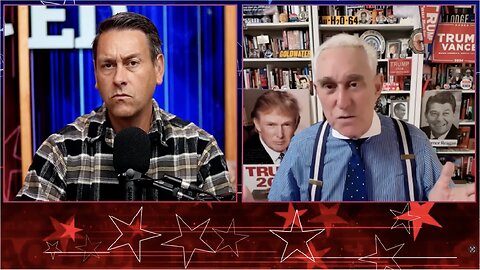
Roger Stone is a seasoned political operative, speaker, pundit, and New York Times Bestselling Author featured in the Netflix documentary Get Me Roger Stone.

Richard Nixon, Ronald Reagan, and Donald Trump—all of these Presidents relied on Roger Stone to secure their seat in the Oval Office. In a 45-year career in American politics, Stone has worked on over 700 campaigns for public office.

“Roger’s a good guy. He is a patriot and believes in a strong nation, and a lot of other things I believes in.”

– President Donald J. Trump
Stone’s bestselling books include The Man Who Killed Kennedy: The Case Against LBJThe Bush Crime FamilyThe Clintons’ War on WomenThe Making of The President—How Donald Trump Orchestrated a Revolution, and Stone’s Rules with a forward by Tucker Carlson.
For the last 15 years, Roger Stone has published his International Best & Worst Dressed List. Stone is considered an authority on political and corporate strategy, branding, marketing, messaging, and advertising.
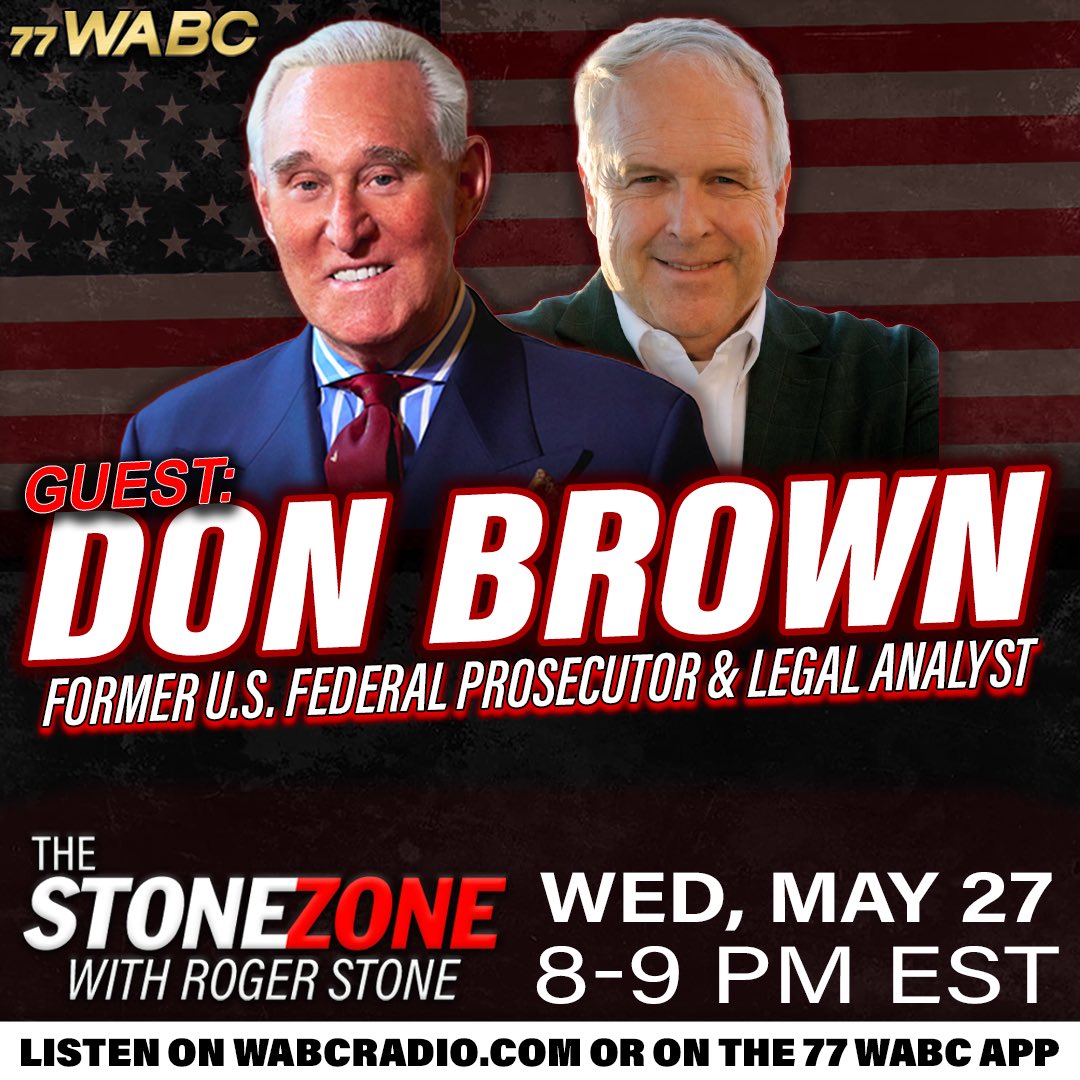
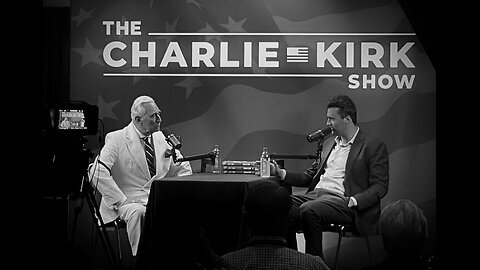
Stone is the host of The StoneZONE on Rumble and is also the host of The Roger Stone Show on WABC Radio.

Stay Informed with Exclusive Updates!

Subscribe for FREE to STONEZONE