Lindsay Clancy is the latest incidence of a social contagion tearing through society like a battering ram.
By its very nature, the Lindsay Clancy case was always going to be grotesque. What it became is something worse: a national morality play in which a woman who strangled her three children was recast as a martyr, her husband as the villain, and the one juror who refused to pretend otherwise as a public enemy.
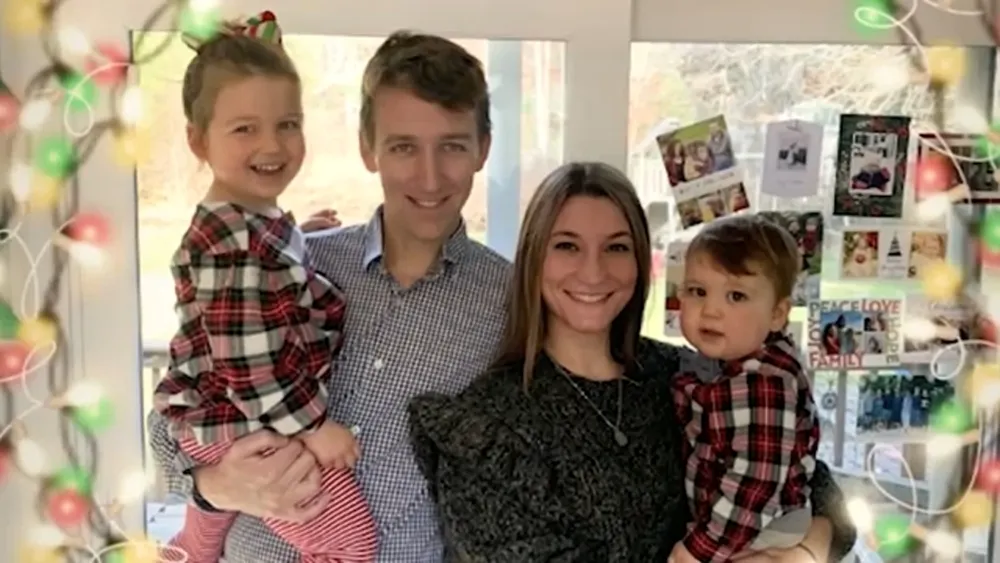
On Jan. 24, 2023, in Duxbury, Massachusetts, Lindsay Clancy, then a labor-and-delivery nurse, sent her husband Patrick out of the house on errands. While he was gone she took her children to the basement and brutally strangled them to death with exercise bands: Cora, 5; Dawson, 3; and Callan, eight months old. Then she cut herself and jumped from a second-story window. She has never denied that she did it. Her lawyers admitted it in open court. The only question at trial was whether she should be held criminally responsible.
At the beginning, a certain level of sympathy was not insane. In the four months before the killings Clancy was put on a merry-go-round of dangerous Big Pharma chemicals: Zoloft, Prozac, Seroquel, Ativan, Klonopin, Valium, Ambien, Trazodone, Remeron, buspirone, amitriptyline, and more—thirteen psychiatric drugs, more than thirty prescriptions, handed out by a rotating cast of psychiatrists, nurse practitioners, and emergency-room doctors. Anyone who has looked out the national overprescription crisis and the preventable tragedies that have resulted could look at that list and think that the system failed her. But what began perhaps as an empathetic impulse soon gave way to something far more depraved and indefensible.
The defense of Clancy’s actions did not stop at “she was overmedicated.” It demanded that the public treat the murders as an act of love. And a large, loud, mostly female audience on TikTok was happy to oblige. They declared her innocent even as she and her lawyers kept emphasizing that she had done the killing. They invented a husband who hired a body double to walk into CVS. They decided Patrick had framed her, gaslit her, or somehow performed the stranglings himself. There is video, phone records, and a 911 call that jurors later said they will never unhear. There is zero evidence Patrick killed anyone. That did not matter. Jilted, aggrieved women turned the victim into the perpetrator to satiate their Jezebel spirits.
Influencers shamelessly picked apart photos of Patrick with his new wife, a fertility doctor in New York, speculating that he was engaged in an affair with Lindsey Clancy to gain attention and clicks. His lawyer has now threatened legal action against what he called a “relentless, escalating and destructive defamation campaign” by “minor celebrities, so-called influencers and outright conspiracy theorists.” This only emboldened the mob to attack him further. As the trial arrived, the agenda behind the gynocentric circus became unmistakable.
After five weeks of testimony and some thirty-eight hours of deliberation, eleven jurors wanted Lindsay Clancy incomprehensibly found not criminally responsible for the murders she committed. One man defiantly stood strong and refused to be bullied into joining the consensus. Defense attorney Kevin Reddington asked the judge to throw that juror off the panel for “refusing to listen to the law” on reasonable doubt. The judge refused as it is a juror’s responsibility to follow their conscience above all else. Reddington raced an emergency appeal to the Massachusetts Supreme Judicial Court, which was denied. A mistrial was declared, and a tremendous miscarriage of justice was prevented—at least temporarily.
What followed was not the solemn response from citizens who had just spent weeks staring at three dead children. It was a media tour. Foreperson Roni Carlson, a retired fifth-grade teacher, told NBC she was “so sad, so sad that we couldn’t come up with a verdict for Lindsay.” She said she started filling out the not-guilty forms in excitement when the holdout allegedly admitted some doubt—then he added that he still would not say she was not guilty by reason of insanity. Juror Paula Devlin explained that a hospital video helped the room understand “altruistic filicide,” and that “whatever she did, however she did it, it came from a place of love.” Kellie Farina complained that the holdout “had the hardest time getting off the fact that Lindsay viciously killed her children.” They found the prosecution “harsh.” They found the defense “compassionate” and “entertaining.” They suggested maybe juries should not have to be unanimous. They were not describing a criminal trial. They were describing a pro-Lindsay support group that was bothered by a man with the audacity to remember the crime.
NBC10 Boston then engaged in a doxxing spree against the holdout, described as a black man in his thirties. They stalked his home, harassed his family, and published a dossier. To impugn his reputation, they drudged up a 2021 domestic-violence allegation that was dismissed, a restraining order involving a nephew and an eviction fight over unpaid rent. Even though the juror list was impounded, it did not stop the media from its irresponsible coverage. This is a direct attack on the jury process. Twelve citizens are supposed to be able to say no without being hunted by media ghouls and a digital chorus that has already decided so-called “postpartum psychosis” means license to kill.
The result they wanted is not merely about Lindsay Clancy. For a generation, feminists moved abortion from a tragic concession to a holy sacrament. The next step, always denied until it is not, is to treat the child outside the womb as a continuation of the same problem. If the infant is an accident of timing, then the three-year-old is an accident of endurance. This is what happens when a nation turns its back on Christianity and secularizes. A child goes from an individual whose spirit should be nurtured and whose life should be venerated; to a parasite whose existence impedes the vaunted notion of female empowerment.
Lindsay Clancy is the latest incidence of a social contagion tearing through society like a battering ram. It happened in the summer of 2020 when fentanyl-addicted thug George Floyd was made into a Christ figure and it became virtuous to raze cities in the name of racial retribution. It happened on a different scale when children were systemically indoctrinated, told that their God-given birth sex could be changed on a whim, and then were drugged and butchered and left scarred and mangled for life. These instances draw lines in the sand within the broader culture war, and those of us with decency and sanity must respond in kind. In this particular case, we must make sure through crowdfunding that the lone juror becomes very wealthy in the aftermath so others are incentivized to stand strong in the future.