

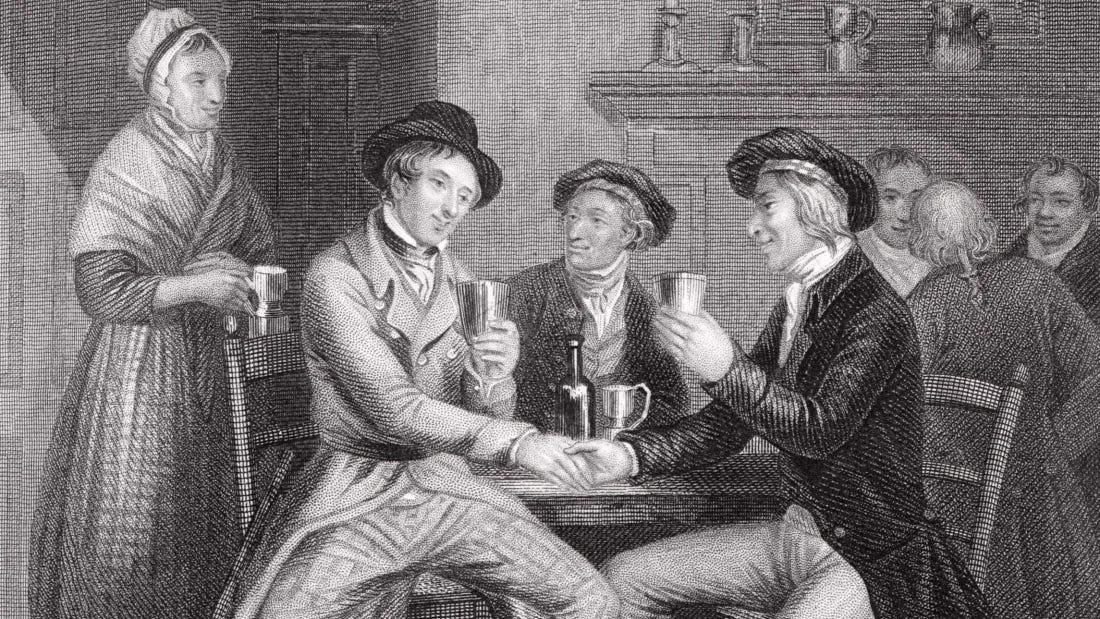
As the clock strikes midnight on New Years Eve and the champagne is poured with ritualistic precision people across the world instinctively clasp hands and sing a song whose words many cannot fully translate but whose meaning they feel in their bones. Auld Lang Syne is not merely a tune. It is a benediction. It is a moral accounting. It is a reminder that time is undefeated and that memory is sacred.
The phrase “Auld Lang Syne” comes from the Scots language not English and translates roughly to “old long since” or more poetically “times long past.” Scots is a Germanic language closely related to English but with its own vocabulary cadence and literary tradition. The song therefore carries with it the cultural DNA of Scotland a land steeped in clan loyalty hard weather and an unromantic understanding of time loss and endurance.
The version of the song we know today was popularized in the late eighteenth century by Robert Burns Scotland’s national poet. Burns did not invent the song out of thin air. He collected and refined older folk verses that had circulated orally for generations. What Burns did was give the song literary permanence and emotional coherence transforming a fragment of folk memory into a universal anthem of reflection and fidelity.
At its core Auld Lang Syne asks a deceptively simple question. Should old acquaintances be forgotten and never brought to mind. The answer given is an emphatic no. The song insists that friendship shared struggle and lived experience demand remembrance. It affirms that loyalty does not expire with convenience and that shared history confers obligation. In an age addicted to novelty and disposability this message is quietly radical.
So why do we sing it on New Years. The answer lies in Scotland’s Hogmanay tradition the historic celebration of the turning of the year. In Scottish custom New Years was not merely a party but a reckoning. Debts were settled quarrels forgiven and friendships reaffirmed. Singing Auld Lang Syne at midnight became a way of symbolically carrying the moral ledger of the past year into the unknown future with humility and grace.
The physical ritual matters as much as the lyrics. Participants traditionally formed a circle holding hands which are crossed only at the final verse when arms are linked across the chest. This gesture signifies unity reconciliation and shared fate. It is a communal act not a performance. You do not sing Auld Lang Syne to be heard. You sing it to belong.
Over time the song migrated far beyond Scotland carried by emigrants, sailors, soldiers, and missionaries until it became the global soundtrack of farewell and renewal.
There is something profoundly unfashionable about this song and that is precisely why it endures. It does not flatter the ego. It does not celebrate progress or conquest. It honors continuity memory and the unglamorous virtue of keeping faith with those who walked with you before the applause stopped.
In a culture obsessed with reinvention Auld Lang Syne reminds us that character is cumulative. That friendships are earned. That time is not an enemy but a witness. As the new year begins and the old one recedes into history the song asks us to pause not to boast but to remember.
And in that moment of collective stillness as voices rise imperfectly in unison we are reminded of a truth older than politics older than fashion older than the noise of the age. We are not self-made. We are made by time by loyalty and by one another.
That is why we sing it.

