

The Democratic Socialists of America (DSA) frequently condemns authoritarianism and vigorously defends self-determination, yet its foreign policy often reveals a pattern of selective criticism that critics describe as speaking out of both sides of its mouth.
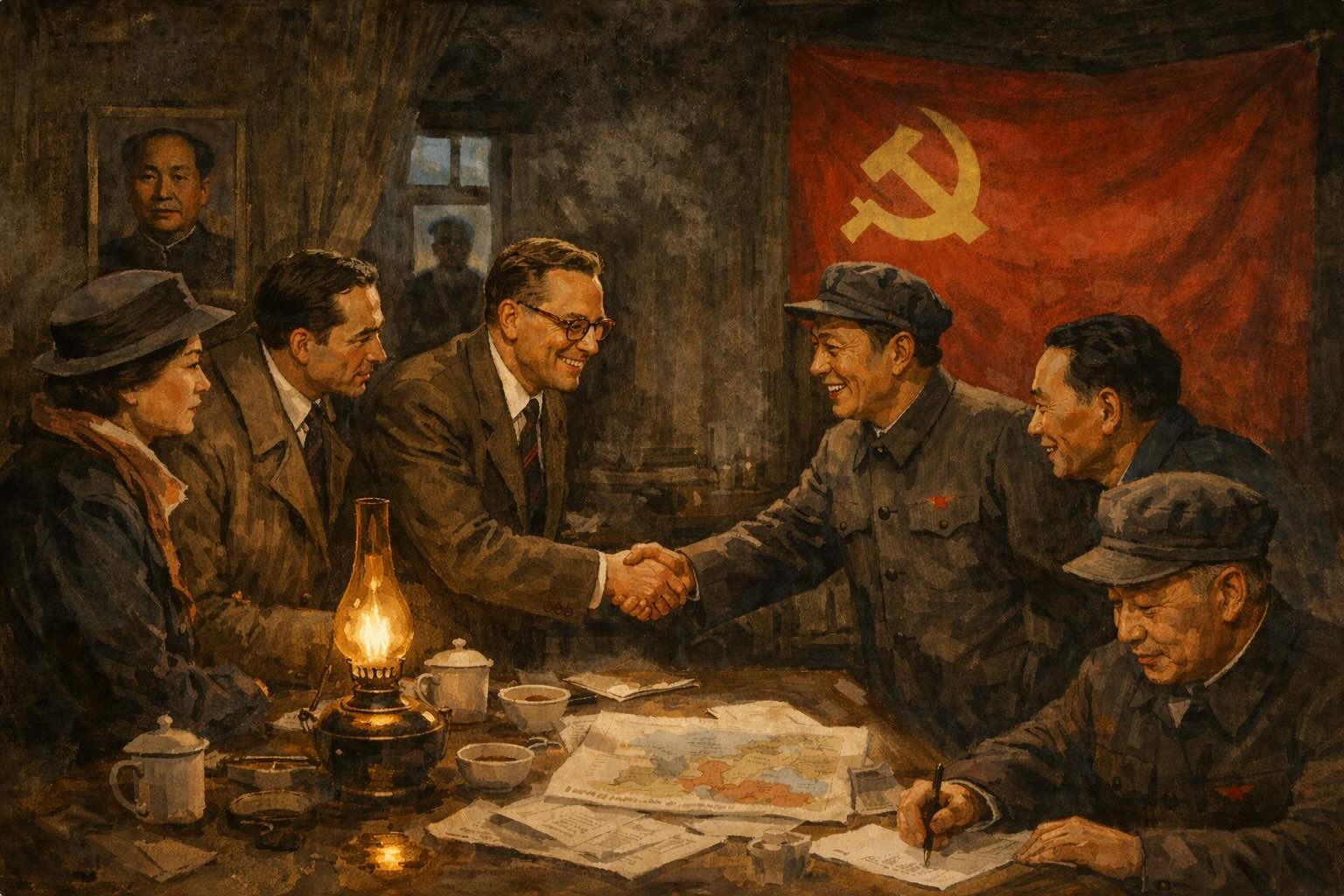
According to leaked internal minutes first published by Newsweek in January 2026 (obtained from a whistleblower), some members of the China Working Group and International Committee actively sought contacts with Chinese Communist Party (CCP) officials. DSA reached deliberate, internal agreements not to criticize Beijing on key issues such as threats to Taiwan, the Hong Kong crackdown, and mass detention in Xinjiang, dismissing reports of mass internment in Xinjiang (including abuses against Uyghurs) as exaggerated or part of U.S. propaganda. Some members also characterized Uyghur internment and repression in similar terms, calling them exaggerated or driven by U.S. propaganda.
In seminars, some members presented positive views of aspects of China’s system, including referring to vocational training centers favorably despite widespread reports of mass detention and forced assimilation.
This internal approach runs counter to DSA’s public positions.
The organization has condemned Russia’s invasion of Ukraine and called for troop withdrawal, in the past, but it attributes the war in part to U.S. and NATO imperialism and opposes American military aid and sanctions against Russia.
On China, the minutes indicate reluctance to engage with sensitive topics internally, with some members dismissing reports of mass internment in Xinjiang as exaggerated or part of U.S. propaganda. Publicly, DSA rarely issues strong condemnations of China’s actions in Xinjiang, Hong Kong, or toward Taiwan, instead directing criticism toward U.S. militarism in the Indo-Pacific, such as the AUKUS alliance.
Critics describe this as campism: a pattern of downplaying or excusing abuses by governments opposing U.S. power, including Russia, China, Iran, Venezuela, and Cuba, while subjecting the U.S. and its Western allies to far harsher criticism. DSA’s foreign policy centers on challenging American dominance and building solidarity with Global South struggles. It often views Russia and China as forces that help check or balance U.S. dominance, even as the organization officially denounces specific acts of aggression like the invasion of Ukraine.
This one-sided critique produces perceptions of inconsistency: strong advocacy for Palestinian self-determination and BDS against Israel, opposition to U.S. sanctions on authoritarian regimes such as Venezuela or Iran, yet muted or absent criticism of CCP actions, with internal guidance to avoid sensitive topics that could disrupt dialogue.
DSA rarely addresses these internal documents in public statements, maintaining that its focus remains on opposing U.S. empire rather than endorsing foreign governments outright.
The tension is not accidental; it is embedded in DSA’s anti-imperialist framework, which places greater priority on confronting U.S. power than on uniformly condemning all forms of authoritarianism.
Some members expressed significant discomfort with the outreach, with the whistleblower who leaked the minutes to Newsweek stating that the CCP contacts “isn’t what I signed up for” and viewing them as a departure from socialist principles. Internal dissent surfaced in discussions and forums, with members arguing the approach compromises DSA’s commitment to universal human rights and self-determination.
This selective approach creates the strong impression of speaking out of both sides of the mouth, particularly when internal records show deliberate efforts to avoid criticizing the CCP in order to preserve lines of communication.
Ben Norton, an independent American journalist and political commentator (not a formal DSA member), plays a notable role in this context through his participation in official DSA activities. He spoke at the Democratic Socialists of America’s 2025 seminar series on “Modern China and Lessons for US Socialists,” where he led the opening session on “Socialism with Chinese Characteristics.”
In that presentation, he explained how the Communist Party of China adapts Marxism to its national conditions and highlighted China’s achievements in reducing inequality and poverty as a model for socialists.
His involvement drew attention amid revelations of DSA’s contacts with CCP officials, positioning him as a prominent voice promoting positive views of China within U.S. leftist circles.
Norton is currently pursuing a PhD at Tsinghua University in Beijing. His academic work there aligns with and reinforces his public advocacy for studying and learning from China’s adaptation of Marxism as a successful socialist model. His research focuses on development financing in the Global South, inequality, and political economy. He has described the move as a shift from journalism to academia to address global inequality through scholarship.
Having reported from Latin America for years before relocating to China around 2024–2025, Norton frequently speaks positively about his experiences there, emphasizing innovation, sovereignty, and socialist-oriented policies.
U.S. political groups like DSA engaging with foreign parties such as the CCP is not inherently illegal, as the First Amendment protects freedom of association and speech. However, if such contacts involve unregistered lobbying, political activities, or efforts to influence U.S. policy on behalf of a foreign principal, they could fall under the Foreign Agents Registration Act (FARA), which requires public disclosure.
This concern extends beyond DSA to broader worries about Chinese influence in American institutions. Senators Rick Scott, Jim Banks, and Markwayne Mullin warned in January 2026 that programs allowing Chinese nationals fast-track citizenship paths create long-term security vulnerabilities, potentially enabling future infiltration of U.S. government and academic positions.
Sen. Tom Cotton and colleagues similarly urged restrictions on Chinese nationals at Energy Department facilities to prevent theft of AI and national security research. These warnings underscore why even non-official contacts with CPC-linked entities draw scrutiny in today’s climate of U.S.-China rivalry.
This pattern is not new in the American left. It echoes the foreign obsessions of the Weather Underground in the late 1960s and 1970s. Emerging from Students for a Democratic Society (SDS), that militant group sought inspiration and support from revolutionary movements abroad, including trips to Cuba where members met North Vietnamese representatives and received training, funding, and tactical advice.
The Weather Underground aligned with anti-U.S. forces in the Third World and socialist states, viewing them as allies against American imperialism, even as it engaged in domestic bombings and revolutionary rhetoric. DSA’s current outreach to CCP officials and reluctance to criticize Beijing’s actions reflect a similar prioritization of anti-imperialist solidarity over consistent opposition to authoritarian practices.
Ultimately, the question is not just whether such ties are legal, but what they reveal about ideological consistency. When a major U.S. socialist organization quietly accommodates one authoritarian power while loudly condemning others, it risks undermining its own credibility and the very principles it claims to defend.
The contradiction may serve short-term strategic goals, but in the long run, it invites scrutiny that no amount of anti-imperialist framing can fully deflect. In an era when U.S. senators and lawmakers openly warn of Chinese infiltration in academia, government, and research, the DSA’s documented outreach serves as a stark reminder that foreign influence operations can take many forms, and few go unnoticed forever.

