

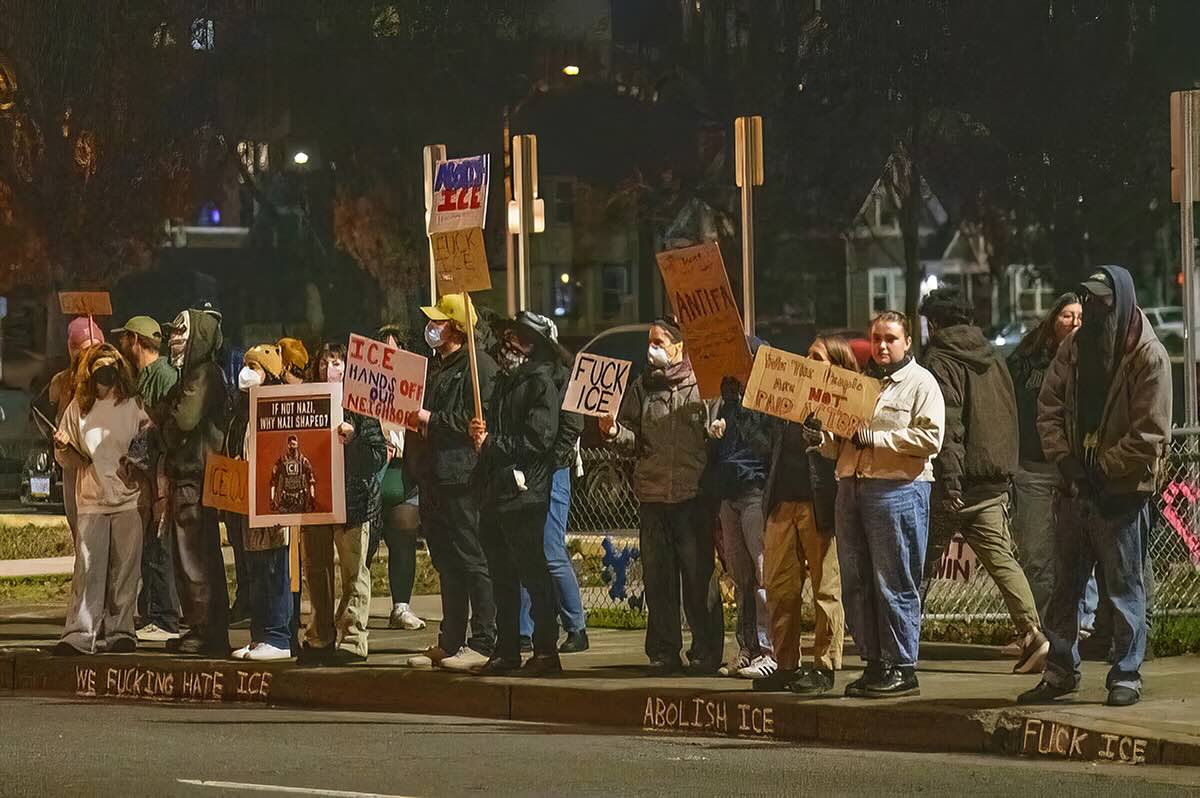
The men and women of Immigration and Customs Enforcement (ICE) are not villains. They are federal law enforcement officers executing the laws of the United States as written by Congress and upheld by the courts. They are fathers, mothers, sisters, brothers, sons, daughters, veterans, and public servants who place themselves in harm’s way to protect American sovereignty. Yet for nearly two decades they have been the subject of a sustained rhetorical assault that has distorted their mission, endangered their lives, and undermined respect for the rule of law itself.
To understand how we arrived at this perilous moment, one must return to 2008 and the words of Barack Obama during his campaign for the presidency. In a speech addressing immigration, candidate Barack Hussein Obama described a system in which families were, in his words, “terrorized by ICE.” That phrase, inserted into a broader appeal for comprehensive immigration reform was not a throwaway line. It was vivid, emotionally charged language that cast federal agents not as law enforcers but as perpetrators of fear. Though Obama also spoke of border security, employer accountability, and the need for lawful immigration pathways, the rhetorical damage was done. The imagery of “terror” became embedded in the political bloodstream.
Words matter. When a politician, especially a potential future president, characterizes lawful enforcement as terror it legitimizes hostility toward those enforcing the law. It reframes the officer as the aggressor and the violator as the victim. That inaccurate framing did not remain confined to that sole campaign speech. It metastasized over time, amplified by activists, echoed by media figures, and ultimately adopted by a growing faction within the Democratic Party.
Obama’s defenders often point out that his administration deported more than three million individuals, earning him the moniker “Deporter in Chief.” That is true. But policy and rhetoric can diverge, and in this case they did. Even as removals increased the administration shifted priorities away from broad interior enforcement and toward narrower categories. More importantly, the language surrounding enforcement softened into something approaching apology. Raids were described as disruptive to families. Enforcement became something dainty and managed delicately rather than executed decisively. The moral clarity of law enforcement began to erode.
This rhetorical pattern extended beyond immigration. When a police officer in Cambridge, Massachusetts arrested a Harvard professor, Obama famously remarked that “the police acted stupidly.” That statement, made before all facts were known, sent a message heard loud and clear across the nation: the Commander in Chief was willing to publicly second guess law enforcement. In another widely cited moment, Obama said that if he had a son, “he’d look like Trayvon,” aligning himself emotionally and physically with a narrative that many interpreted as prejudging law enforcement actions in the case of Trayvon Martin. Again, the cumulative effect was unmistakable. The presumption of good faith on the part of police officers was steadily replaced with suspicion.
Fast forward to the years following Obama’s presidency and the rhetoric escalates further. Prominent Democrats began openly calling for the abolition of ICE. Figures such as Alexandria Ocasio-Cortez and Elizabeth Warren lent legitimacy to slogans that portrayed ICE as inherently violent, dangerous, abusive and illegitimate. Others went further, comparing agents to historical villains and labeling their work as “state violence.” This was no longer nuanced policy debate. It was vilification.
The consequences of such language are not theoretical. They are measurable and real. In recent years, federal data has shown dramatic increases in assaults, threats, and targeted attacks against ICE officers. Agents have been doxxed. Their families have been harassed. Their homes have been targeted. When you tell the public that a group of law enforcement officers are akin to secret police or oppressors, you should not be surprised when unhinged individuals take that rhetoric literally.
The summer of 2020 provided a chilling demonstration of what happens when anti law enforcement rhetoric reaches a fever pitch. Following the death of George Floyd, protests erupted across the country. Many were peaceful. But many were not. Cities burned. Federal buildings were attacked. Police officers were injured, assaulted, and in some cases killed. The banner of Black Lives Matter became, in certain quarters, a cover for lawlessness. The chant to defund the police gained traction among elected officials. The line between protest and riot blurred, and respect for law enforcement collapsed in ways not seen in generations.
ICE agents, already demonized, found themselves particularly vulnerable. Unlike local police, they often operate in anonymity due to the sensitive nature of their work. Yet that anonymity was stripped away by activists determined to expose and intimidate them. In response, agents began wearing masks not for public health, but for personal safety. Think about that. Federal officers in the United States of America concealing their identities to protect themselves and their families from politically motivated harassment and physical or, God forbid, deadly harm. That is the environment created by years of reckless rhetoric.
It is essential to state plainly what should never have been in doubt. ICE agents are not the enemy. They are enforcing laws passed by elected representatives. If those laws are to be changed the proper avenue is Congress, not intimidation. To delegitimize the enforcement of law is to delegitimize the law itself. And when the law is delegitimized, society begins to unravel.
Barack Hussein Obama’s 2008 remark about families being “terrorized by ICE” may have been intended as a critique of policy but its legacy has been far more corrosive. It helped seed a narrative that transformed law enforcement into a moral adversary. That narrative has since been weaponized by activists and politicians alike, with dangerous and predictable results.
A nation cannot function if its laws are optional and its law enforcement officers are targets. The men and women of ICE deserve not condemnation, but gratitude. They stand on the front lines of a difficult and often thankless mission. They deserve the full support of the American people, not the slanders of those who seek political advantage by tearing them down.
Law and order is not a slogan. It is the foundation of civilization. Undermine it, and everything else begins to crumble. In fact, it’s already crumbled in some ways.

