

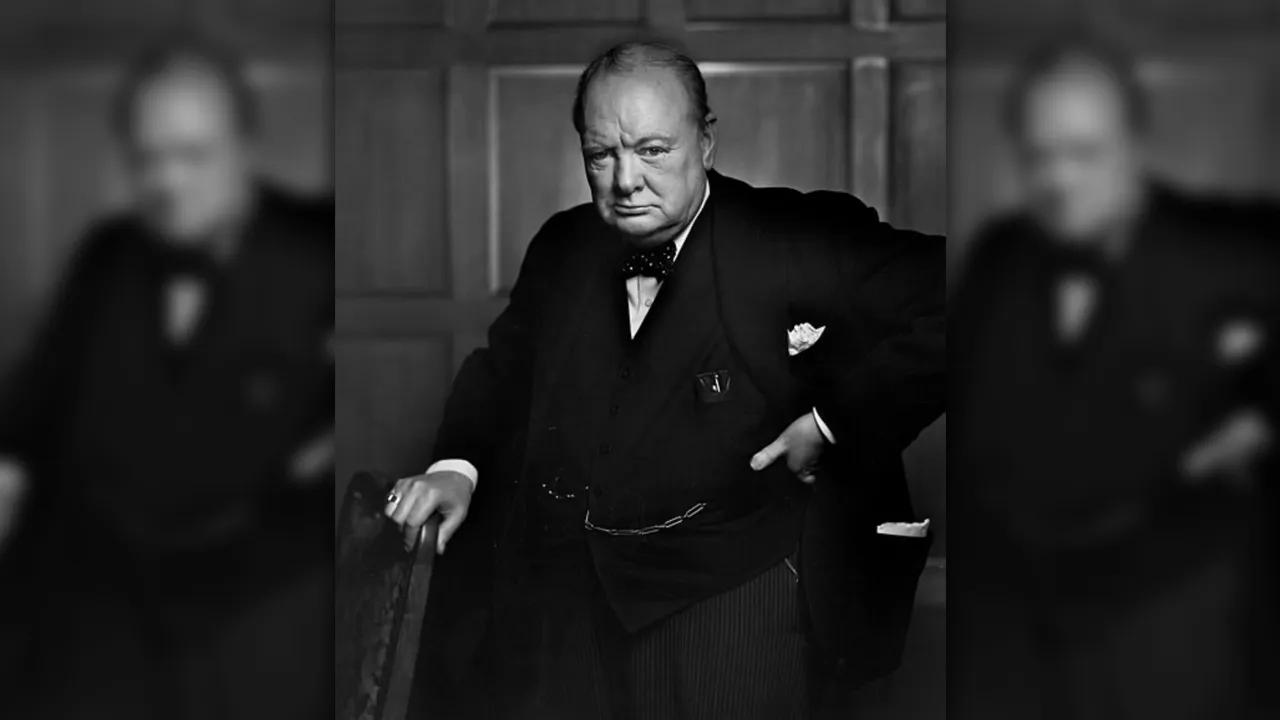
Far from a mere politician, Churchill understood the power of appearance in projecting authority, confidence, and national resilience.
Winston Churchill, the iron-willed British Prime Minister who led the United Kingdom through the crucible of World War II, was as renowned for his lionhearted unbreakable spirit as he was for his impeccable sense of style. Far from a mere politician, Churchill understood the power of appearance in projecting authority, confidence, and national resilience.
His clothing choices blended traditional British tailoring with practical innovations that reflected both his aristocratic roots and his dauntless resolve in crisis. Even amid air raids and global upheaval, Churchill maintained a polished, larger-than-life image that became synonymous with British spirit. His wardrobe was a visual emblem of defiance and dignity.
Central to Churchill’s everyday look were his finely tailored three-piece suits from Savile Row. Cut in chalk stripes, pinstripes, or subtle checks, they were designed to flatter his distinctive physique: broad shoulders, arched back, and pronounced midsection. The waistcoat added structure while the jacket draped elegantly around his frame.
Winston Churchill worked his suits hard but insisted on details like pressed sleeve backs and ample pockets for cigars. These made-to-measure garments, rooted in Victorian elegance and adapted for modern leadership, made him appear commanding whether addressing Parliament or posing with a Thompson submachine gun.
Central to Churchill’s unmistakable style were his bow ties, which he paired with a pocket watch on a chain that traced a distinctive “W” across his waistcoat. Unlike conventional neckties that dragged the eye downward, the bow tie drew every gaze upward, perfectly framing his stiff collars and adding a flash of personal flair. Silk pocket squares and mirror-polished shoes completed his commanding look. Whenever he stepped out of 10 Downing Street, he projected unshakeable confidence and British resolve.
Nothing captured Churchill’s iconic powerful image quite like his vast hat collection, which ran into the hundreds and ranged across military, formal, and leisure styles. He loved grey and black Homburgs, the stiff rolled-brim hats that became his signature, as well as broad-brimmed Stetsons for vacations, bowlers, top hats, and even ceremonial bicorn hats.
Winston Churchill believed that prominent figures needed distinctive, iconic emblems, and hats provided the perfect touch of flair. Churchill famously traveled with multiple hatboxes, carefully choosing the right one for every occasion — from breezy Panama hats on vacation to formal military caps with his uniform.
Churchill’s most inventive contribution to menswear was the “siren suit,” a groundbreaking one-piece garment that he popularized during the Blitz. Designed for lightning-fast changes when the air-raid sounded, these practical jumpsuits featured loose, comfortable cuts with pleated trousers, generous breast pockets (perfect for his cigars), and optional belts.
For formal occasions, Churchill commanded sharply tailored cashmere-striped trousers, a single-breasted waistcoat, and a crisp jacket, dramatically accented by his treasured Breguet pocket watch. This refined, court-inspired attire perfectly suited the solemn halls of Parliament and grand state ceremonies, preserving an unmistakable air of timeless British tradition and dignity.
He also proudly wore military uniforms drawn from his cavalry heritage and honorary ranks, complete with service caps and imposing bicorns. During inspections and official parades, these classic outfits projected authority while allowing the battle-hardened former soldier to embody both his profound heritage and supreme authority.
Churchill’s style was a philosophy that emphasized dressing appropriately for every occasion — always effortless and unforced. He insisted on practical pockets and relaxed at home in comfortable one-piece suits or dressing gowns. He never compromised on polish: his shoes were always shined and his collars starched. He believed that looking the part strengthened morale during Britain’s darkest hours. His impeccable appearance reassured the public — if the Prime Minister could maintain standards amid falling bombs, so could the nation endure.
These garments could be pulled on over pajamas or regular clothes in seconds. Ranging from sturdy wool and pinstripes to soft flannel and luxurious velvet, they were nicknamed “rompers” by Churchill’s inner circle. They blended wartime utility with undeniable panache, and Churchill wore them confidently to meetings and even displayed one during his visit to Washington, D.C.
Beyond his commanding presence in tailored suits, painting offered Churchill deep creative solace and fulfillment. He took up the brush in 1915 at age forty amid political adversity and ultimately produced more than 500 vibrant oils that captured landscapes, seascapes, and personal retreats with bold, joyful colors.
This artistic pursuit, which he called “half passion and half philosophy,” gave him solace and sharpened his powers of observation. In early 1946, shortly after his election defeat, Churchill recuperated in Miami Beach at Col. Frank W. Clarke’s home on North Bay Road. There he painted local scenes, attended the Hialeah races, and addressed the University of Miami, blending leisure, creativity, and duty in a rare moment of post-war tranquility.
Winston Churchill’s iconic style legacy continues to inspire menswear today. Savile Row tailors, particularly Henry Poole & Co., still draw inspiration from his signature chalk-stripe suits and Homburg hats. Leading fashion houses recreate his most distinctive pieces, and style authorities worldwide regard him as one of the best-dressed political figures in history.
True to his Lionheart legacy, Churchill showed that true style is far more than mere appearance, it is a powerful instrument of leadership and statesmanship. By masterfully blending timeless British tradition, bold innovation, and his formidable character, he created an indelible image of resilience, dignity, and strength. Even amid the gravest trials of war, his clothing proclaimed to the world that refinement and unyielding resolve walk hand in hand.

