

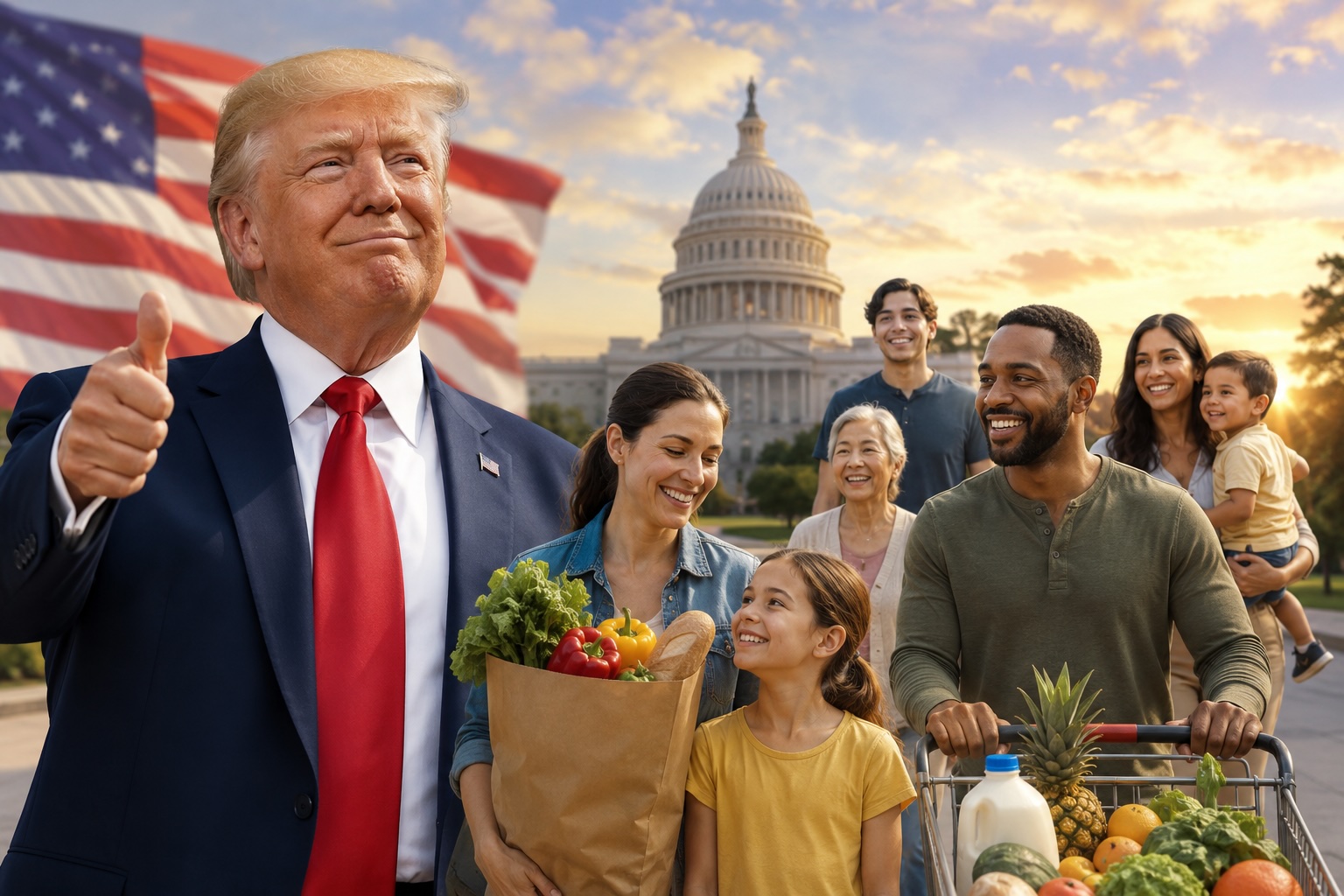
SNAP is a $102 billion annual program serving roughly 38 million people each month.
For decades, the welfare system trapped generations in cycles of poverty by discouraging work. President Trump’s policies, paired with robust economic expansion, demonstrate that the best anti-poverty program is a thriving job market.
At a rally this past Friday in Rockland County, New York, President Trump announced that nearly 5 million Americans have come off food stamps during his second term, a major win for fiscal responsibility and economic self-sufficiency.
The Trump administration’s pro-growth economic policies are empowering more Americans to achieve greater independence and reduce their reliance on government assistance. At the same time, the One Big Beautiful Bill Act responsibly expanded eligibility to better protect the most vulnerable, allowing veterans, homeless Americans, and minors as young as 14 to access SNAP benefits without parental consent.
This progress is thanks to the One Big Beautiful Bill Act, signed into law on July 4, 2025. The landmark legislation introduced stricter work requirements for able-bodied adults, raising the age limit to 64 in many cases, and eliminated loopholes that previously allowed long-term dependency. It has also cracked down on noncitizen eligibility.
These changes collectively contributed to a major drop in the program’s enrollment, from roughly 42.8 million participants in January 2025 to about 38.5 million in January 2026.
Official USDA data confirms this. Independent analyses from organizations across the ideological spectrum, including the American Enterprise Institute (AEI), the Center on Budget and Policy Priorities (CBPP), and the Food Research & Action Center (FRAC), confirm a decrease of roughly 4.3 million to 5 million SNAP participants.
Administration officials have attributed the decline to strong job growth and targeted efforts to reduce widespread abuse and improper payments. Agriculture Secretary Brooke Rollins has emphasized that a substantial portion of the reductions stems from cracking down on fraud that has plagued the nutrition assistance program.
According to a report by the Foundation for Government Accountability (FGA), roughly 14,000 SNAP recipients in just one state owned luxury vehicles — including multiple Ferraris, Lamborghinis, Bentleys, Porsches, and more than 2,000 Teslas. The Trump administration understandably argues that these cases expose significant loopholes that the recent reforms aim to close.
This bill has shifted costs to the states, tightened eligibility (especially for non-citizens and able-bodied adults without dependents), and promoted personal responsibility while continuing to protect aid for the truly vulnerable — children, seniors, and people with disabilities.
Despite fierce pushback from progressive groups and media figures, the broader economic reality overwhelmingly supports the administration’s position.
Record-low unemployment, a manufacturing resurgence, strong wage growth, and deregulation have opened the door to millions of new jobs, allowing Americans to trade food stamps for paychecks and achieve real self-sufficiency.
This isn’t about denying aid, it’s about fostering dignity through employment. As families see real increases in take-home pay, fewer will rely on government assistance.
This approach counters the big-government mindset that views citizens as clients of the state.
Though challenges persist in helping former recipients transition to employment, the direction is clear: rewarding effort works. Americans are working, earning, and thriving, just as President Trump promised.

