

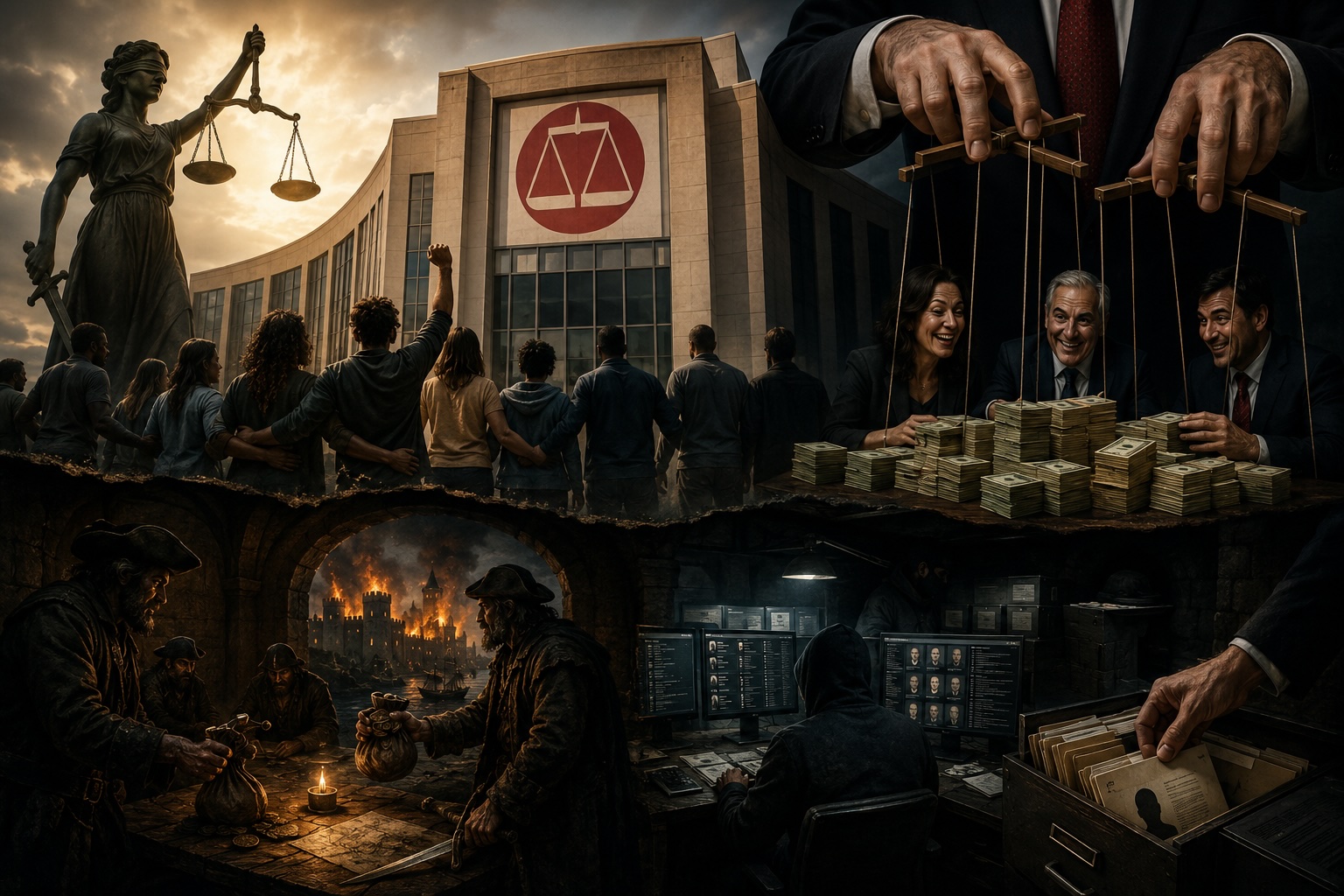
In medieval Europe wealthy monarchs sometimes paid pirates to attack rival kingdoms while publicly condemning piracy. The arrangement allowed rulers to profit from the chaos while maintaining the appearance of moral authority. History is filled with examples of powerful institutions secretly nurturing the very threats they publicly claimed to oppose. According to a newly filed superseding indictment by the United States Department of Justice (DOJ), federal prosecutors now allege that the Southern Poverty Law Center (SPLC) may have been operating under a similarly astonishing contradiction. For decades, the Southern Poverty Law Center portrayed itself as the nation’s foremost opponent of racism, white supremacy, and political extremism. Through direct mail campaigns, media appearances, fundraising appeals, litigation, and its controversial hate group designations, the organization amassed an enormous financial empire and became one of the most influential political advocacy organizations in America.
Its reports were treated as gospel by the corporate media. Its accusations were repeated by politicians. Technology companies relied upon its designations. Banks, advertisers, universities, and government agencies often treated its determinations as authoritative. The Southern Poverty Law Center did not merely influence public opinion. It became one of the principal gatekeepers of acceptable political discourse in modern America. Now federal prosecutors are presenting a dramatically different picture.
As readers of StoneZone may remember from my earlier column, “The Poverty of Southern Poverty” I examined longstanding criticisms of the organization, including allegations that it exaggerated threats, inflated hate group statistics, and weaponized political labels to generate donations and silence ideological opponents. The newly filed superseding indictment moves far beyond those criticisms and into the realm of alleged federal criminal conduct.
According to prosecutors, the Southern Poverty Law Center maintained a covert network of paid informants embedded within extremist organizations for decades. The use of confidential sources is not itself unlawful. Law enforcement agencies, journalists, and intelligence services have relied upon informants throughout history. The government’s case is not based upon the mere existence of informants. Rather, prosecutors focus on how those informants were allegedly funded, how those payments were allegedly concealed, and what activities those funds allegedly supported.
The original indictment, returned in April, charged the Southern Poverty Law Center with six counts of wire fraud, four counts of making false statements to a federally insured financial institution, and one count of conspiracy to commit concealment money laundering. The superseding indictment reportedly expands the factual allegations while retaining the same charges.
Federal prosecutors now allege that approximately $4.1 million in tax exempt donor funds were funneled through fictitious entities, shell accounts, prepaid cards, and other concealed financial mechanisms. According to the indictment, these funds ultimately reached individuals who were leaders, members, or affiliates of organizations such as the Ku Klux Klan, Aryan Nations, the National Socialist Movement, and other extremist groups.
The allegations do not stop there. Prosecutors contend that some of the money was allegedly used not merely to gather intelligence but to sustain the operations of the very organizations the SPLC publicly denounced. The superseding indictment reportedly includes additional details regarding funds allegedly used for recruiting efforts, transportation, organizational activities, rallies, and the purchase of materials associated with extremist events. If those allegations are ultimately proven in court, the implications would be staggering.
Imagine a fire department secretly providing fuel to arsonists while simultaneously raising money to fight fires. Imagine a temperance organization financing bootleggers while collecting donations to combat alcoholism. That is the contradiction federal prosecutors appear to be alleging in this case.
The government’s central argument is straightforward: Donors contributed money believing they were supporting efforts to dismantle extremist organizations. Prosecutors allege that significant amounts of those funds were instead secretly directed to individuals operating within those organizations while the true nature of the transactions was concealed from donors, financial institutions, and the public. Among the most striking allegations are claims that one informant associated with a neo-Nazi organization allegedly received more than $1 million over time. Another individual reportedly received hundreds of thousands of dollars while maintaining involvement in activities connected to the infamous 2017 Charlottesville rally. Prosecutors allege that several informants occupied influential positions within extremist organizations while receiving SPLC funds.
The Southern Poverty Law Center has vigorously denied wrongdoing. The organization has pleaded not guilty and argues that the prosecution represents political retaliation by the Trump administration. SPLC attorneys maintain that the informant program was a legitimate intelligence gathering operation designed to monitor dangerous organizations, gather information, and share actionable intelligence with law enforcement agencies. They contend that confidential sources helped prevent violence and contributed to successful criminal investigations over many years.
Those arguments will be evaluated in federal court where the Southern Poverty Law Center remains presumed innocent unless and until proven guilty. Yet regardless of the eventual verdict, the case exposes a profound irony. For decades, the SPLC built its reputation by casting itself as the moral prosecutor of American public life. It accused others. It labeled others. It investigated others. It judged others. It frequently did so with little regard for the reputational destruction that followed.
Many conservative organizations, Christian ministries, political activists, and public figures found themselves branded as extremists by an organization that enjoyed near total immunity from scrutiny by the mainstream press. Now the spotlight has turned. Conservatives have long argued that the SPLC’s business model depended upon the existence of a permanent crisis. The organization raised vast sums of money by warning donors about growing threats while continuously expanding its list of targets. Critics often accused the organization of creating a self perpetuating cycle of fear, fundraising, and political demonization.
The government’s allegations go even further. Prosecutors suggest that donor money may have flowed to individuals whose activities helped sustain the very movements that generated public alarm and fundraising opportunities. That allegation, if proven, would represent one of the most remarkable scandals in the history of American nonprofit organizations.
The SPLC and the Democrats behind them who fund these witch hunts have a casual relationship with ethics and honesty at best. For years they have smeared political opponents, demonized conservatives, weaponized accusations, and cultivated division for political and financial gain. The same political establishment that spent years lecturing Americans about misinformation and accountability now finds one of its most important institutional allies facing serious allegations of fraud, deception, and concealed financial activity.
Whether federal prosecutors ultimately prevail remains to be seen. The evidence will be tested. Witnesses will be cross examined. The legal process will run its course. But one thing is already beyond dispute. The carefully polished image that protected the Southern Poverty Law Center for decades has been shattered. The organization that built a fundraising empire by warning Americans about dangerous extremists now faces allegations that millions of dollars were secretly routed to individuals operating inside those very movements.
If the government’s allegations withstand scrutiny, the scandal will not merely expose hypocrisy. It will reveal a breathtaking inversion of purpose in which an organization dedicated to fighting extremism allegedly became financially entangled with the very forces it claimed to oppose. History teaches that institutions often collapse not because of attacks from their enemies but because of contradictions within themselves. The Southern Poverty Law Center spent decades pointing an accusing finger at everyone else. Now a federal grand jury has pointed one back at them.

