

I confess that I am a political junkie. Not the kind who watches election returns every four years and suddenly becomes an expert because he once retweeted a poll. I have spent more than half a century immersed in campaigns, elections, voter behavior, political history, and the perpetual chess match that determines who governs America. I have studied elections the way medieval monks studied scripture. I have watched candidates rise and fall, parties reinvent themselves, and political fortunes disappear faster than a free lunch at a congressional hearing. Yet even after all these years, I remain amazed by how many Americans believe the most important political battle occurs on Election Day. It does not.
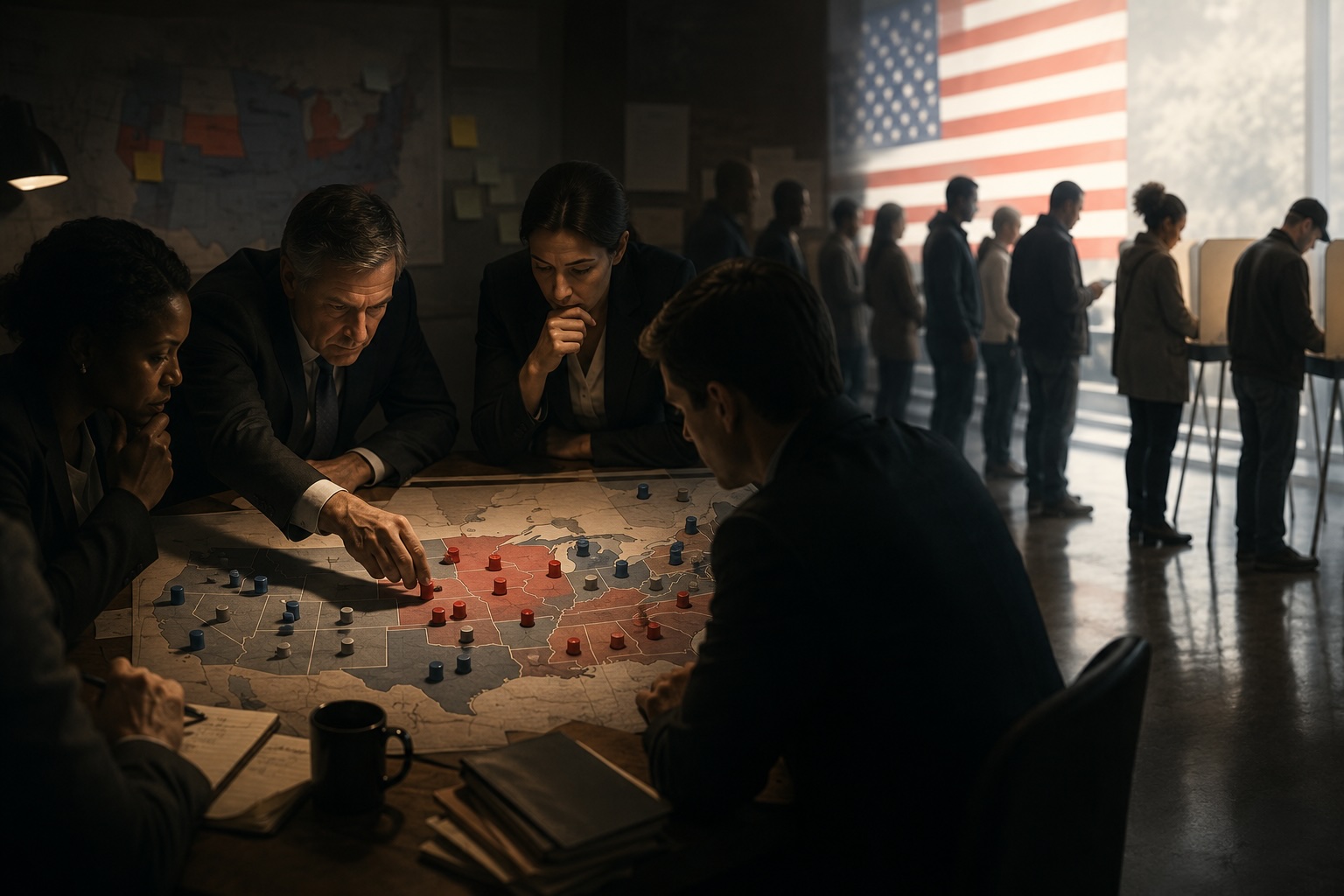
Americans are taught that elections are decided by candidates, ideas, debates, advertising, and turnout. That is a charming fairy tale suitable for a middle school civics textbook. The reality is that one of the most consequential political struggles in America occurs in the obscure and often incomprehensible world of redistricting. Before candidates campaign, before television commercials air, before yard signs appear, and before voters cast ballots, politicians, lawyers, consultants, activists, and judges are engaged in a ferocious war over maps. These maps determine who votes where, which communities are grouped together, which neighborhoods are separated, and ultimately who has the advantage before the campaign even begins.
Imagine sitting down to play a football game only to discover that the field has already been tilted twenty degrees in one direction. One team will be running downhill while the other is climbing uphill. Both teams still have to play. Both teams still have to score points. Yet anyone with common sense understands that one side has been handed a significant advantage before the opening whistle. That is modern redistricting.
The process itself is not new. Politicians have been manipulating district lines since the early days of the Republic. The term “gerrymander” dates back to 1812 when Massachusetts Governor Elbridge Gerry approved a district so bizarrely shaped that critics said it resembled a salamander. More than two centuries later, technology has transformed that salamander into a genetically engineered political monstrosity. What once required crude maps and educated guesses now involves sophisticated software capable of analyzing voting history, demographics, census data, consumer behavior, and virtually every other measurable characteristic of the electorate.
The modern redistricting consultant is less like a cartographer and more like a mad scientist operating in a political laboratory. With enough data, they can dissect communities block by block and street by street. They can tell you where Republicans shop, where Democrats attend church, where independents drink coffee, and which side of a neighborhood tends to vote more consistently. It would make the census takers of ancient Rome weep with envy.
The public is repeatedly told that redistricting battles are noble crusades for fairness. Forgive my skepticism. Whenever politicians begin speaking passionately about fairness, I instinctively check to see where my wallet is. Every redistricting fight is advertised as a heroic effort to protect democracy. Curiously, the proposed maps always seem to benefit the people making that argument. This remarkable coincidence occurs so frequently that one suspects divine intervention has been replaced by political consultants billing six hundred dollars an hour.
Both political parties participate in this ritual. Democrats do it. Republicans do it. Anyone who tells you otherwise is either dishonest or preparing to ask for campaign contributions. The difference is not whether gerrymandering exists. The difference is who benefits from it at any given moment. Washington resembles two pickpockets arguing over ethics while standing in the same crowd. What has changed dramatically in recent years is the role of the judiciary. Increasingly, elections are not decided by voters but by judges reviewing maps. Every census is followed by years of litigation. Every district line becomes grounds for a lawsuit. Every lawsuit generates appeals. Every appeal attracts activists, advocacy groups, consultants, and enough lawyers to populate a small European nation. By the time the process concludes, voters often discover that their congressional district has changed multiple times without anyone ever asking their opinion.
The Founding Fathers would find this spectacle bewildering. They designed a constitutional republic in which elected representatives would be accountable to the people. They did not envision a future in which armies of attorneys would spend years fighting over digital maps while judges effectively determine the political landscape of entire states. James Madison probably anticipated many dangers to the Republic. I doubt he foresaw a future where elections would hinge on software algorithms and expert witnesses carrying PowerPoint presentations into federal courtrooms.
History offers some useful perspective. The great military campaigns of the ancient world were often decided before the battle itself. Alexander the Great carefully selected terrain before engaging his enemies. Hannibal manipulated geography to trap larger Roman armies. Napoleon understood that positioning frequently determined victory before the first cannon fired. Modern redistricting operates on the same principle. Control the terrain and you dramatically improve your chances of winning the battle. That is why these disputes matter so much. In today’s America, control of the House of Representatives can hinge on a handful of seats. A few districts in a few states can determine which party controls committees, legislation, investigations, spending priorities, and oversight powers. The consequences are enormous. Yet most voters pay little attention because the process unfolds in courtrooms rather than campaign rallies.
There is also an entire industry built around this perpetual warfare. Redistricting has become a lucrative enterprise for consultants, law firms, advocacy organizations, and political operatives. Every controversy produces fundraising appeals. Every lawsuit generates billable hours. Every court decision creates new opportunities for more litigation. Gold prospectors once rushed to California. Modern political entrepreneurs rush to federal court. The irony is delicious. We are constantly told that our democracy is under threat. The same people making this proclamation often spend years trying to influence who votes where, which voters are grouped together, and which districts are more favorable to their preferred candidates. They speak reverently about the will of the people while simultaneously litigating the composition of the people whose will they claim to respect. It is rather like an umpire redesigning the baseball field between innings while insisting he has no preference regarding the final score.
Americans should understand that there are now effectively three elections. The first occurs when politicians and legislatures draw the maps. The second occurs when lawyers and judges challenge and revise those maps. The third occurs when voters finally cast their ballots. By the time Election Day arrives, much of the battlefield has already been established. The campaign itself is merely the final act in a drama that began long before most citizens were paying attention. This is not an argument for cynicism. It is an argument for awareness. Citizens who care about self government should pay close attention to the mechanisms that shape political outcomes. The struggle over redistricting may lack the excitement of a presidential debate or a campaign rally, but its consequences are often far greater. The most important political battles are not always the most visible.
As the nation approaches another midterm election cycle, Americans should remember a simple truth. The loudest arguments occur on television. The most important speeches occur on campaign stages. The most expensive advertisements flood social media and cable news. Yet the battle that may determine who governs the country often takes place quietly, in conference rooms, legislative chambers, and courtrooms where maps are drawn, challenged, and redrawn. The politicians call it redistricting. The consultants call it strategy. The lawyers call it litigation. The rest of us should call it what it has become: the election before the election.

