

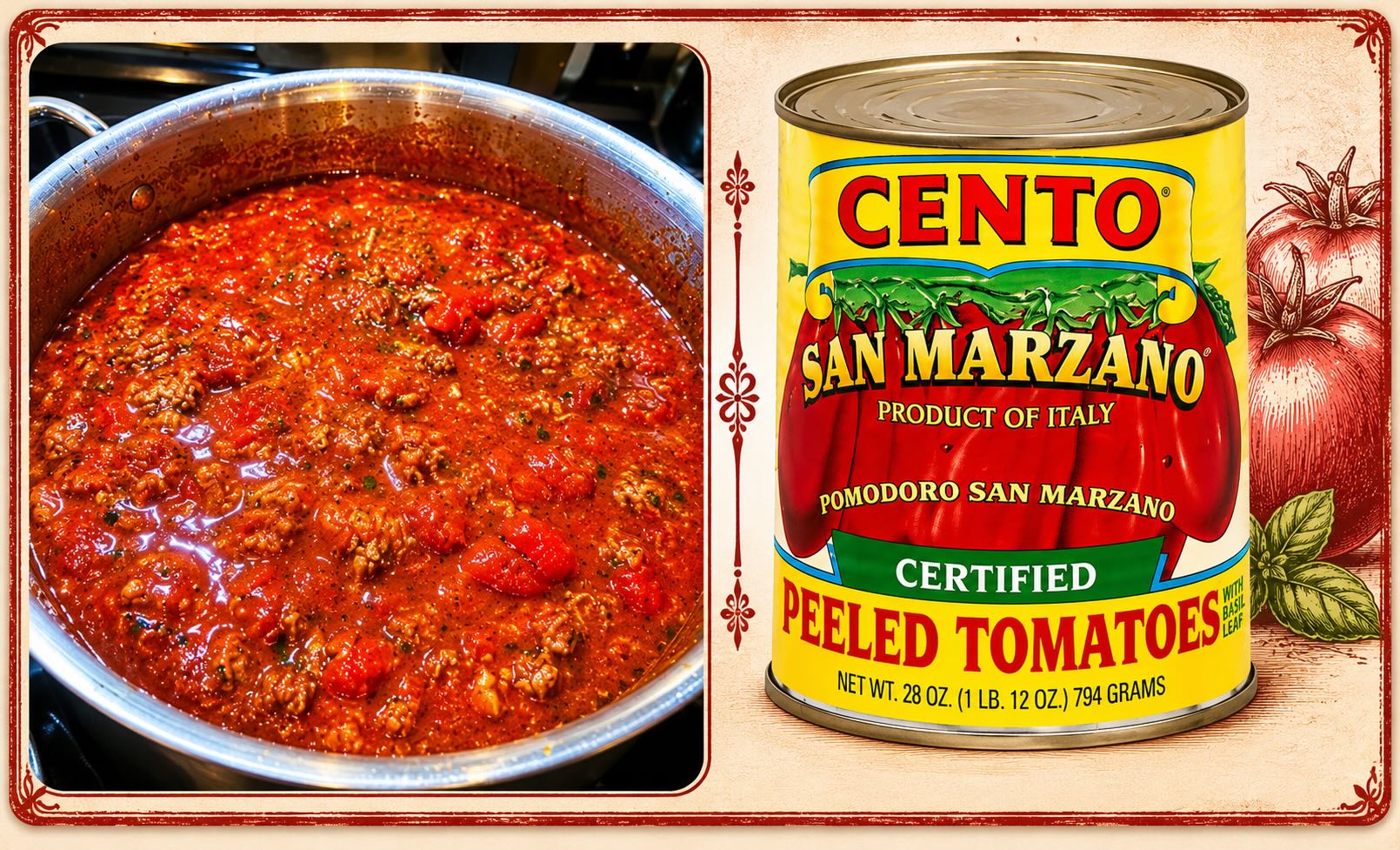
On the June 7, 2026 edition of The Roger Stone Show I took a few moments away from politics, government intrigue, and the endless spectacle that is modern American public life to reflect on something far more important to me. June 6, 2026 marked 10 years since my mother, Gloria Rose Corbo Stone, left this mortal coil. As I sat behind the microphone I found myself remembering not only the woman who gave me life, but the woman who gave me many of the qualities that have sustained me through triumph, adversity, persecution, and redemption. It was from my mother, and from my grandmother before her, that I inherited my grit, my resilience, my stubbornness, my toughness, and my faith. Like many people, I wandered from the Church at various points in my life, but I ultimately found my way back because of the foundation they laid. Whenever I begin preparing Sunday dinner, I think of them.
To Italians, Sunday dinner was never merely a meal. It was never simply about eating. Sunday dinner was an institution. It was a weekly reaffirmation of family, faith, continuity, and heritage. It was where stories were exchanged, lessons were learned, disputes were settled, and children discovered who they were and where they came from. Long before smartphones, social media, and 25 hour cable news transformed America into a nation of distracted spectators, Italian families gathered around a table and participated in something increasingly rare in modern life: genuine human connection. The centerpiece of that tradition was always the gravy. I know there are readers who insist on calling it sauce. God bless them. They are entitled to be wrong.
In my family it was always Sunday gravy. Rich, aromatic, slow simmered Sunday gravy. The fragrance would drift through the house for hours, announcing itself long before dinner was served. My grandmother made it. My mother made it. I make it today. The recipe appears in my book Stone’s Rules: How to Win at Politics, Business, and Style because it is one of the most valuable inheritances I possess. It is not merely a recipe. It is a family heirloom. Every pot contains memories. Every Sunday dinner contains history.
At the center of that recipe stands one immutable rule. The only acceptable tomatoes are San Marzano tomatoes. Not because they sound exotic. Not because they are fashionable. Not because some celebrity chef whispered their name into a camera lens while standing in a professionally lit test kitchen. I use San Marzano tomatoes because culinary truth, like political truth, exists whether fashionable opinion acknowledges it or not.
San Marzano is not a brand. It is not a marketing slogan. It is not a contrivance conceived by advertising executives in a Manhattan conference room. San Marzano is a place. A tangible, ancient agrarian reality. It is a small town in the Campania region of southern Italy situated near Mount Vesuvius. For centuries the surrounding volcanic soil has been enriched by mineral rich ash and trace elements deposited by the volcano. The soil is dark, fertile, loamy, and uniquely suited to the cultivation of extraordinary tomatoes. The result is not accidental. It is the product of geography, tradition, discipline, and stubborn fidelity to ancestral methods.
San Marzano tomatoes are elongated and plum-shaped. Their flesh is dense and unctuous. Their seed cavities are sparse. Their skins are thin and compliant. Their flavor achieves a remarkable equilibrium of sweetness, acidity, and depth. Nothing shrill. Nothing cloying. Nothing coarse. Only richness, resonance, and composure. The tomato intended for serious gravy has always been the plum tomato. Not a slicing tomato. Not a beefsteak tomato. Not some watery supermarket variety bred for appearance rather than substance. Plum tomatoes are cultivated for concentration and structure. Among plum tomatoes, San Marzano occupies an almost sacred status.
Like so many things in life, authenticity matters. That lesson extends far beyond the kitchen. We live in an age drowning in imitation. Artificial intelligence generates artificial prose. Politicians manufacture artificial personas. Corporations create artificial narratives. News organizations frequently present artificial realities. Everywhere one looks there are substitutes masquerading as the genuine article. The same disease has infected the grocery store.
Walk down the canned tomato aisle and you will encounter a carnival of imposters. Labels adorned with Italian flags. Packages decorated with vaguely Mediterranean imagery. Clever phrases such as “San Marzano Style,” “Italian Type,” or “Inspired by San Marzano.” These marketing euphemisms are designed to create the illusion of authenticity without delivering the substance. As we say in Italian-American circles, it’s a fugazi. These tomatoes may be grown thousands of miles away under entirely different conditions. They do not share the soil. They do not share the seeds. They do not share the methods. Most importantly, they do not share the soul.
Genuine San Marzano tomatoes are protected under a designation known as Denominazione di Origine Protetta (DOP), meaning Protected Designation of Origin. This certification guarantees that the tomatoes were grown in a legally defined region using approved cultivars and traditional methods. If the can lacks that designation, you are not buying authentic San Marzano tomatoes. You are buying an imitation.
Can such imposters produce something edible? Perhaps. Can they produce greatness? Never.
My mother’s recipe itself is not complicated. Like many great things in life, its genius lies in simplicity. Genuine San Marzano tomatoes form the foundation. The gravy combines beef, pork, and veal in equal measure, simmered slowly with olive oil, garlic, onion, basil, and a whisper of red pepper. There are no gimmicks. There are no shortcuts. There are no culinary fads. The meat enriches the gravy over hours of patient cooking until the entire house is filled with an aroma capable of summoning memories from half a century ago. The recipe is less a list of ingredients than a lesson in discipline. The secret ingredient, as my mother demonstrated every Sunday, is time.
When genuine San Marzano tomatoes are gently coaxed together with olive oil, garlic, basil, and patience, they undergo an alchemical transformation. They do not collapse into thin soup. They evolve into gravy. Silken. Luminous. Redolent. Rich. A substance that clings to pasta with aristocratic dignity rather than sliding off in watery surrender. My mother’s gravy simmered for hours because she understood something much of modern America has forgotten. Excellence requires effort. Quality requires standards. Traditions survive only when they are respected and defended. She did not consult celebrity chefs. She did not chase trends. She did not believe that newer automatically meant better. She trusted the accumulated wisdom of generations.
The older I become, the more I appreciate how much of my character was shaped by the women who raised me. My mother and grandmother endured hardships that would leave many modern Americans curled into the fetal position demanding therapy, medication, and government intervention. They faced adversity with courage. They practiced their faith without fanfare. They worked hard. They loved deeply. They expected excellence from themselves and from those around them.
Whenever I make Sunday gravy, I am reminded of those lessons. I hear my mother’s voice. I remember her laughter. I remember her strength. I remember the countless Sundays gathered around a table surrounded by family. Most importantly, I remember where I came from.
Ten years after her passing, Gloria Rose Corbo Stone continues to influence my life every Sunday afternoon. Her recipe remains unchanged. Her standards remain intact. Her lessons remain relevant. In gastronomy, as in politics, as in faith, as in civilization itself, shortcuts produce decay while standards produce permanence. That is why I still make my mother’s Sunday gravy. That is why I insist on genuine San Marzano tomatoes. That is why no substitute will ever suffice. And that is why the last honest tomato still matters.
May God bless my mother, Gloria Rose Corbo Stone. May God bless all the mothers and grandmothers who pass down traditions worth preserving. And may there always be a pot of Sunday gravy simmering somewhere in America, reminding us that some things are simply too valuable to surrender to convenience, fashion, or imitation.

