

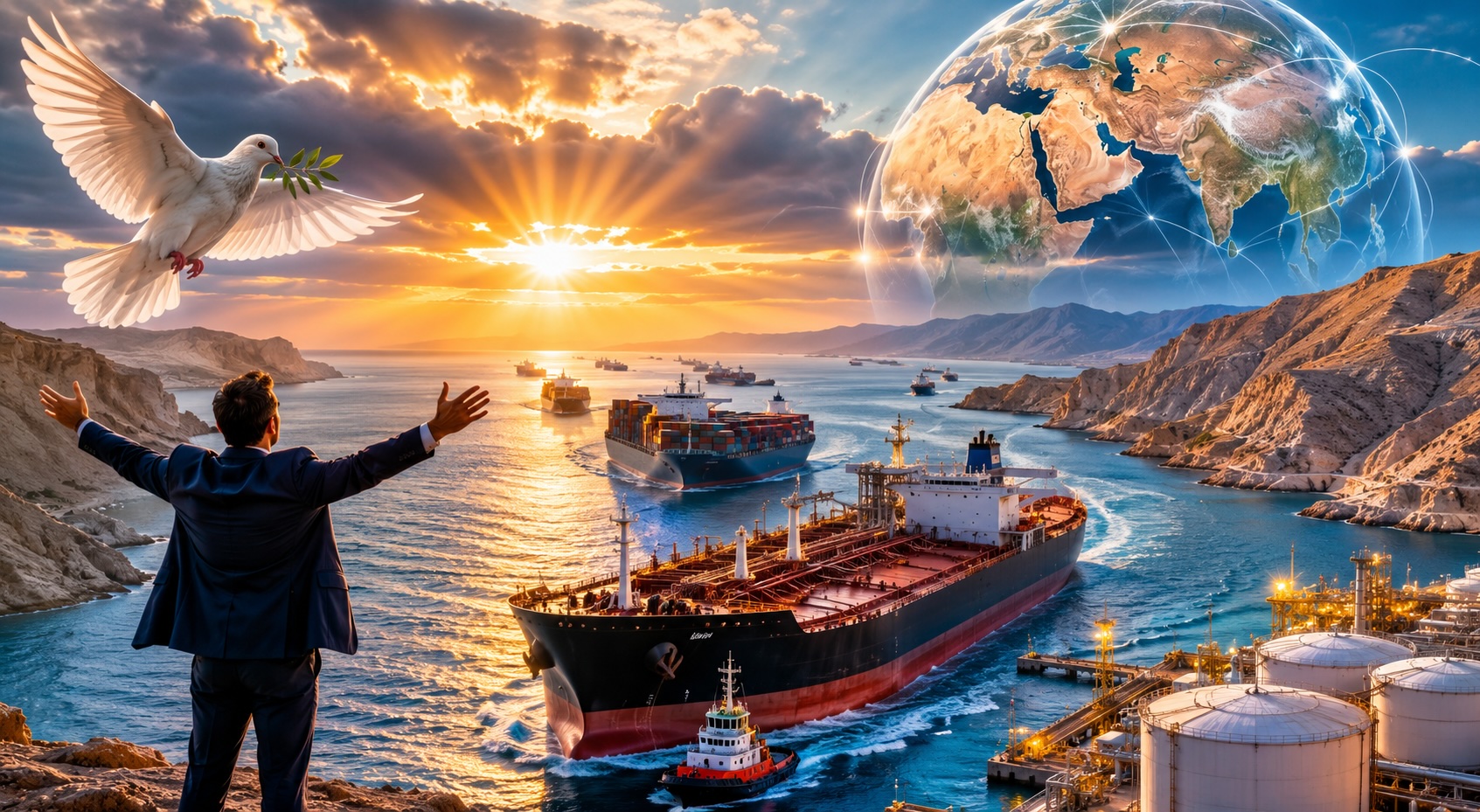
For the better part of four months, the world economy has been living under a dark cloud. The closure of the Strait of Hormuz threatened to trigger the greatest energy shock since the Arab oil embargo of the 1970s. Roughly one fifth of the world’s seaborne oil supply and a significant portion of global liquefied natural gas transit through this narrow maritime corridor separating the Persian Gulf from the Gulf of Oman. When traffic through the strait slowed to a trickle, markets shuddered, energy prices surged, and economists began openly discussing the possibility of a global recession.
Today, however, there is reason for cautious optimism. President Donald Trump announced that oil tankers are once again moving through the Strait of Hormuz and that ships carrying vital energy supplies are beginning to emerge from the Gulf. Markets reacted immediately. Oil prices fell sharply and investors welcomed what appears to be the first meaningful step toward restoring stability to one of the world’s most important trade routes.
This development should not be underestimated. The average American may never see the Strait of Hormuz on a map, but every American feels its effects. The price of gasoline, diesel fuel, airline tickets, groceries, home heating, and manufactured goods are all influenced by the uninterrupted flow of energy through this strategic chokepoint. When oil cannot move, economies slow. When economies slow, families suffer.
The Strait of Hormuz has long been one of the most strategically significant waterways on Earth. Barely twenty miles wide at its narrowest point, it serves as the gateway through which Gulf oil reaches world markets. For decades military planners, diplomats, and energy experts have warned that any disruption there could have profound consequences for the global economy. Those warnings proved correct.
When conflict erupted earlier this year and shipping through the strait became increasingly dangerous, energy markets immediately responded. Oil prices climbed. Insurance costs skyrocketed. Tankers were stranded. Supply chains were disrupted. Governments around the world scrambled to secure alternative sources of fuel. The effects rippled across continents. Factories reduced production. Transportation costs rose. Inflationary pressures intensified. Countries heavily dependent on imported energy found themselves confronting difficult economic choices.
What made the situation particularly dangerous was that it demonstrated how fragile modern globalization has become. An incident in a narrow stretch of water thousands of miles away can affect families filling their gas tanks in Florida, truck drivers delivering goods in Ohio, and manufacturers operating in Texas.
The world economy remains interconnected in ways that many Americans rarely consider. That is why the reopening of the Strait of Hormuz matters. It represents more than the movement of ships. It represents the restoration of confidence. Markets thrive on certainty. Businesses invest when they know what tomorrow will bring. Consumers spend when they believe prices will remain stable. Investors commit capital when geopolitical risks appear manageable.
The reopening of this critical maritime artery signals that the worst-case scenario may have been avoided. Credit should be given where credit is due. Throughout this crisis, President Trump consistently emphasized the importance of restoring freedom of navigation and maintaining stability in global energy markets. His administration understood that prolonged disruption would not only harm America’s allies but would also impose significant costs on American consumers.
Critics frequently mock the President’s focus on energy prices. They should not. Energy is the lifeblood of modern civilization. Every product that reaches a store shelf, every airplane that leaves a runway, every tractor that harvests a field, and every truck that delivers food to a supermarket depends on affordable and reliable energy. When energy prices spike, the consequences are felt throughout the economy. When they decline, working families benefit.
To be clear, the situation remains far from normal. Shipping companies remain cautious. Some vessels are still waiting for assurances regarding security. Insurance rates remain elevated. Analysts warn that a complete return to pre-crisis conditions could take months rather than weeks.
Nevertheless, the trajectory is encouraging. The world is witnessing the first substantial signs that one of the most dangerous economic disruptions in recent memory may finally be easing.
There is another lesson here that Washington should remember: for years, America was told that energy independence was outdated, unnecessary, or environmentally irresponsible. We were told that reliance on foreign energy sources posed no significant risk. The events of the past several months have exposed that fantasy. A nation that cannot produce sufficient energy is vulnerable. A nation dependent upon unstable regions for critical resources sacrifices both economic security and strategic flexibility.
The United States possesses enormous energy resources. We have the ability to produce oil, natural gas, coal, and nuclear power at levels that would have astonished previous generations. Energy abundance strengthens national security. Energy abundance lowers costs. Energy abundance protects American families from geopolitical turmoil occurring thousands of miles away.
As ships once again navigate the Strait of Hormuz, Americans should welcome the development while remembering the lessons it has taught. The global economy remains vulnerable. Strategic chokepoints still matter. Strong leadership still matters. And energy security remains inseparable from national security. The world may have avoided an economic catastrophe. That alone is cause for gratitude. Now comes the harder task of ensuring that America never finds itself so exposed to the decisions of hostile regimes and distant conflicts again.

