

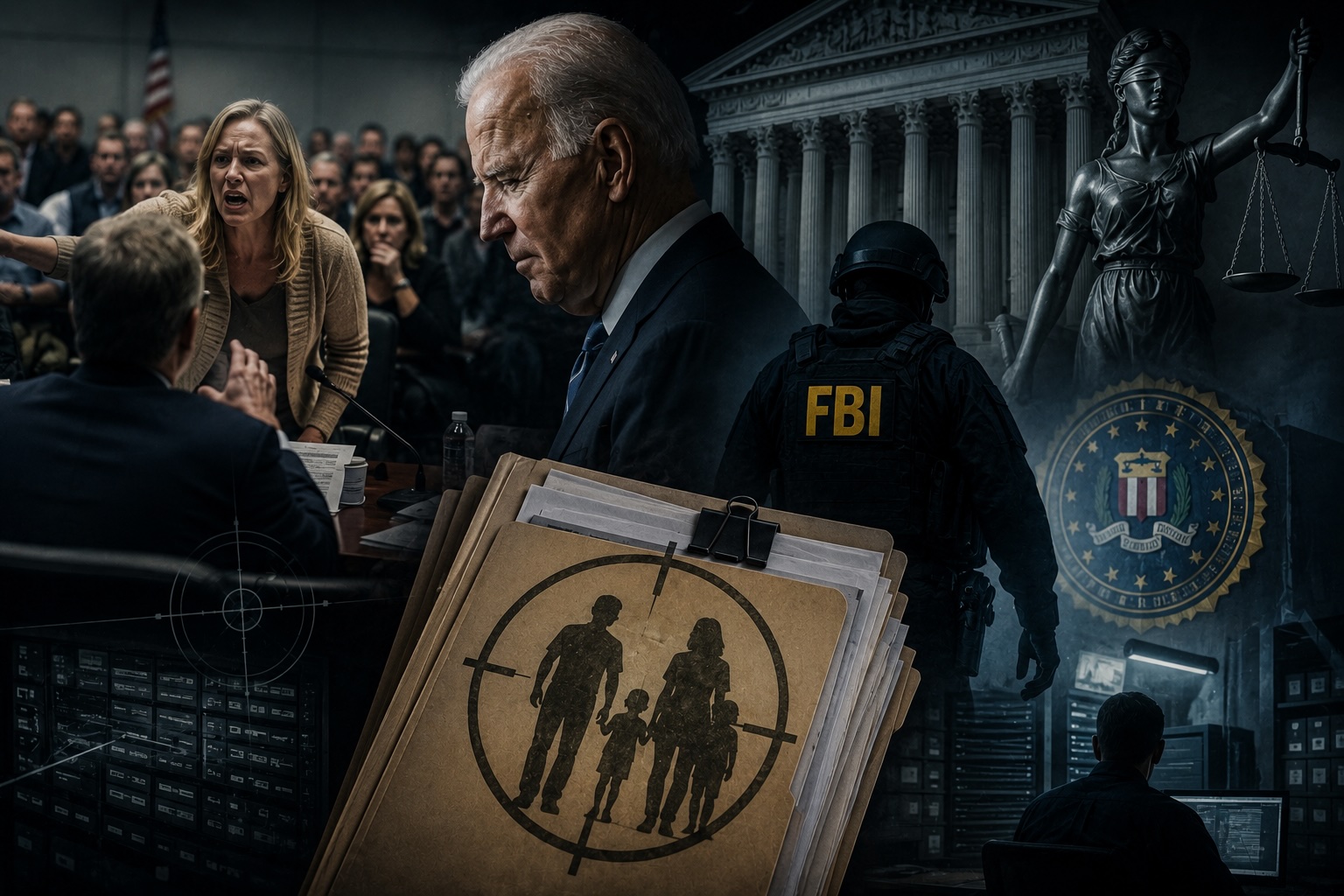
After Democrats took control of the White House in 2020, the administration implemented a wide range of controversial mandates across multiple policy areas, which often prompted strong concerns from parents and local officials regarding the federal government’s involvement in education and local control.
In October 2021, the FBI’s Counterterrorism and Criminal Divisions created and implemented a dedicated threat tag labeled “EDUOFFICIALS” to track school board-related cases nationwide.
This followed Attorney General Merrick Garland’s memorandum dated October 4, 2021. The memo directed the FBI and U.S. Attorneys’ offices to address reported increases in harassment, intimidation, and threats of violence against school administrators, board members, teachers, and staff. This was reported by the New York Post in its recent coverage of newly released FOIA documents.
The memorandum was issued shortly after the National School Boards Association (NSBA) sent a letter to President Biden on September 29, 2021. That letter described disruptions and threats at school board meetings, frequently connected to debates over COVID-19 masking policies, curriculum issues, and school re-openings.
The six page document suggested that some incidents could constitute domestic terrorism or hate crimes and requested federal assistance, including potential use of tools such as the Patriot Act.
America First Legal through FOIA litigation, later obtained documents released in 2025, revealing extensive White House coordination and political orchestration behind the memo. These records show that on October 1, 2021, White House officials were already pressing the DOJ for action in response to the NSBA letter.
Internal emails indicate DOJ officials noted the challenge of “finding a federal hook” but concurred on the White House outreach for assistance. On October 2, senior DOJ political appointees, including Sparkle Sooknanan, directed Civil Rights Division attorneys to urgently identify legal authorities to address the issue over the weekend.
Career attorneys in the Civil Rights Division repeatedly warned that there was no clear federal authority for targeting parents and that much of the activity involved speech protected by the First Amendment.
Despite these objections, political leadership bypassed normal clearance and coordination processes. They issued the memo on October 4, driven by political priorities rather than standard law enforcement protocols. This shifted certain local school board matters into national law enforcement priorities.
Nevertheless, newly released internal records obtained through FOIA requests by America First Legal in 2026 show reservations from within the FBI prior to the memo’s issuance. On the day Garland issued the directive, then-FBI Deputy Assistant Director Jay Greenberg emailed DOJ officials noting that the bureau was “not on the same page” with investigators. He cited coordination issues and requested additional time to develop a unified approach.
Just days later, on October 8, 2021, Garland’s chief of staff Peter Hyun documented a conversation with Jonathan Thompson of the National Sheriffs’ Association. Thompson reported that sheriffs nationwide had not observed or received reports of widespread threats to school boards. He noted the absence of prior coordination from the FBI or DOJ and questioned the federal role in what were primarily local issues. Subpoenaed materials and surveys from the U.S. Attorneys’ offices similarly indicated limited evidence of a broad national crisis.
Nevertheless, implementation of the memorandum continued.
On October 20, 2021, the FBI’s Counterterrorism and Criminal Divisions directed personnel to apply the “EDUOFFICIALS” tag to investigations and assessments involving threats against school board administrators, board members, teachers, and staff. The purpose was to enable national-level analysis and coordination.
Subsequent whistleblower disclosures and House Judiciary Committee investigations found that the tag was applied to approximately 25 Guardian assessments across nearly every FBI region. Some of these involved parents’ speech and attendance at school board meetings.
A March 2023 interim staff report by the House Judiciary Committee and its Select Subcommittee on the Weaponization of the Federal Government stated that, as a result of Garland’s directive, the Biden Administration misused federal law-enforcement and counterterrorism resources, including the FBI’s Counterterrorism Division and the newly created EDUOFFICIALS threat tag, to examine activity that included protected First Amendment expression.
The report concluded there was “no legitimate nationwide basis” for the memo and that it chilled parents’ speech. It cited subpoenaed documents showing the FBI opened dozens of investigations (disclosed as at least 25 “Guardian assessments”) under the EDUOFFICIALS tag, many of which did not result in federal charges.
Congressional oversight by House Republicans, through the House Judiciary Committee and its Select Subcommittee on the Weaponization of the Federal Government, along with Senate Judiciary Republicans including Sens. Ted Cruz (R-TX) and Chuck Grassley (R-IA), produced multiple reports, letters, and subpoenas documenting the scope of the effort.
These materials, including subpoenaed internal DOJ documents, revealed internal discussions questioning aspects of Garland’s October 4, 2021 memo. Many officials described elements as politically damaging or unwise, while law enforcement partners, including the National Sheriffs’ Association which noted that most incidents were local matters best handled by local police rather than federal authorities.
Documents also indicated White House coordination with the NSBA in relation to the DOJ’s drafting process.
The NSBA later issued an apology for portions of its letter, withdrew the domestic terrorism framing, and saw several state associations distance themselves from the organization.
Garland’s memorandum was not rescinded. In congressional testimony, Garland maintained that the effort focused solely on true threats and violence, not on protest, and that FBI agents would not attend school board meetings.
The newly released 2026 FOIA documents have prompted renewed congressional and public scrutiny, particularly regarding the handling of internal warnings from FBI professionals and local law enforcement leaders.
This episode has intensified longstanding debates over the appropriate role and proper boundaries of federal law enforcement in local education matters, the protection of parental rights in public forums, and the importance of institutional impartiality.
In response to the National School Boards Association’s September 2021 letter; which labeled certain parental protests as potential domestic terrorism, federal authorities directed the FBI’s Counterterrorism Division to deploy specialized threat-tracking tools, including the “EDUOFFICIALS” tag originally intended for national security threats. These tools were applied to parents at school board meetings, drawing widespread criticism as disproportionate overreach.
Such measures raised concerns about potential violations of core constitutional protections, particularly the First Amendment’s guarantees of free speech, assembly, and the right to petition government officials. By framing routine civic participation as a potential threat requiring counterterrorism scrutiny, the actions risked chilling lawful dissent and eroding public trust in federal institutions.
Oversight findings ultimately demonstrate an important truth. While genuine threats must be addressed promptly, public institutions must exercise restraint and precision to avoid infringing on protected speech and the foundations of constitutional liberties.
Under the Biden administration, the DOJ de-emphasized traditional prosecutions in favor of directing resources inward. Rather than focusing primarily on conventional law enforcement priorities, it applied counterterrorism tools in an attempt to overgovern parents voicing objections at school board meetings, many of whom opposed prevailing COVID-19 policies and related mandates.

