

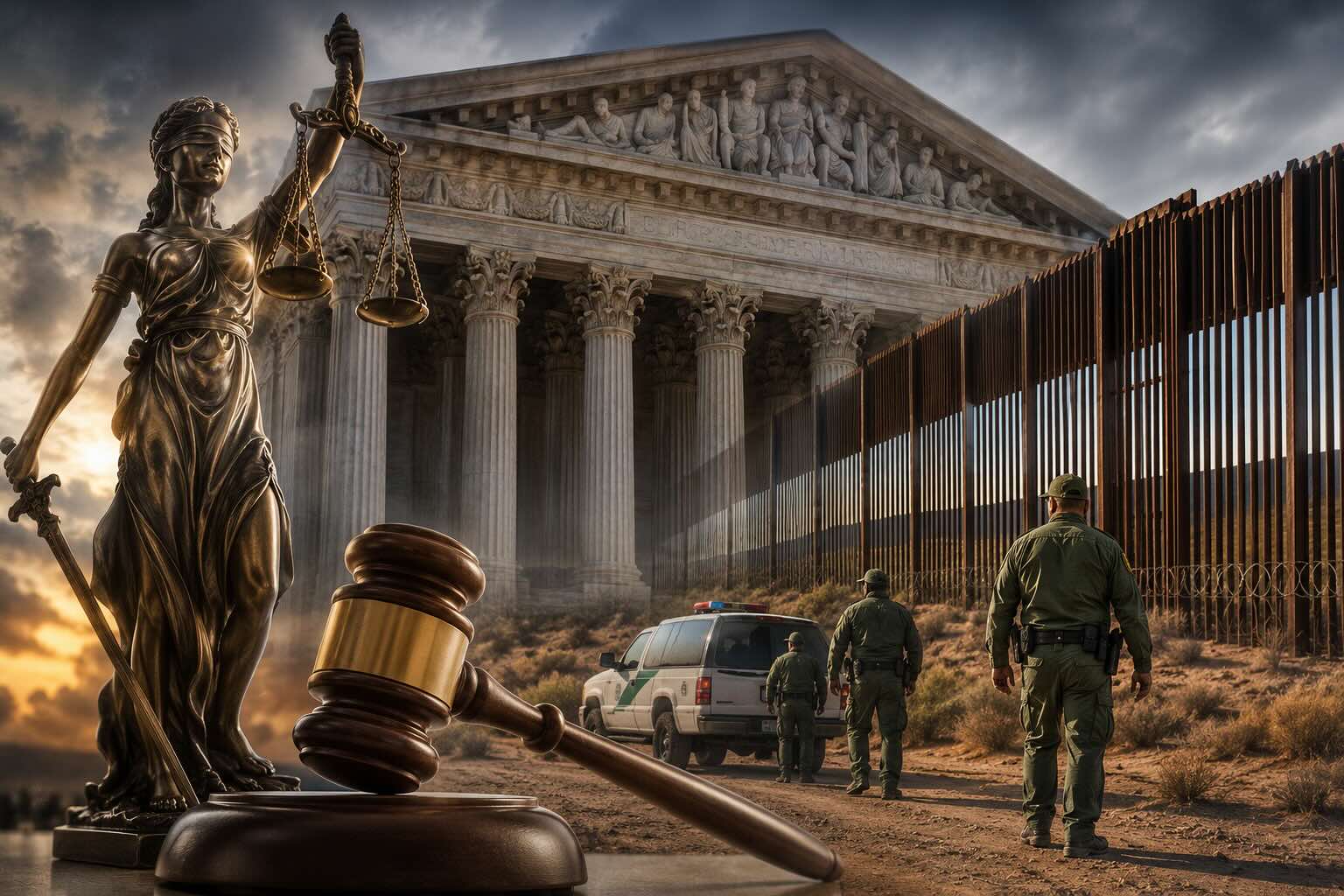
In a 6-3 decision, the Supreme Court ruled today that the federal government may legally limit the number of asylum seekers processed at ports of entry along the U.S.-Mexico border.
The Court held that migrants standing on the Mexican side have not yet “arrived in the United States” under the Immigration and Nationality Act (INA), so they are not entitled to immediate inspection or to apply for asylum until they physically cross the border.
The policy originated under the Obama administration in 2016 in response to a surge of Haitian migrants overwhelming the San Ysidro port of entry. It was later expanded and used by the first Trump administration to manage capacity at border crossings.
Lower courts had previously blocked it, but the Supreme Court overturned those rulings, clearing the way for the Trump administration to potentially revive the practice during future surges.
Justice Alito’s Majority Opinion:“In ordinary speech, no one would say that a person ‘arrives in’ a place—for example, a house, a city, or a country—before the person enters that place. The context in which the phrase ‘arrives in the United States’ is used in the immigration statutes at issue here supports an ordinary-meaning reading.”
The Court rejected the argument that simply presenting oneself at the border from Mexico counts as “arriving in” the U.S. It also noted that metering only delays entry — it does not permanently bar anyone from seeking asylum later — and serves practical needs like preventing overcrowding.
Background on the Core Statutory Language:
Justice Alito’s focus on the phrase “arrived in the United States” directly addressed the central legal question that brought the case to the Supreme Court in the first place.
The dispute, Mullin v. Al Otro Lado (formerly Noem v. Al Otro Lado), turned on the interpretation of that exact verbiage in the Immigration and Nationality Act (INA), specifically provisions like 8 U.S.C. §§ 1158(a)(1) and 1225(a) that grant asylum eligibility and inspection rights to those who “arrive in” the United States.
Lower courts, including the Ninth Circuit had previously sided with challengers, holding that migrants who present themselves at a port of entry, even if physically stopped on the Mexican side, had legally “arrived,” triggering mandatory processing.
The Supreme Court reversed this, adopting a plain text, commonsense reading that physical entry into U.S. territory is required. The Court essentially ruled that migrants on the Mexican side of the border have not yet “arrived in the United States” under the INA. Therefore, they are not entitled to immediate inspection or asylum processing at that moment.
Justice Thomas’s Concurrence:
Justice Clarence Thomas wrote a separate concurring opinion, reinforcing the majority’s textualist approach while emphasizing broader principles of statutory interpretation and judicial restraint.
Justice Sotomayor’s Response:The three liberal justices dissented. Justice Sonia Sotomayor read her dissent from the bench — a rare step — and added extemporaneously that the ruling “regrettably and tragically extinguishes the light of the torch of the Statue of Liberty.”
What This Means for Asylum Seekers Now:
Metering does not eliminate the right to seek asylum, it simply restores the government’s ability to manage the flow at official ports of entry. Migrants who are turned away can wait in Mexico for their appointed processing time, attempt irregular crossings between ports, which carries higher risks and different legal consequences, or pursue other pathways.
Once individuals physically enter the United States and are inspected, they remain eligible to apply for asylum by demonstrating a well-founded fear of persecution (or past persecution) on account of one of five protected grounds under U.S. law: race, religion, nationality, membership in a particular social group, or political opinion.
For example, claimants who can credibly prove persecution based on race, such as targeted violence, discrimination, or harm tied to ethnic or racial identity in their home country, can still qualify.
Successful claims typically require detailed evidence, including personal testimony, country condition reports, and corroborating documents. Asylum officers or immigration judges then assess “credible fear” in initial screenings before full merits hearings.
This ruling gives the administration more tools to control surges at legal entry points while preserving core statutory protections for real refugees.

