

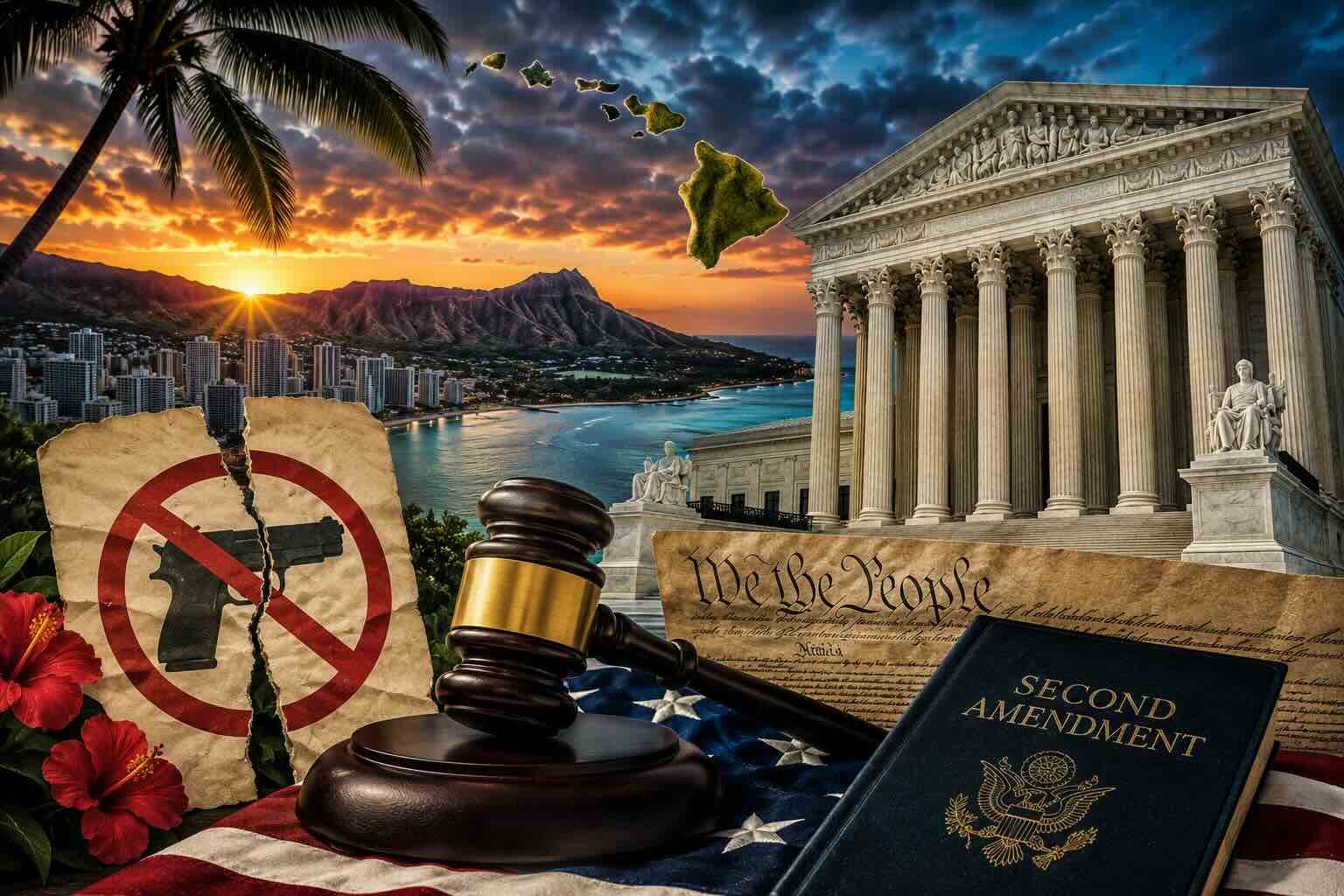
Hawaii’s infamous “vampire rule” just got staked by the Supreme Court.
In the second major 6-3 ruling on June 25, 2026, Justice Samuel Alito wrote for the majority in Wolford v. Lopez (24-1046), striking down Hawaii’s 2023 law that required licensed concealed-carry permit holders to obtain explicit permission from property owners before bringing firearms into stores, hotels, shopping malls, gas stations, and other private properties open to the public.
The Supreme Court ruled that this presumptive ban, which treated armed citizens like vampires who needed a personal invitation before crossing the threshold, violates the Second Amendment.
Building squarely on the 2022 Bruen decision, the conservative majority held that Hawaii’s creative “default prohibition” lacked historical analogs and improperly burdened the core right to self-defense outside the home.
As Justice Alito wrote: “This regime hobbles what the Second Amendment protects: the right of Americans to carry arms for self-defense as they go about their daily lives.”
Challengers, including Maui gun owners Jason Wolford et al. and the Hawaii Firearms Coalition, argued that the presumption against carry on public-access private property lacked sufficient historical analogs and improperly burdened the core right to self-defense outside the home.
Hawaii defended the law as protecting private property rights, asserting that an invitation to shop or stay does not automatically include permission to carry a gun.
The state passed the measure after Bruen expanded concealed-carry permits, aiming to let businesses and owners control weapons on their premises. Lower courts had largely upheld it before the Supreme Court intervened.
The majority, consisting of the six Republican-appointed justices, viewed the regulation as impermissibly relegating the Second Amendment to second-class status.
Chief Justice John Roberts and Justice Samuel Alito, among others, drew comparisons to First Amendment protections, noting that governments cannot easily flip defaults to burden fundamental rights without clear historical support.
This decision does not affect Hawaii’s other gun restrictions, such as bans in parks, beaches, or alcohol-serving establishments. Owners can still prohibit guns by posting clear “no firearms” signs or communicating restrictions, preserving their ability to opt out.
Gun rights advocates are rightfully calling it a decisive victory, hailing the ruling as a significant victory that prevents states from undermining Bruen through creative default rules. It clarifies that licensed carriers generally enjoy the right to enter businesses open to the public while armed, unless owners actively object.
SCOTUS made it clear the Second Amendment doesn’t disappear when you walk into everyday public places.
The Trump administration supported the challengers, arguing the law was pretextual and targeted Second Amendment rights. Legal experts expect the decision to influence similar cases in other states.

