

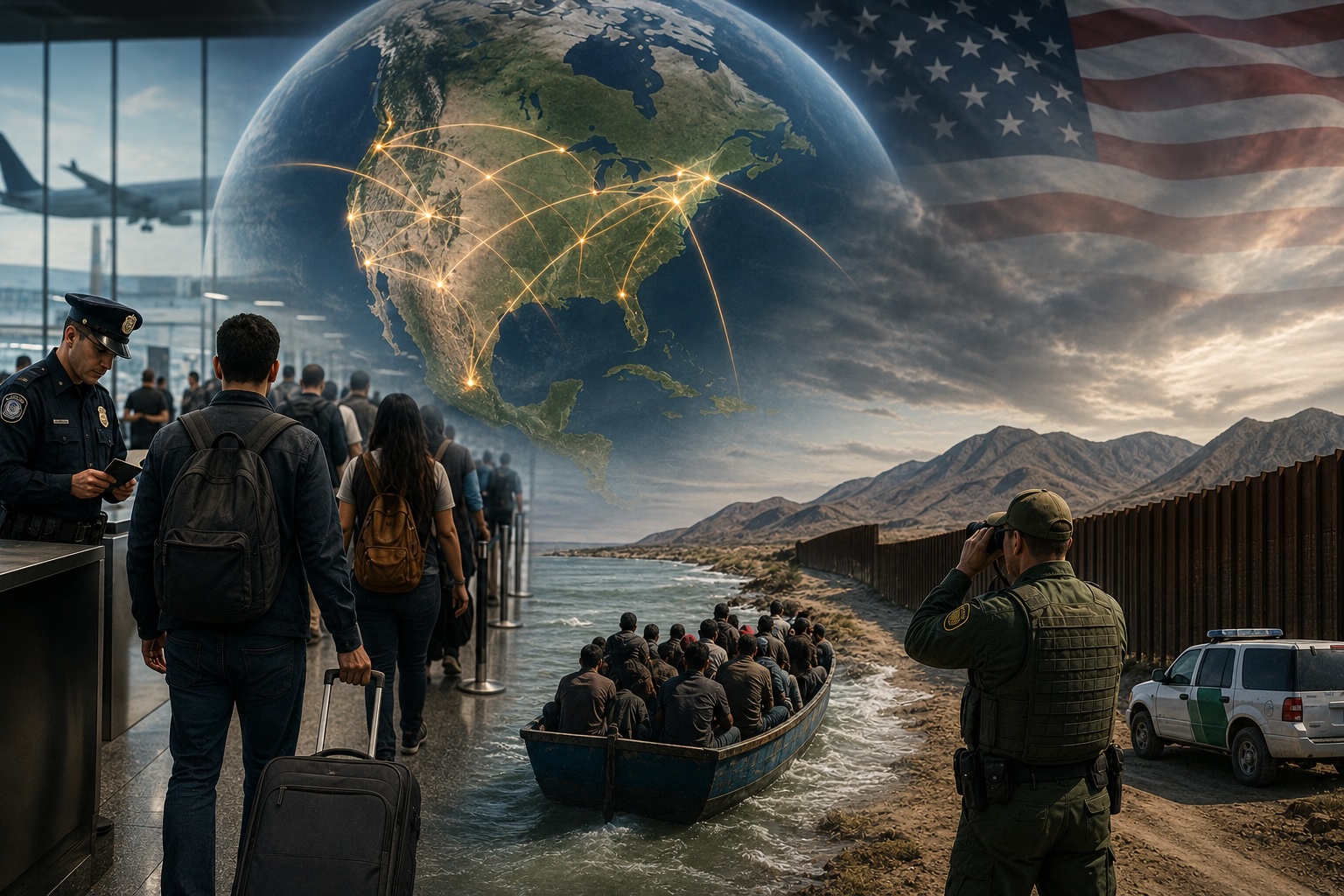
President Donald Trump has long understood something many Washington, D.C. bureaucrats never grasped. America’s border does not begin at the Rio Grande, Niagara Falls, JFK Airport, or along any of the unpatrolled areas along the Southwest border. It begins wherever our enemies begin planning to bring terrorists, narcotics, human traffickers, or deadly contraband toward the United States.
That is precisely the philosophy behind U.S. Customs and Border Protection’s (CBP) Office of International Affairs. While the agency recently highlighted its growing international partnerships on social media, this initiative deserves far more attention than a promotional post with a globe emoji. The concept is remarkably simple. Instead of waiting for dangerous people or cargo to arrive at our ports of entry (POE), CBP works with allied governments to identify and stop those threats overseas. Officers stationed at American embassies coordinate intelligence sharing, train foreign customs agencies, strengthen cargo screening, improve aviation security, and work with international partners to disrupt terrorist networks, fentanyl trafficking, human smuggling organizations, and transnational criminal enterprises before they ever reach American soil. This is common sense.
Every kilogram of fentanyl precursor intercepted in Asia is one less shipment reaching the Mexican cartels. Every terrorist identified by a European intelligence service before boarding a flight is one less threat confronting American law enforcement. Every human smuggling organization dismantled overseas means fewer illegal crossings at our southern border.
That does not mean Americans should blindly celebrate every international initiative coming out of Washington. International cooperation is only as effective as the governments involved. Some nations are dependable allies. Others struggle with corruption, weak institutions, or political agendas that do not always align with America’s interests. Intelligence sharing must always protect American sovereignty, and every partnership should be judged by measurable results rather than diplomatic press releases.
President Trump has consistently demonstrated that strong border security begins with strong leadership at home. Border walls, aggressive enforcement, ending catch and release, pressuring foreign governments to secure their own territory, and restoring respect for immigration law remain the foundation of any successful strategy. International partnerships should reinforce those policies, not replace them. America First has never meant America All Alone. When foreign governments are willing to stop terrorists before they board airplanes, intercept narcotics before they reach our hemisphere, or dismantle criminal organizations before they target American communities, that cooperation serves our national interest.
The true measure of success will not be hashtags or carefully staged photographs featuring international flags. The real questions are far more important. Are fentanyl shipments declining? Are terrorist travel routes being disrupted? Are human trafficking organizations being dismantled? Are Americans safer today than they were yesterday? Time will tell and and if the answer to those questions is yes, then CBP’s international mission deserves continued support and expansion. If not, no amount of diplomatic symbolism can compensate for failed security.
President Trump has repeatedly shown that protecting the American people requires layered defenses. A secure border begins with strong enforcement inside the United States, but it also means confronting our enemies long before they ever reach America’s doorstep. That is exactly where they should be stopped.

