

Daniel Ortega has held Nicaragua under dictatorial control for nearly two decades. On July 19, 2026, the 80-year-old leader used a speech commemorating the 47th anniversary of the 1979 Sandinista Revolution, the Marxist uprising he helped lead with Cuban backing, to declare there will be no more elections, openly dropping any remaining pretense of democracy.
“There will be no more elections,” Ortega declared, railing against his longtime adversary, the United States. “Parties put in place by the Yankees, put in place by the Somoza regime, coming back to power, that story is over.” He repeated emphatically: “Never, never, never.”
Ortega voiced strong solidarity with the regimes in Cuba and Venezuela, fiercely criticizing any potential U.S. military intervention in Cuba while denouncing the United States and “the empires, because there are empires everywhere.”
Ortega announced that his government would work with the Sandinista-controlled National Assembly to erect a “wall” or “barrier” of laws “against the coup plotters and the traitors,” ensuring that no matter how much money “the Yankees give them,” opposition forces “will never be able to return to government.”
Ortega has been a central figure in Nicaraguan politics since the 1979 Sandinista Revolution, which he helped lead with Cuban backing.
Ortega’s Time in Power:
1979–1985:
Member of the Junta of National Reconstruction (coordinator from 1980) — immediately after the Sandinista Revolution victory
1985–1990:
President of Nicaragua (elected in 1984). Defeated in the 1990 election.
1990–2007:
In opposition / out of power
2007–present:
President (re-elected in 2011, 2016, and 2021), ruling continuously since January 2007
February 2025–present:
Co-President with his wife Rosario Murillo after constitutional changes that extended terms and entrenched family control.
This marks an explicit end to even the facade of electoral competition. The next elections had been theoretically scheduled for November 2027
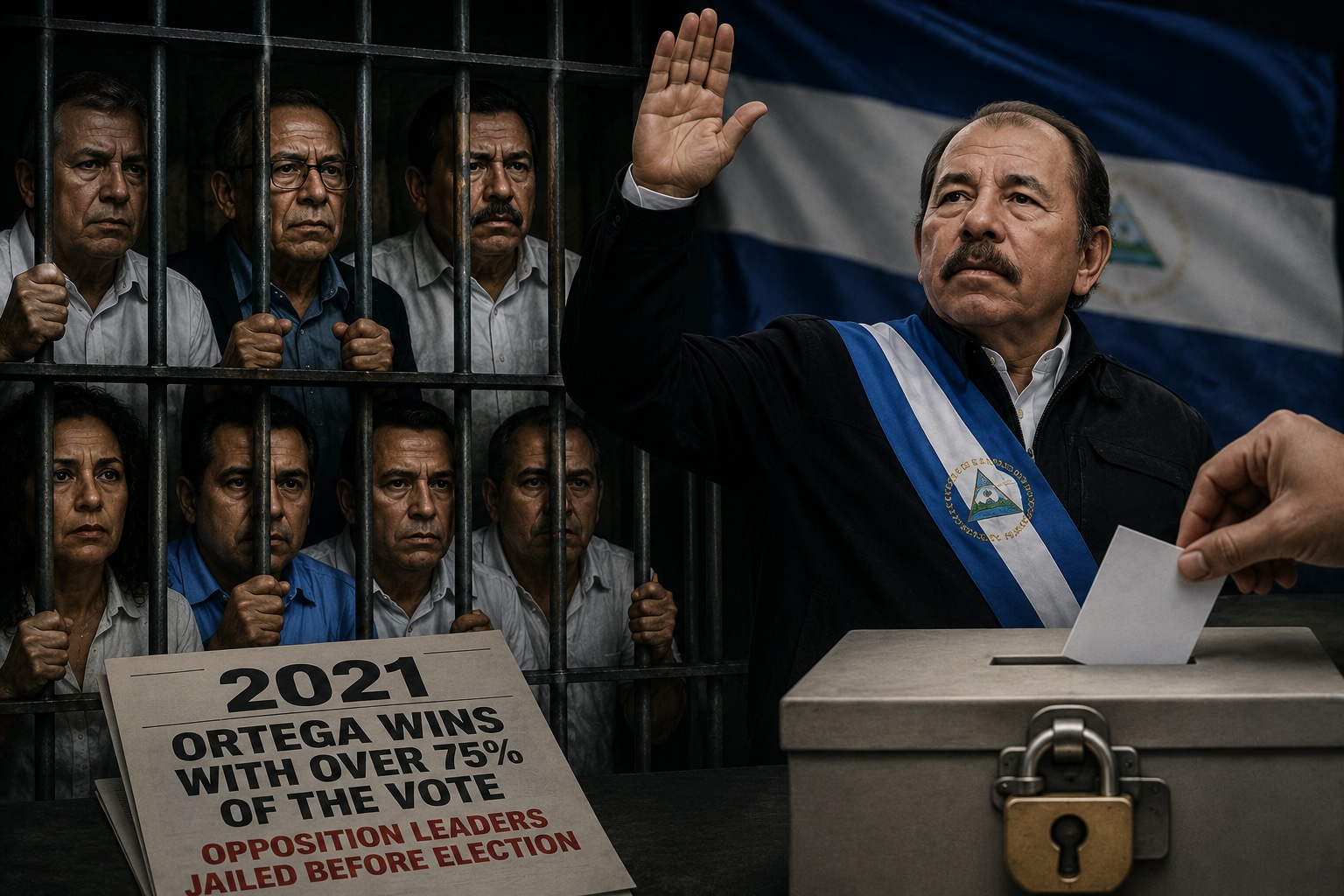
This is not Ortega’s first assault on democratic processes. In 2021, he declared himself the winner with over 75% of the vote after jailing nearly every viable opposition presidential candidate months before the election, a vote widely condemned as illegitimate internationally.
The Ortega-Murillo regime has long been described as a dictatorship and has faced repeated U.S. and UN sanctions for repression, corruption, and human rights abuses.
Opposition figures in exile and analysts see the announcement as a sign of weakness and further entrenchment of a family dynasty, with Ortega appearing frail in his rare public appearance after 61 days out of sight.
“There will be no more elections here for them to try to seize the government and seize power,” Ortega said, a clear admission that the ballot box will no longer serve even as a tool for the regime’s opponents.
Secretary of State Marco Rubio wasted no time in addressing the development. “The Trump Administration and the international community will not stand by as the Murillo-Ortega dictatorship deepens repression at home and manufactures instability that threatens U.S. national security. Ortega’s pledge to abolish elections in Nicaragua proves his cowardice and fear of the Nicaraguan people’s will.”

