

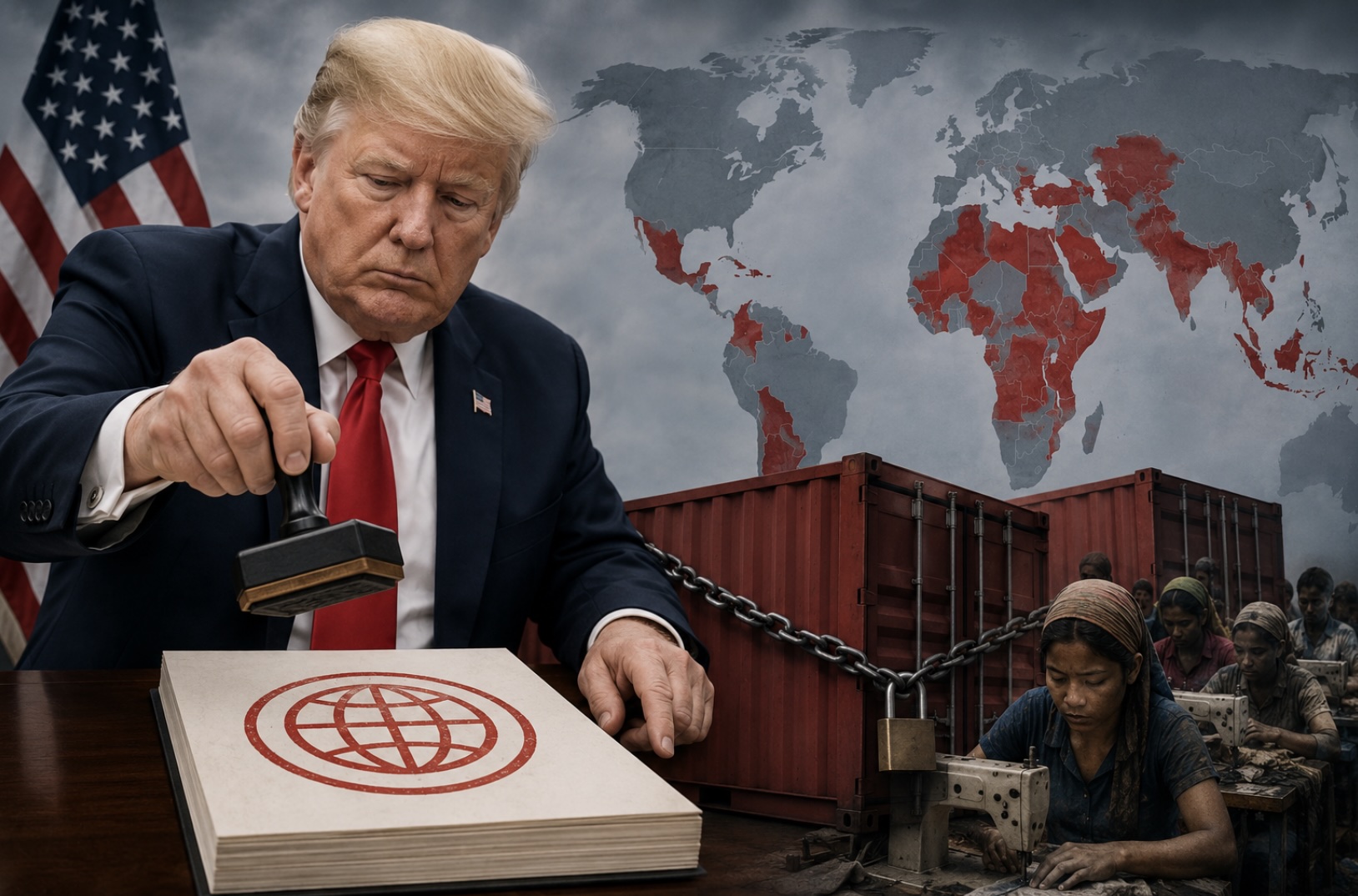
The Trump administration has imposed new tariffs of 10% to 12.5% on imports from 60 countries for their failure to ban or enforce prohibitions on goods made with forced labor.
U.S. Trade Representative Jamieson Greer announced the final action on July 23, 2026, under Section 301 of the Trade Act of 1974. The duties took effect at 12:01 a.m. ET on July 24, replacing the temporary global 10% tariffs that were set to expire that same day.
U.S. trade officials sorted the 60 economies into three groups based on their forced-labor import rules:
Seventeen countries that have introduced even partial restrictions face a flat additional 10% tariff. These are: Argentina, Bangladesh, Cambodia, Canada, Ecuador, El Salvador, Guatemala, Honduras, India, Indonesia, Jordan, Malaysia, Mexico, Pakistan, Sri Lanka, Trinidad and Tobago, and the United Kingdom.
Five economies, the European Union, Taiwan, Japan, South Korea, and Switzerland, face product-specific rates between 10% and 12.5%.
Thirty-eight economies, the largest group, received the highest levy of 12.5% after officials concluded they had neither enacted nor properly enforced bans on forced-labor imports. China falls into this 12.5% group.
The lower rate serves as an incentive for countries already taking steps against forced-labor goods, while the higher rate applies to those that have not.
The Trump administration has noted that the United States has barred imports made with forced labor for nearly a century and strictly enforces the rule through U.S. Customs and Border Protection.
Greer stressed that trading partners need to follow suit, arguing that products made under exploitative conditions are both a human rights abuse issue and an unfair trade practice that gives foreign competitors an edge, hurts American workers, and distorts global markets, stating.
Certain products are exempt from the new duties, including informational materials, donations, personal baggage, items already subject to Section 232 tariffs, select raw materials critical to domestic supply, energy products, some pharmaceuticals, and other goods officials determined would not further the policy aims. The full list appears in the related Federal Register notice.
The mere threat of tariffs has already pushed countries such as India to tighten their rules. Import bans, even when imperfect, raise awareness and put pressure on supply chains. The International Labour Organization estimates that tens of millions of people worldwide remain trapped in forced labor.
This action builds on the President’s America First agenda. Earlier steps by the administration, particularly the forced-labor provisions secured in the USMCA during Trump’s first term and the continuing effort to embed comparable prohibitions in new trade agreements, have shaped this broader initiative aimed at restoring balanced trade, strengthening American manufacturing, and confronting unfair trade practices.
Other Section 301 investigations remain underway, including one examining overproduction by certain economies that could result in additional measures.

