

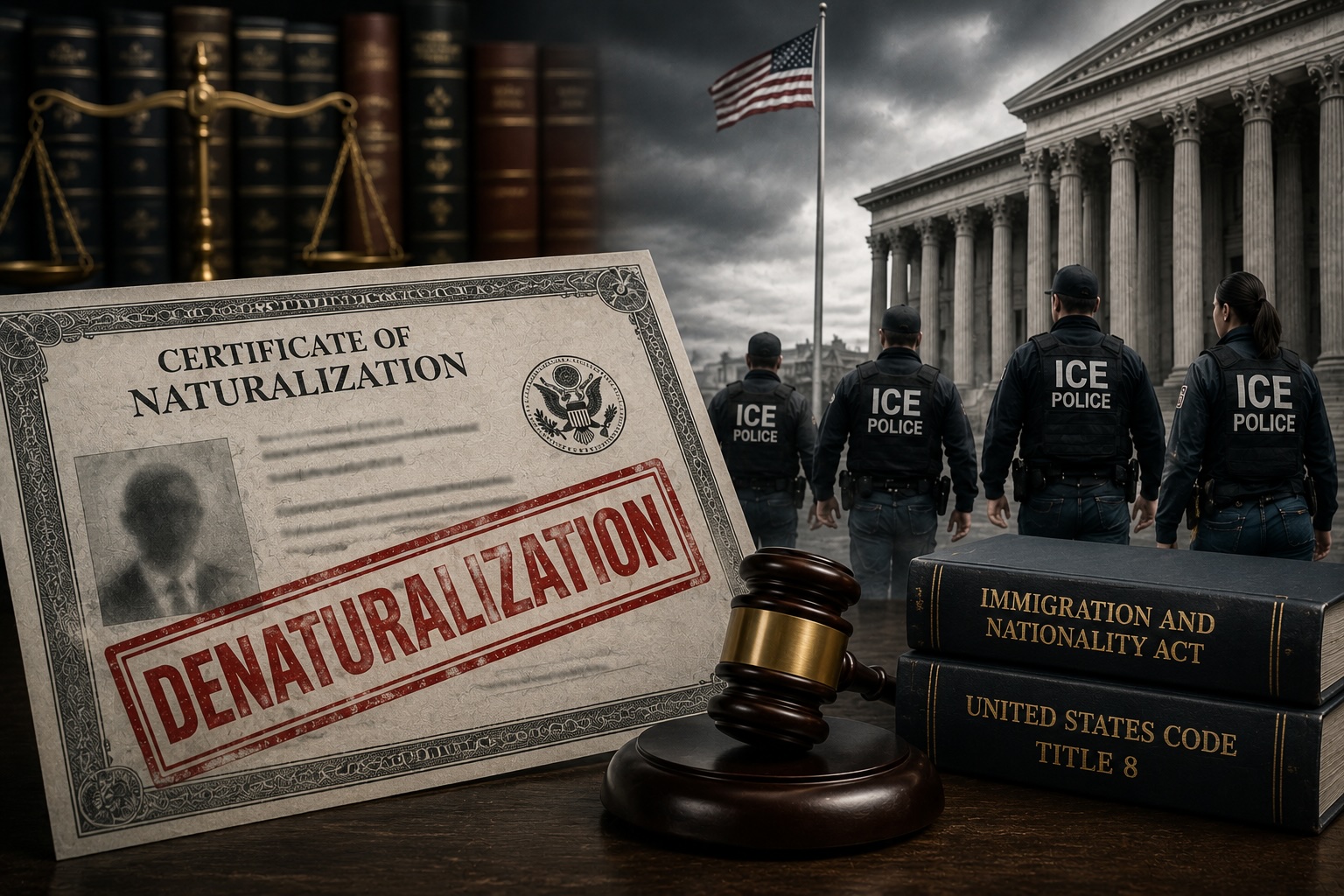
Denaturalization has always been possible under the Immigration and Nationality Act. For decades, however, prosecutors have treated it as a last resort, largely reserved for war criminals, spies, and those linked to terrorism.
The law is clear under Section 340(a) of the Immigration and Nationality Act (8 U.S.C. § 1451(a)): if someone obtained citizenship illegally or through concealment of a material fact or willful misrepresentation, the government can ask a federal judge to revoke the order of naturalization and cancel the certificate.
The Trump administration is intensifying efforts against naturalized U.S. citizens who concealed criminal records or lied on their citizenship applications.
On July 20, the Department of Justice announced it had filed denaturalization actions against 10 individuals accused of serious offenses, including child sexual abuse, health care fraud, and drug trafficking.
Two weeks later, on August 3, the DOJ announced a second, larger batch of 25 cases filed between July 20 and August 3 against individuals accused of attempted first-degree murder, assault with a deadly weapon with intent to kill, aggravated assault and battery, and aggravated sexual assault of a child.
The official release, titled “Justice Department Files Record 25 Denaturalization Cases Against Naturalized Criminals Including Attempted Murderers, Spousal Abusers, and Child Sex Offenders,” details complaints filed between July 20 and August 3 against individuals from 17 countries.
According to the release, these people secured their citizenship through fraud or by concealing everything from child sex abuse and attempted murder to drug trafficking, major fraud schemes, identity fraud, and domestic violence.
Since President Donald J. Trump returned to office on January 20, 2025, the department has filed 123 civil denaturalization complaints, the most in recorded history.
In the past, fewer than a dozen per year would occur. Between 1990 and 2017 the government averaged about 11 cases a year.
Justice Department leadership issued an internal memo in June 2025 directing civil litigators to prioritize these cases, and by December 2025 USCIS was told to start referring up to 200 potential files a month. It was issued by Assistant Attorney General Brett A. Shumate and is titled “Civil Division Enforcement Priorities.”
Previously, most civil denaturalization cases were handled by a small specialized unit inside the Justice Department’s Office of Immigration Litigation (OIL) in Washington, D.C. That unit coordinated and often litigated the cases, sometimes with local U.S. Attorney’s Offices assisting.
Now, to handle the much larger volume, the DOJ is spreading the cases out to civil prosecutors around 39 regional offices of the U.S. Attorney’s Offices across the country. So the work has moved from a centralized specialized team to many local federal prosecutor offices.
The latest cases involve child sexual abuse, Medicare fraud, identity theft, Green-card marriages, attempted murder, and serious domestic violence.
The administration has already secured wins in a number of the earlier cases, with the rest still moving forward.

