

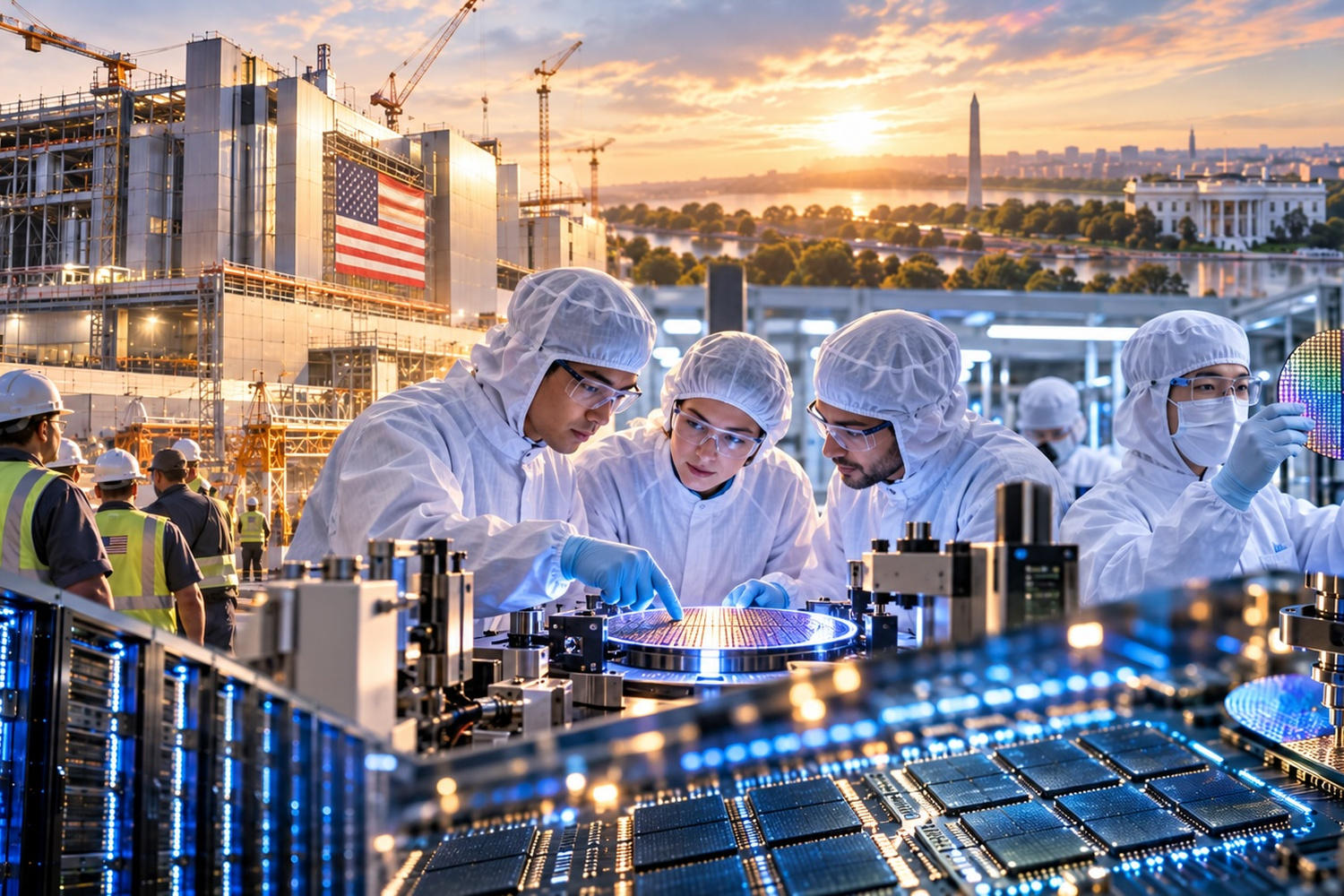
President Donald J. Trump on Thursday celebrated Micron’s plan to spend $10 billion on new research laboratories in the United States, another win for American policy pulling advanced technology back home.
Memory has become the bottleneck that feeds AI machines. Without enough of it, even the fastest computers sit idle. That is why we must keep both research and production on American soil.
Industry and university leaders backed the plan on day one.
Micron, the only American memory manufacturer, unveiled the labs in Boise, Idaho, on August 20.
This pledge is separate from more than $250 billion the company has already committed to American factories and development through 2035. That factory program is projected to support 90,000 jobs.
The company plans to spend about $1 billion a year over the next decade on memory research. The Boise campus is the first dedicated memory research hub of its kind in the United States.
The network will connect existing Micron research sites in the United States, Europe, Japan, India, Singapore, and Taiwan. Researchers will study new memory types, memory-compute integration, packaging, and future factory design.
The $10 billion add-on is meant to pay for the flagship Boise campus, university work, smaller sites elsewhere, and industry partnerships. Over the past year, Micron spent about $4.8 billion on research and development.
In Boise, the first new factory, ID1, is targeted for first wafers in mid-2027, the same year the research campus is slated to break ground. ID2 is due in late 2028. Design and production will sit next to each other so a new architecture can leave the bench and enter the line without leaving the country.
The announcement drew immediate public backing from NVIDIA founder Jensen Huang and Apple CEO Tim Cook, and others.
Micron CEO Sanjay Mehrotra said America’s AI future “will be built on American-made memory.” The company is building U.S. factories and a Boise research campus as Washington pushes memory production home.
Under President Trump’s policies, companies have announced large new commitments to U.S. plants, chips, and infrastructure. The Trump administration has taken charge on critical technologies, aiming to rebuild semiconductor capacity and bring manufacturing back to the United States.
This adds to the White House’s July 2026 report Science: A New Golden Age, which argues America must rebuild how it funds discovery and manufacture if it wants to lead the next century. The report rests on four pillars:
- Revitalize the enterprise — Shift money toward individual scientists rather than “legacy institutions,” add faster and longer grants, give reviewers “golden tickets” to fund unconventional ideas that panels would kill, stand up agile X-Labs and expanded ARPA-style outfits, and create metascience units so agencies treat grantmaking as a skill they can improve.
- National missions — Concentrate resources on a short list of hard, time-bound goals: the Genesis Mission (AI to double research productivity), QC-ADDS quantum systems, commercial fusion by the mid-2030s, crewed lunar return and a lunar base, and next-generation semiconductors.
- AI-native science — Scale Genesis as the flagship, build domain-specific foundation models and high-value datasets, fund autonomous facilities and verification infrastructure, and begin converting institutions so they can actually use machine-augmented discovery instead of treating AI as an add-on.
- Benefits for all Americans — Tie STEM to apprenticeships and the skilled trades, open research careers to people outside the traditional academic pipeline, and grow regional clusters that connect discovery to manufacturing so the economic returns are not confined to a handful of coastal universities.
Memory is no longer a commodity America can afford to import. It is the substrate of every AI system that matters. Micron’s $10 billion research commitment, stacked on more than $250 billion already pledged to U.S. factories through 2035, is what follow-through looks like when policy stops treating advanced manufacturing as optional. Design will sit next to the fabs. The work will not leave the country to become someone else’s production.
That is the art of the deal applied to a strategic industry. Change the terms until the only American memory manufacturer has more reason to build here than anywhere else. Put the factories and the research campus on the same ground so a new architecture does not have to leave the country to become a product. Pull the public backing of Jensen Huang and Tim Cook on day one because the supply chain they need is finally being rebuilt on American soil. Ten billion dollars is not a press release. It is the other side signing.
We are in the New Golden Age under the Trump administration.

