

One is working to end the war. The other is helping reunite the families caught in it.
President Donald Trump has spent his second term pursuing an end to the Russia-Ukraine war through the traditional machinery of presidential diplomacy: meetings with world leaders, direct conversations with Russian President Vladimir Putin and Ukrainian President Volodymyr Zelenskyy, American envoys traveling between capitals and negotiations over territory, sanctions and security guarantees.
Those negotiations remain extraordinarily difficult, with the diplomatic process repeatedly advancing, stalling and restarting. As recently as September, preparations were underway for another possible round of U.S.-Russia-Ukraine talks.
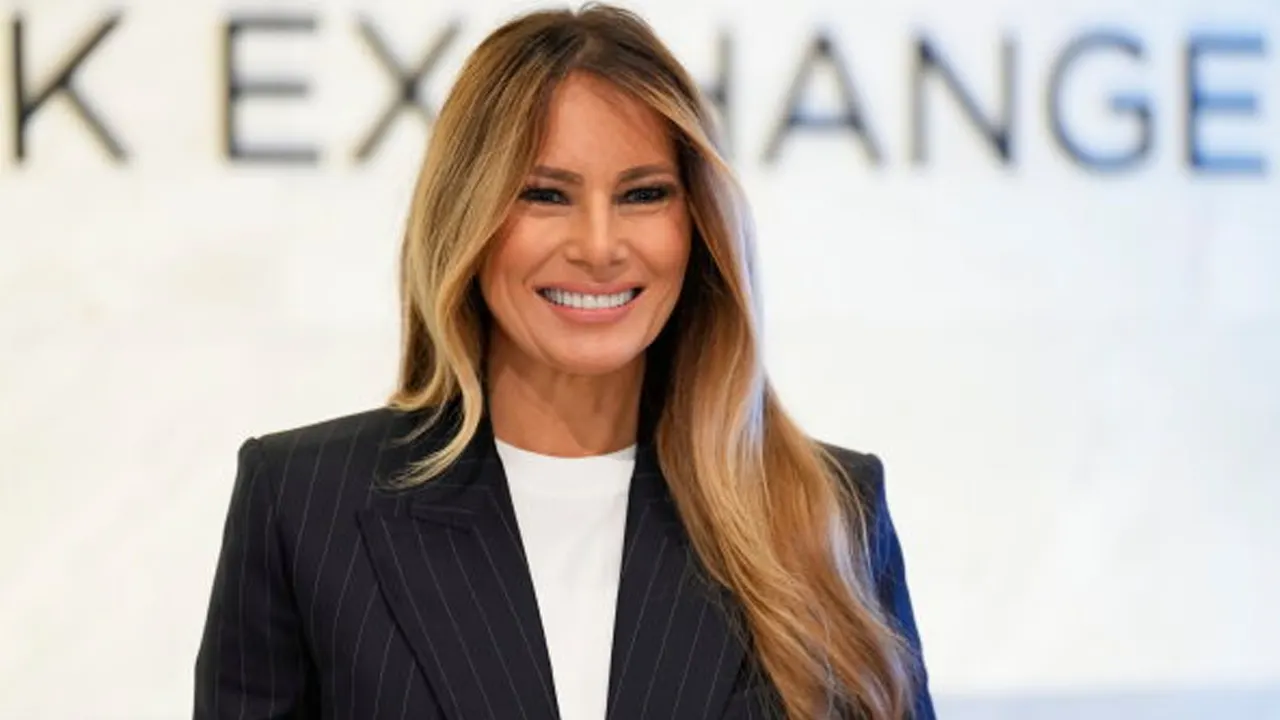
But alongside the President’s conventional diplomatic effort, First Lady Melania Trump has developed something different: a parallel humanitarian channel between countries at war, centered not on territory or military objectives, but on children and families separated by the conflict.
That distinction may be more significant than Washington realizes.
The effort began with a personal letter the First Lady wrote to Putin in August 2025 raising the plight of children affected by the war. From that outreach grew continuing communications involving her representative and officials from both Russia and Ukraine – and results followed.
The first reunifications came in October 2025. Seven more children were reunited with their families in December, with additional rounds in February, April and July. By August 17, 2026, the White House said the initiative had helped facilitate the reunification of 34 children and families separated during the war.
Thirty-four children represent only a small portion of a much larger crisis. Ukrainian officials have documented approximately 20,000 reported cases involving the deportation or forced transfer of Ukrainian children, while Russia disputes Ukraine’s characterization of those cases.
But the significance of the First Lady’s effort isn’t simply a number – it’s the mechanism she has helped create. Traditional peace negotiations tend to begin with the hardest questions: territory, borders, sanctions, armies and security guarantees. Those are precisely the issues on which neither side believes it can easily compromise.
Child reunification works differently.
A child returning to his or her family does not require either country to surrender territory, abandon a military position or settle the future of disputed land. Instead, it identifies something simpler: an area where two adversaries can still cooperate.
Every successful reunification requires names to be exchanged, identities verified, families located, logistics arranged and commitments honored. Those may be small steps beside negotiations to end a war. But diplomacy is often built from small commitments that are made – and then kept.
The First Lady herself captured the idea in July when she said that the parties should be able to place children “above international disputes.”
That principle has now produced repeated cooperation, and it offers a lesson for Washington: American diplomacy traditionally approaches conflicts from the top down, settling the largest geopolitical disputes first and expecting humanitarian progress to follow.
Melania Trump’s initiative suggests a second path can run alongside it – one that begins where agreement is possible, builds trust through narrow and verifiable commitments, and produces a tangible result before attempting another.
The President and First Lady are, in effect, operating on two different tracks – one from the top down, the other from the bottom up.
They do not have to remain disconnected.
The First Lady’s humanitarian channel cannot by itself resolve territorial disputes or produce a ceasefire, and 34 reunifications should not be confused with a resolution of the enormous suffering the war has caused. But diplomacy depends on channels of communication, particularly ones that have already demonstrated that opposing sides can exchange information, make commitments and carry them out.
That is why what Melania Trump has built deserves attention beyond the humanitarian success of each individual reunion. She has shown that even nations fighting a brutal war can still find a narrow piece of common ground.
And sometimes that is how something much larger begins.
President Trump continues working toward an agreement capable of ending the war. Alongside him, the First Lady has developed a different kind of diplomacy – humanitarian, personal and deliberately focused on the one subject both sides should be able to place above politics and war: children.
After 34 reunifications, her effort is no longer merely symbolic. It is a functioning diplomatic channel – one built on communication, cooperation and commitments kept.
Together, they have created two paths toward the same destination. One is working to end the war. The other is helping reunite the families caught in it.

