

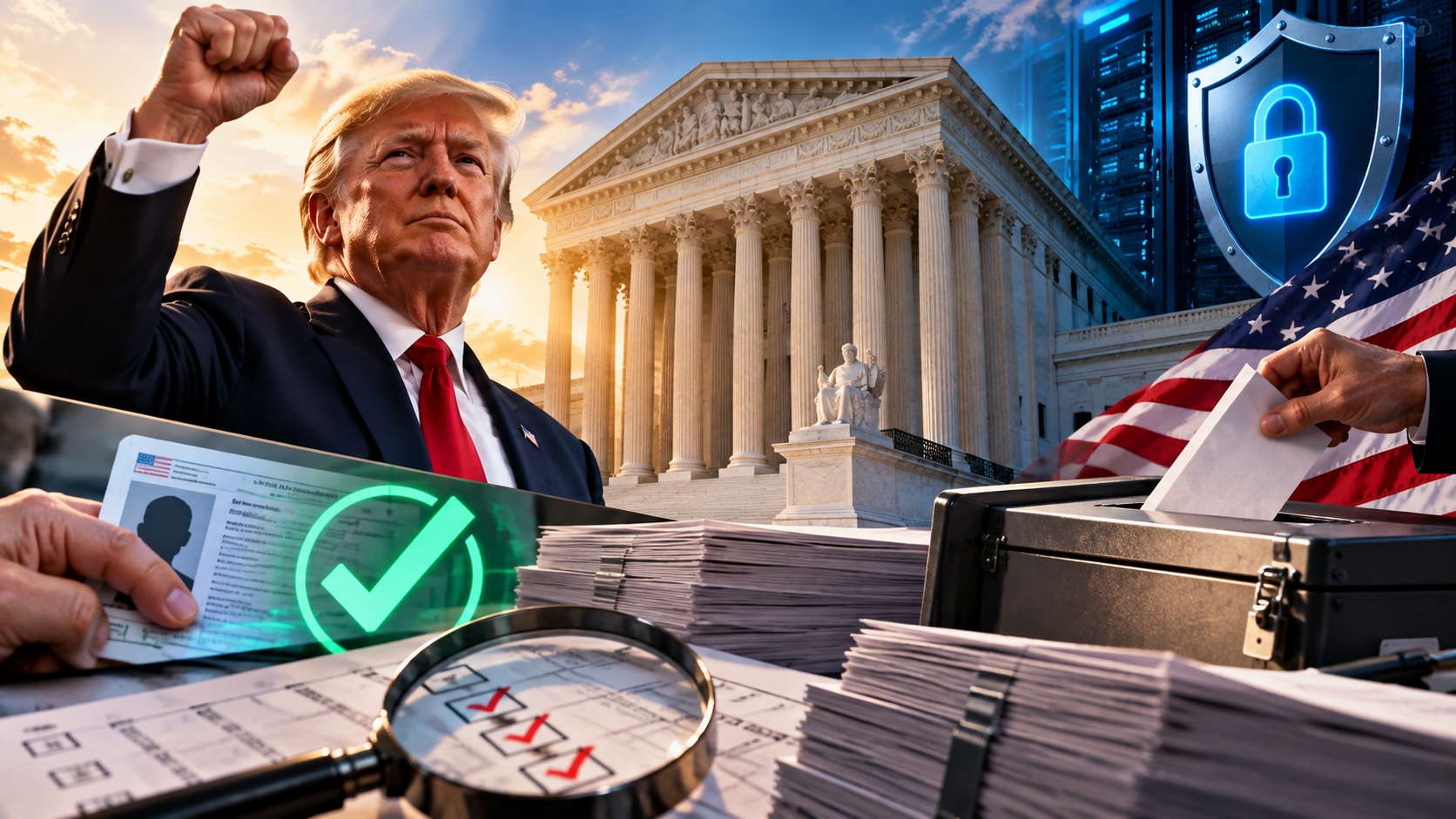
The Trump administration closed the week with two election-integrity wins heading into November 3.
First, the Supreme Court voted 6-3 to temporarily revive the expanded SAVE program, so states can again use federal records to check whether people on the voter rolls are U.S. citizens. A day earlier, the Cybersecurity and Infrastructure Security Agency released its first public election-security plan of this term: treat voting systems as a year-round target, use paper ballots, run post-election manual audits, and lock down the machines.
That is the week the White House wanted heading into the midterms. Two moves, one job: confirm that the people on the list are citizens, and keep the machines on a short leash.
Common sense says checking U.S. citizenship at the point of registration and voting should be the first step, not a lawsuit.
The Court: Congress authorized the data, and the justices respected the 90-day rule
President Trump’s March 2025 order directed Homeland Security to let election officials verify citizenship. DHS rebuilt SAVE around Social Security numbers and other identifiers, adding bulk search and SSN lookup so clerks could flag ineligible names.
The League of Women Voters sued. Judge Sparkle Sooknanan blocked the system in June. An appeals court left the freeze in place.
On Friday the Supreme Court paused that order. The majority said Congress authorized DHS to pull citizenship data from other agencies, including Social Security, and that Washington must answer states that ask whether a voter is a citizen. The injunction, the justices wrote, “prevents the Federal Government from using the program it believes is best suited to the task.”
They also respected existing law. The National Voter Registration Act still bars systematic purges inside 90 days of a federal election. The Court said that moratorium “limits the potential impact” this close to November 3. What is back now: individualized citizenship checks before Election Day, and broader list maintenance after.
The stay is not a final ruling. Before the freeze, the administration told the Court more than 65 million voters across 26 states had already been checked, with about 28,635 flagged as possible noncitizens. The legal point the majority locked in is basic: when a state asks if the person on the list is a citizen, Washington is supposed to answer.
Rep. Claudia Tenney, R-N.Y., called it a “massive win.” Checking citizenship, she said, “should be the bare minimum.”
CISA: paper, audits, lock the doors
A day earlier CISA issued the 13-page Securing the Next 250 plan, the first public election-security blueprint of the term after last year’s freeze. Secretary Markwayne Mullin ordered it in July.
It is voluntary and no-cost. It tells offices the systems are a year-round target. The recommendations are old-school: paper ballots, post-election manual audits, multi-factor authentication, tighter access, and a year of logs. CISA will offer a no-cost information-sharing platform and assign regional directors as advisers.
What it means before November
SAVE is back for citizenship checks. The Court respected the 90-day bar on systematic purges and still restored individualized verification before November 3. CISA is back on the record for paper and audits. Neither move ends the lawsuits or rewrites state codes. Both put tools back with the people who run elections: a way to ask if a registrant is a citizen, and a federal playbook that keeps the machines on a short leash instead of trusting them on faith.

