

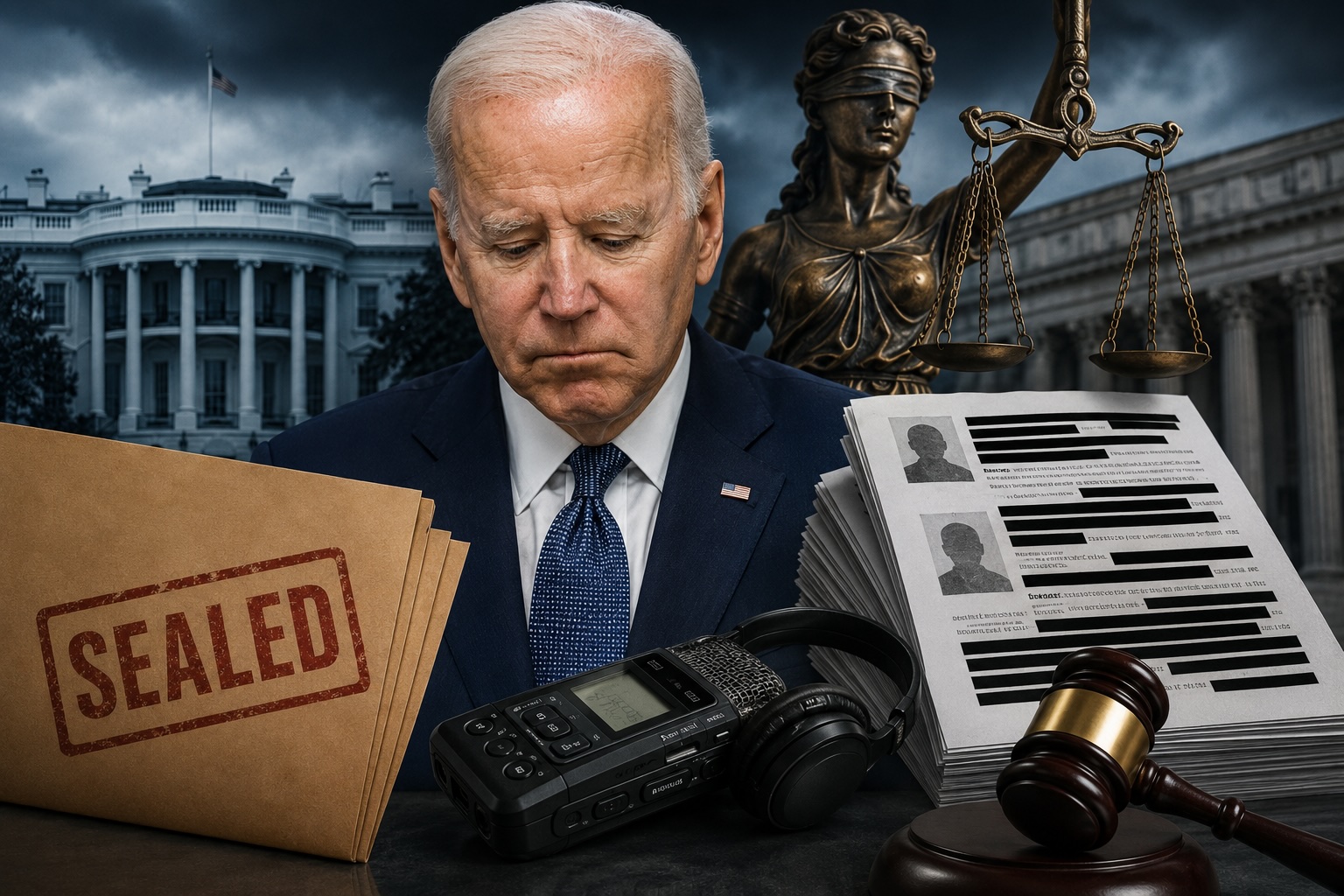
Former President Joe Biden has dropped his legal fight to keep the audio recordings and transcripts sealed. The materials come from interviews he did with his ghostwriter. On July 24, 2026, his lawyers filed a notice of voluntary dismissal in federal court, which means the Justice Department can now hand over the redacted versions to the House Judiciary Committee and the Heritage Foundation, as reported by Just the News.
There are approximately 70 hours of recordings from conversations Biden had with Mark Zwonitzer at his home in 2016 and 2017. Those talks became the basis for Biden’s 2017 memoir, Promise Me, Dad: A Year of Hope, Hardship and Purpose, which focuses in part on the death of his son Beau. Special Counsel Robert Hur obtained the audio during his 2023 investigation into whether Biden improperly held onto classified materials from his time as a senator and vice president.
Hur’s report from February 2024 found that Biden had deliberately held onto classified materials and, at times, shared them. Still, Hur decided not to push for charges. He said there wasn’t enough solid evidence to win a case in court, and he portrayed Biden as a well-meaning elderly man with a diminished memory. The report kept bringing up the Zwonitzer materials as part of the evidence they looked at, as reported by Politico.
During the Biden administration, the Justice Department refused to release the recordings, pointing to privacy concerns and FOIA exemptions.
The Heritage Foundation began pushing for them through FOIA lawsuits around 2024, saying the tapes were important for examining Special Counsel Hur’s conclusions on the classified documents and what they revealed about Biden’s mental state at the time. After the change in administrations, the Trump Justice Department reversed that stance in early 2026 and informed Biden it intended to provide withheld versions to both the Heritage Foundation and Congress.
Biden filed a lawsuit in May 2026 to stop the release. His lawyers claimed the conversations were private and meant to stay confidential. They said putting them out would violate his privacy, especially when it came to personal family matters. They also argued the Justice Department was ditching its earlier positions for political reasons, and that turning over materials from a law-enforcement investigation could discourage people from cooperating with investigators in the future. The department pushed back, saying the heavy redactions already handled the privacy concerns and that the strong public interest made the release worthwhile.
In mid June 2026, U.S. District Judge Dabney Friedrich, appointed by Trump, denied Biden’s bid for a preliminary injunction. She concluded the public’s right to see the materials which were central to Special Counsel Hur’s choice against filing charges carried more weight than Biden’s privacy interests which remained significant even if they had eased somewhat. After examining the documents in private, Friedrich observed that they held no references to Biden’s relatives or other private people nor any highly personal topics involving illness or death. Still she put a temporary hold on the release so an appeal could be filed.
On July 21, 2026, a three-judge panel on the D.C. Circuit Court of Appeals sided against Biden in a 2-1 decision. The majority said he hadn’t cleared the high bar needed for an injunction, and that whatever privacy issues remained with the materials just didn’t outweigh the public’s right to see them. They put the ruling on hold until August 3, though, so Biden has time to try for a rehearing or take it to the Supreme Court.
Biden’s legal team filed a voluntary dismissal on July 24, officially ending the former president’s court fight.
That means the Justice Department can now move ahead with releasing the audio and transcripts as planned. Both the congressional committee and the Heritage Foundation should receive the materials within the next few weeks.
Judge Friedrich concluded: “The harm to Biden’s diminished privacy interest is outweighed by the public’s interest in the Zwonitzer materials. As now redacted, the Zwonitzer materials contain no information about Biden’s family or other private persons. And while public figures maintain certain privacy rights, the Department did not abuse its discretion in finding that nothing in the remaining Zwonitzer materials is sensitive enough to outweigh the public’s unusually strong interest.”
This outcome shows the Trump administration following through on its transparency pledges by releasing the recordings once the legal barrier was removed.

