

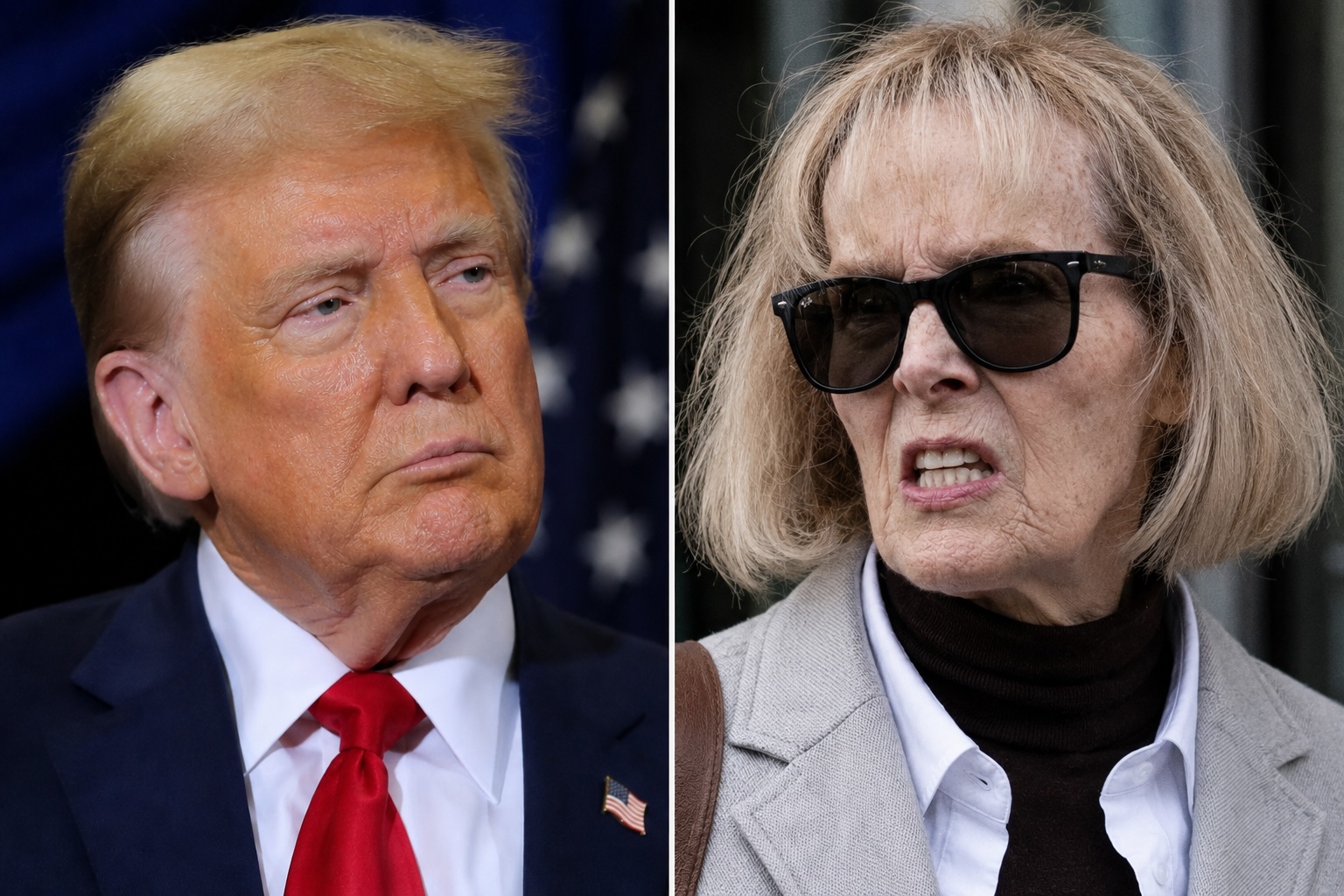
The $83.3 million defamation verdict against President Donald J. Trump in favor of E. Jean Carroll has been placed on a temporary stay blocking enforcement by the U.S. Court of Appeals for the Second Circuit. The May 11, 2026 order gives Trump time to seek Supreme Court review.
This stay follows the court’s decision to uphold the verdict and its denial of Trump’s request for an en banc rehearing. Carroll’s legal team consented to the pause on the condition that Trump post an additional $7.46 million bond to cover accruing interest through October 2027. The $83.3 million award remains on hold as the case proceeds toward the Supreme Court.
Trump’s team asserts there is a strong prospect that the Supreme Court will grant review and reverse on these grounds. His legal team is pursuing presidential immunity and the Westfall Act, arguing that his 2019 denials were official acts made during his first term as president. If the Supreme Court accepts either argument, the defamation claims could be dismissed entirely due to the federal government’s sovereign immunity.
This case combines two relatively uncommon elements: New York’s 2022 Adult Survivors Act, which created a one-year window to revive time-barred adult sexual assault claims, and the application of presidential immunity doctrines and the Westfall Act to statements made by Trump while in office.
Trump’s legal team contends that his 2019 denials, made while he was president, were official acts shielded by absolute presidential immunity under the Supreme Court’s 2024 Trump v. United States decision and the older Nixon v. Fitzgerald (1982) precedent. They are also seeking to invoke the Westfall Act to replace Trump with the U.S. government as defendant.
This case involves statements President Trump made in 2019 while in office, including responses to reporters at the White House and in the Oval Office.
Carroll’s team has argued these statements carried the full authority and reach of the presidential “bully pulpit,” causing far greater reputational and emotional harm than the same words from an ordinary citizen. Trump has countered that the allegations are false, and that issuing the denial from official channels and presidential grounds only reinforces its truth and authority.
This case stems from E. Jean Carroll’s 2019 public accusation that Donald Trump sexually assaulted her in a Bergdorf Goodman dressing room in the mid-1990s. Trump has strongly denied the allegation, calling Carroll a liar who invented the story for publicity and financial gain. Carroll filed suit under New York’s 2022 Adult Survivors Act, which temporarily lifted the statute of limitations for adult sexual assault claims.
A 2023 jury found Trump liable for sexual abuse (not rape) and defamation, awarding $5 million. A 2024 trial over additional statements resulted in the $83.3 million verdict. Throughout the litigation, Trump has maintained his innocence and called the lawsuits politically motivated “witch hunts.” Carroll, a longtime advice columnist, has framed her case as a stand for accountability and support for sexual assault survivors, pledging any awarded funds to help victims.
The trials included testimony from Carroll’s friends who corroborated her account soon after the alleged incident, a decades-old photo of the two, the Access Hollywood tape, and testimony from other women who accused Trump of similar misconduct, evidence Trump’s team argued unfairly prejudiced the jury.
As the Supreme Court weighs whether to grant review, this case sits at the key intersection of executive power and the boundaries of civil liability for presidents. A ruling favoring Trump on constitutional immunity grounds or under the Westfall Act would meaningfully broaden protections for future presidents when they communicate in their official capacity. Such a decision would reinforce the safeguards designed to let the executive branch operate without constant fear of personal litigation.

