

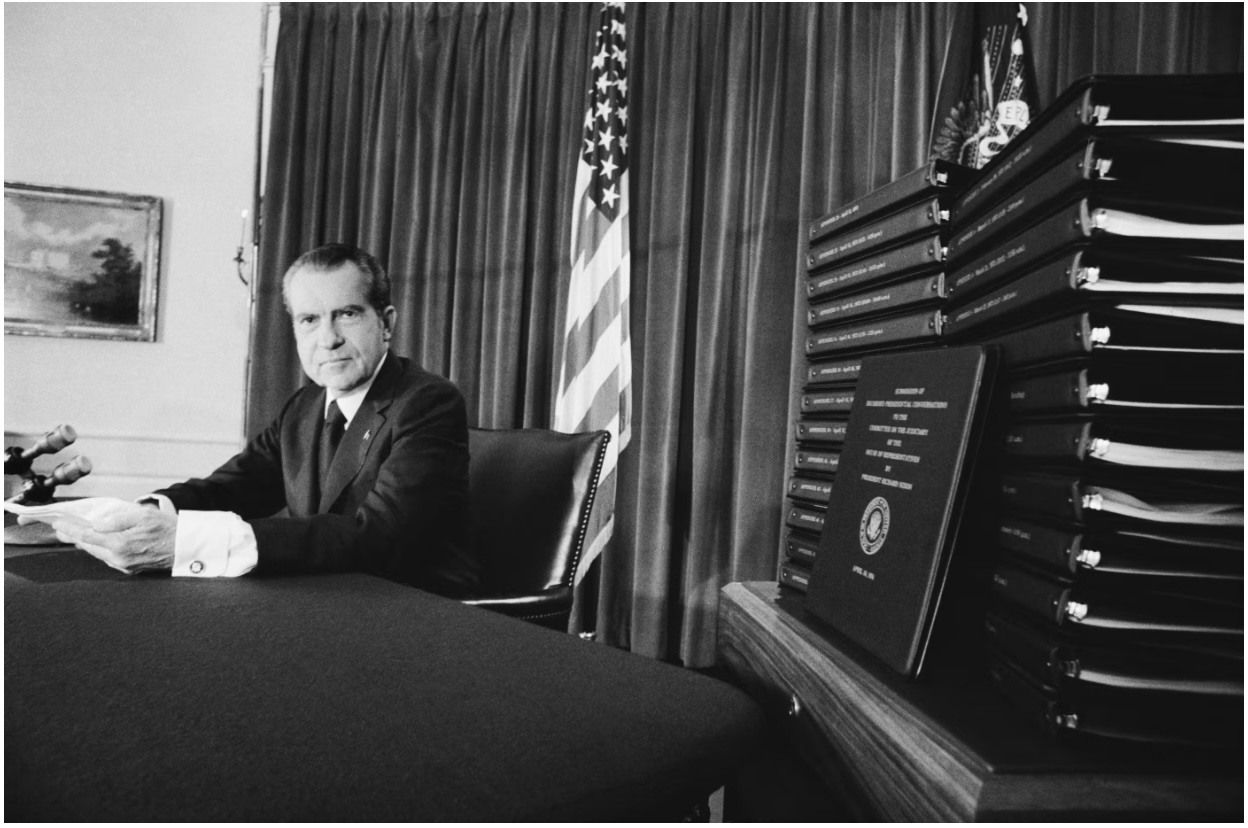
Revisionist historian went to DOJ headquarters to present his case that former president, his associates weren’t treated fairly
WASHINGTON—For nearly two years, the Justice Department has made it a priority to investigate people who previously investigated President Trump. Now it is reaching back in history to consider whether prosecutors mistreated an earlier Republican president: Richard Nixon.
The department is reviewing whether the special prosecutor’s office that investigated the famed Watergate break-in committed misconduct, according to people familiar with the matter, more than half a century after that scandal led to Nixon’s resignation.
Geoff Shepard, a former Nixon aide turned Watergate historian and revisionist, recently gave a two-hour presentation at Justice Department headquarters that laid out his theory that the deep state took Nixon down. The title of his 78-page slide deck: “Watergate As Lawfare.”
The review comes at a moment of renewed interest in the Nixon legacy. Republicans see in the combative former president, who was loathed by the press and besieged by investigations, a historical analogue for Trump. During remarks at the Nixon Presidential Library in Yorba Linda, Calif., this summer, Vice President JD Vance made the comparison explicit.
“If you look at the story of how the deep state took down Richard Nixon, it’s not all that different from what the same groups of people—the same institutions—tried to do to Donald Trump in the first Trump administration,” Vance said. “There is a parallel.”
A senior Justice Department official last month invited Shepard to come to Justice Department headquarters and make his case before the Office of Professional Responsibility, or OPR, an internal watchdog that investigates allegations of misconduct. The office itself is a product of the Watergate era, one of a number of changes aimed at shielding criminal investigations from White House influence.
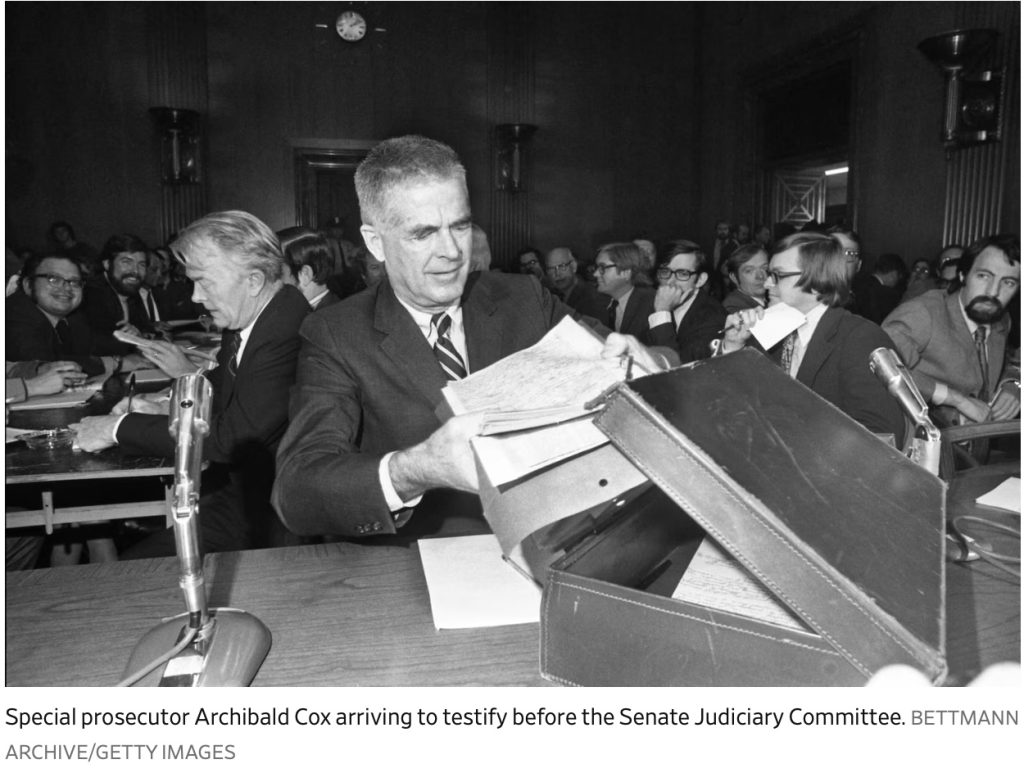
In 2022, the Justice Department under the Biden administration rebuffed Shepard’s request for an investigation, citing the many years that have passed since the events in question. Current officials wanted to hear him out, the people familiar with the matter said. The review is preliminary, and it isn’t clear whether it will lead to a full-fledged probe, the people said.
“Given his expertise and scholarship on Watergate, he was recently invited to give a presentation,” a Justice Department spokeswoman said, “but that presentation does not constitute an investigation. OPR remains focused on ensuring that Department attorneys meet the highest professional standards.”
The scandal was triggered by a botched 1972 break-in at the Democratic National Committee in Washington’s Watergate complex, part of the Nixon re-election campaign’s wide-ranging scheme of political sabotage, wiretapping and illegal contributions. Those activities and the coverup that followed forced Nixon to resign in August 1974.
Shepard has served as a sort of godfather for the Watergate revisionists. His scholarship has unearthed a number of primary-source documents which he says show Nixon and his associates weren’t treated fairly.
During his presentation, Shepard showed officials some of those internal documents from the Watergate Special Prosecution Force first led by special prosecutor Archibald Cox. Leon Jaworski took over the probe after Nixon ordered Cox’s firing in the infamous “Saturday Night Massacre.”
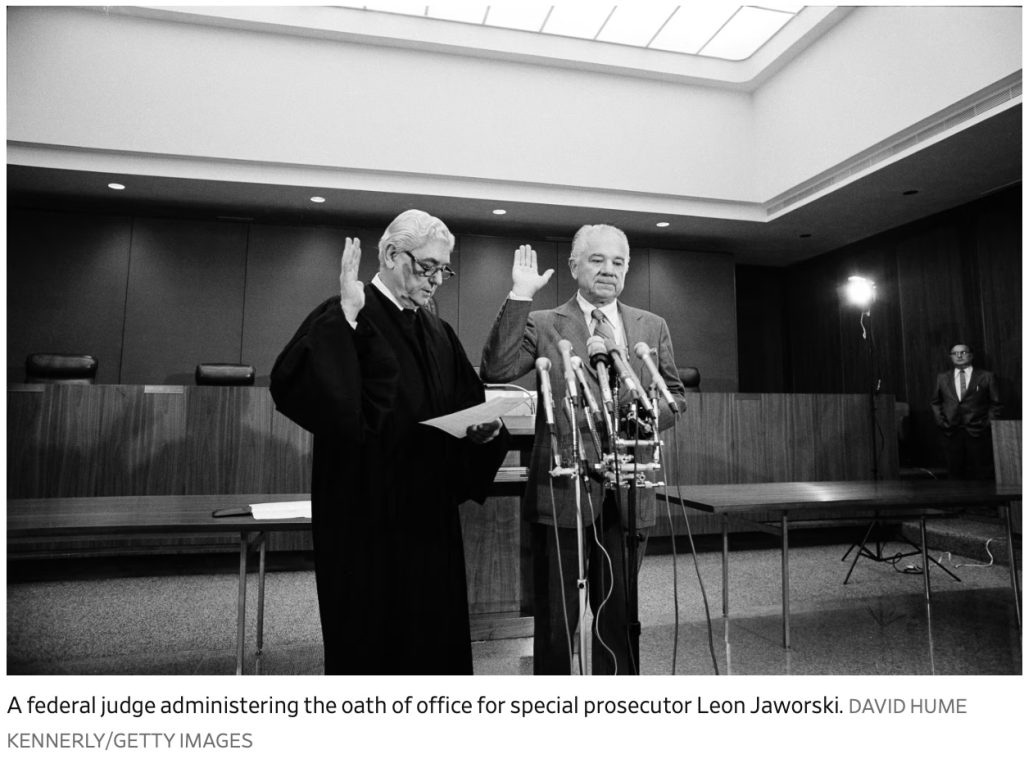
Shepard alleges that Cox and Jaworski violated the due process rights of defendants caught up in the Watergate probe by meeting secretly with the judges overseeing their trial and suppressing evidence from the defense.
Mainstream scholars have long concluded that Watergate generated a genuine constitutional crisis and that Nixon, not those who investigated him, was guilty of a malfeasance which not only doomed his presidency but also led to overhauls that significantly curtailed executive power.
Nixon’s tenure has been of growing interest to Trump, Vance and the larger conservative movement.
Trump has asked former Nixon aides on several occasions why Nixon resigned rather than fight it out. The current president also has moved to roll back many post-Watergate overhauls, challenging limits on presidential authority to fire inspectors general and career civil servants.

