

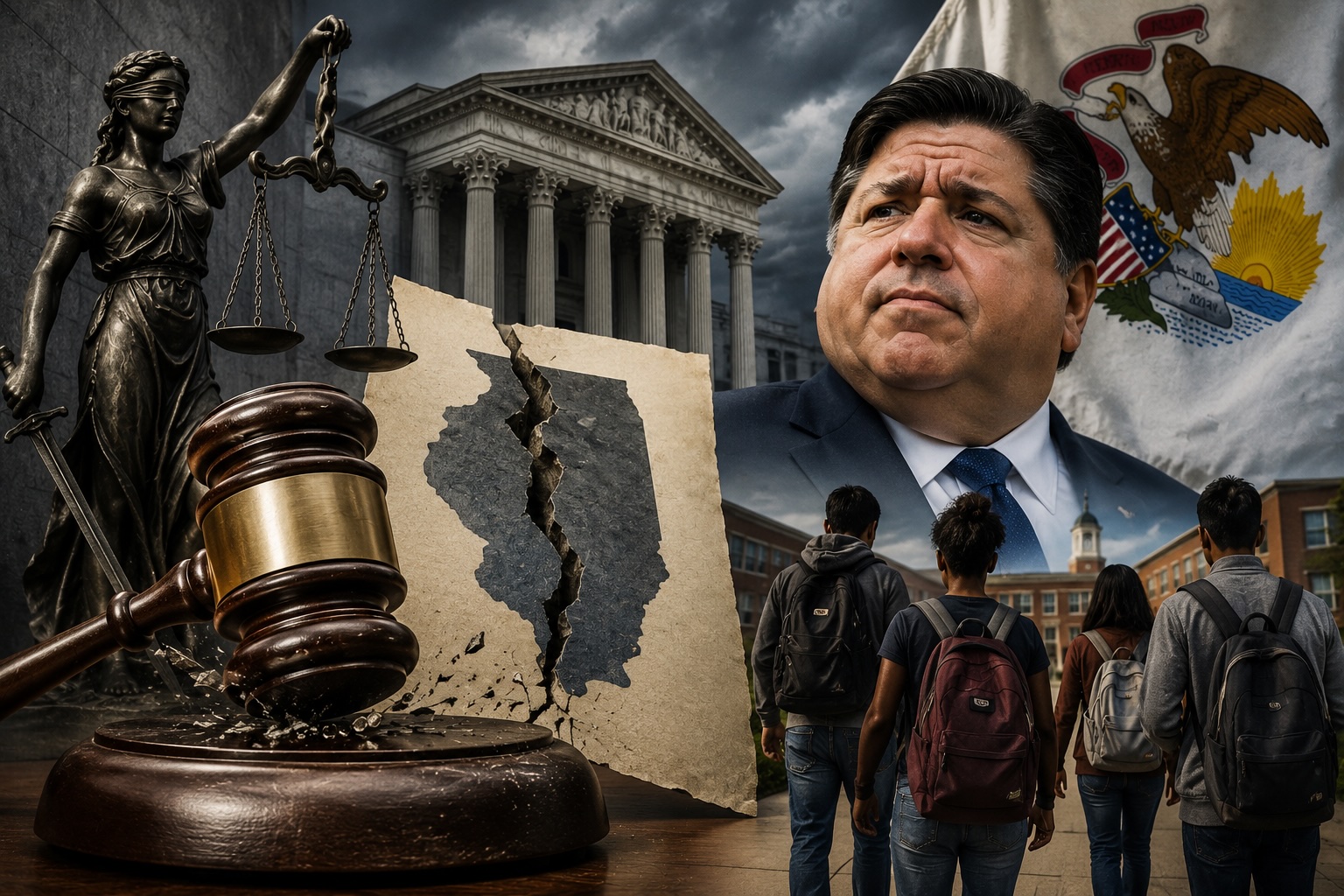
EAST ST. LOUIS, Ill. — The United States District Court for the Southern District of Illinois has ruled in favor of the federal government in a lawsuit against the State of Illinois, Governor J.B. Pritzker, and multiple state entities, declaring key state education policies unconstitutional as applied to aliens who are not lawfully present in the country.
United States Attorney Steven D. Weinhoeft announced the decision on July 24, 2026. The court denied the State’s motion to dismiss and granted the United States’ cross-motion for summary judgment.
At issue were the state’s rules granting in-state tuition rates at public universities and community colleges, along with the RISE Act and the Illinois DREAM Act. The court declared these measures “unconstitutional and invalid” under the Supremacy Clause when applied to aliens not lawfully present.
“Illinois sought to incentivize illegal immigration on the taxpayer’s dime by treating illegal aliens better than U.S. citizens living in other states, in clear violation of federal law,” Weinhoeft said. “This ruling enforces the statute Congress wrote and stops the State from putting illegal aliens ahead of American citizens.”
Federal law under 8 U.S.C. § 1623(a) prohibits a state from granting postsecondary education benefits to illegal aliens on the basis of residence in that state unless the same benefits are made available to every United States citizen and national, regardless of where they live. Illinois provided preferential treatment based on residence to those present illegally but did not extend equivalent benefits to American citizens residing outside the state.
Yet several states continue to allocate taxpayer funds for these benefits despite the federal prohibition. The Department of Justice filed the Illinois lawsuit in September 2025 to halt the policies. In its ruling, the court permanently enjoined the State of Illinois and the named university and college boards from enforcing the challenged provisions against aliens not lawfully present.
The Illinois decision is the latest in a series of federal actions targeting similar state programs. In Texas, Kentucky, Oklahoma, and Nebraska, state officials cooperated with the Department of Justice rather than defending the benefits. These Republican-led states entered consent judgments or accepted permanent injunctions that struck down their residency based in-state tuition and related financial aid programs for illegal aliens.
None of those states chose to appeal and preserve the policies.
In Texas, outside advocacy groups later tried to intervene and reverse the consent judgment, but both the district court and the Fifth Circuit rejected those efforts in 2026. The prohibitions remain fully in effect in all four states.
On July 23, 2026, the Justice Department filed a new lawsuit against Colorado, challenging the state’s ASSET Act and related policies that provide in-state tuition rates and state financial aid to illegal immigrants. Colorado’s Democratic governor, Jared Polis, has defended the policies as a matter of state authority.
Several other Democratic-led states continue to defend their laws or are positioned to appeal. Minnesota successfully defeated the DOJ’s lawsuit at the district court level in March 2026, though the federal government has appealed.
Cases remain active in California, New Jersey, Massachusetts, Rhode Island, Maryland, and Virginia.
Kansas presents a more complicated picture, the state’s Republican attorney general agreed to a proposed consent decree, while the Democratic governor has moved to intervene and defend the existing policy.
The Illinois ruling and the outcomes in Texas, Kentucky, Oklahoma, and Nebraska demonstrate that federal courts are upholding the law and enforcing the limits Congress placed on these benefits. The Illinois injunction has been stayed for 14 days to allow the state to seek a stay pending appeal. While some states continue to resist, the legal trend is clear: preferential treatment of illegal aliens over American citizens will not stand.

