

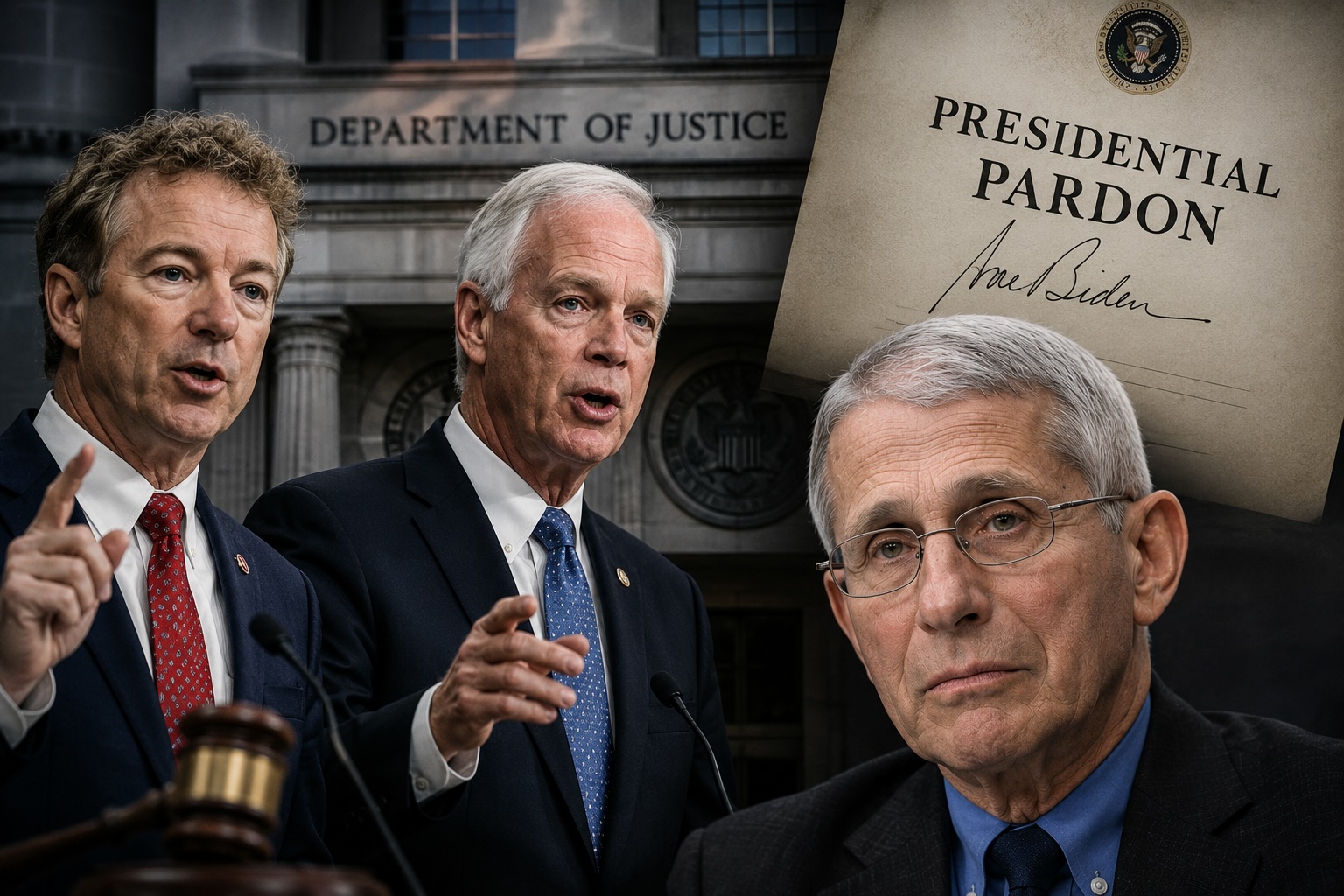
Senators Rand Paul (R-KY) and Ron Johnson (R-WI) are urging the Trump Justice Department to prosecute Dr. Anthony Fauci and challenge the validity of his preemptive pardon from President Biden, according to a June 18, 2026 report by Just the News.
Sen. Rand Paul (R-KY), chairman of the Senate Homeland Security Committee and a longtime critic of Fauci, described Biden’s pardon as unusually broad and vague. It covers a sweeping, unspecified period of years without naming particular crimes, similar to the pardon granted to Hunter Biden.
Paul has questioned the pardon’s legitimacy, noting it was issued via autopen on or around January 19, 2025, as Biden left office. He has raised concerns about whether the former president personally reviewed or authorized it, asking: “Was President Biden of sound mind? Did he understand who he was pardoning? Did he participate in it? Did he approve of each of the ones that were signed by autopen?”
Paul has repeatedly referred Fauci to the DOJ for allegedly lying to Congress about gain-of-function research funded at the Wuhan Institute of Virology. He argues that charging Fauci would allow a judicial review of the pardon’s constitutionality. Recent indictments of Fauci associates, including senior adviser David Morens for allegedly destroying records and concealing information, could provide leverage, as those deputies might cooperate in exchange for leniency.
Senator Ron Johnson (R-WI) told Just the News that Fauci “is a bad person, and he ought to be prosecuted, because I believe he did commit crimes.” Johnson expressed confidence that research supported by Fauci’s agency contributed to the origins of the COVID-19 pandemic. Both senators see prosecution as a means of accountability for alleged misconduct and a way to challenge executive overreach in issuing broad preemptive pardons.
The Trump administration has declared various Biden-era pardons, including Fauci’s, null and void due to autopen use, citing concerns over Biden’s mental fitness and lack of personal authorization.
In 2025, President Trump issued a memorandum directing a review of Biden-era clemency actions, tasking the DOJ and White House Counsel with investigating potential unauthorized use of the autopen. House Oversight Republicans, in reports such as “The Biden Autopen Presidency,” have called for DOJ scrutiny, and the Trump DOJ’s Pardon Attorney has raised doubts about autopen pardons absent further court review.
Legal experts, including constitutional scholar Jonathan Turley, have noted that autopen use is historically permissible absent clear proof of a total lack of presidential awareness or authorization. No definitive Supreme Court ruling has resolved the broader issue.
Fauci has long denied any wrongdoing, maintaining that NIH-funded research did not qualify as gain-of-function under U.S. definitions and that he acted in good faith. Critics, including Paul, point to emails and actions from early 2020 showing Fauci downplaying a potential lab origin while shaping public scientific narratives.
The pardon was part of Biden’s broader preemptive clemency actions protecting figures such as Gen. Mark Milley and January 6 committee members. It has faced scrutiny over autopen procedures and questions about Biden’s capacity at the time.
A successful legal challenge could set precedent on the specificity required for pardons, the validity of autopen signatures on clemency documents, and the scope of preemptive pardons for uncharged conduct. The Trump DOJ now faces pressure to decide whether to indict Fauci and litigate these issues.
Supporters of the senators’ push argue it addresses grievances over COVID-era policies, the handling of the lab-leak hypothesis, and public trust in health institutions. Opponents view it as political retribution. The debate reflects deep divisions over pandemic accountability that continue years later.
Whether the DOJ will act remains to be seen, but Paul and Johnson’s public statements maintain pressure on the issue. With indictments of Fauci’s former colleagues already underway, the case could test the limits of executive pardons and prompt further judicial examination of the COVID response.

