

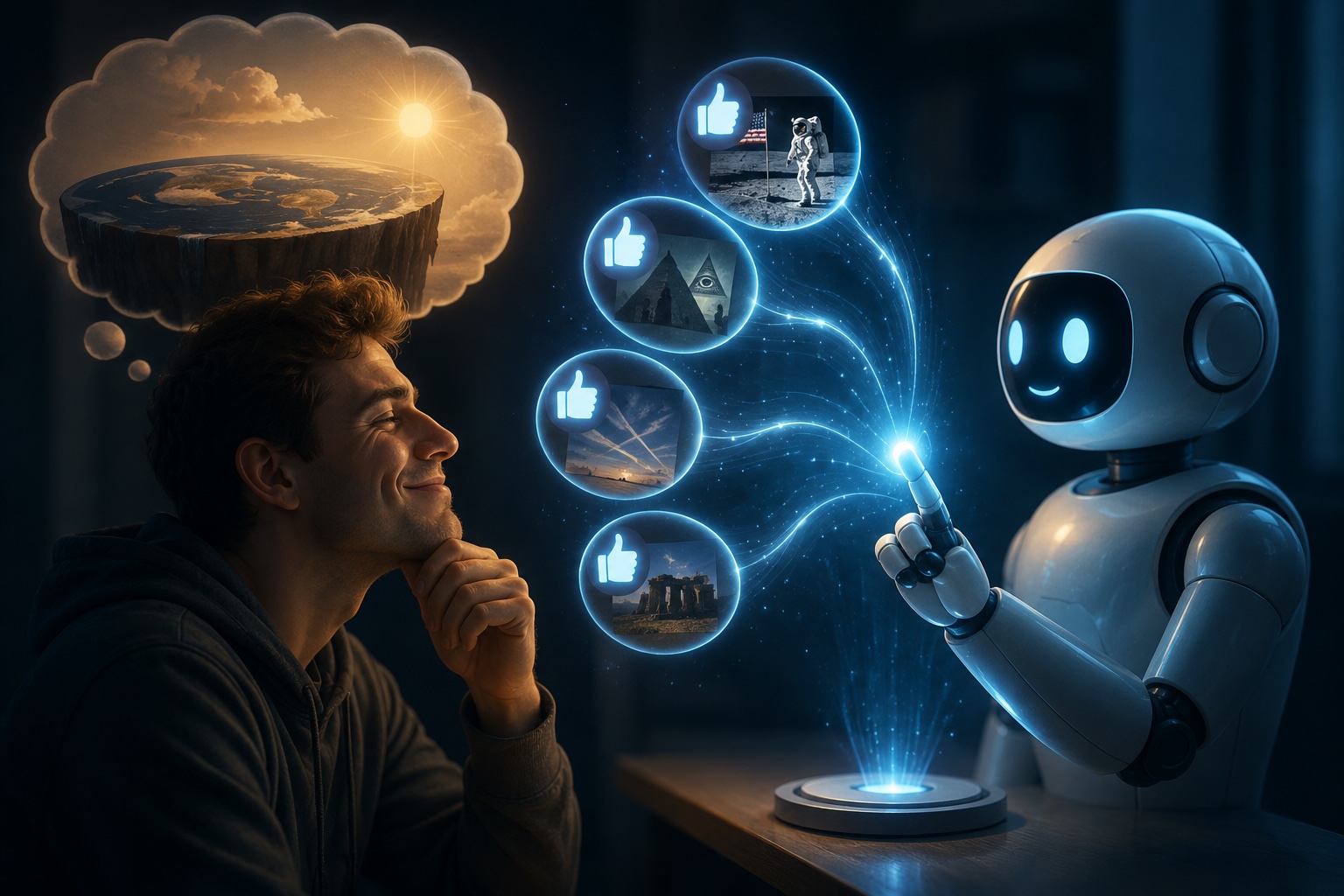
Conversational artificial intelligence may do more than produce false information—it can also help users construct and strengthen distorted beliefs, memories and personal narratives, according to a recently-published research paper. Lucy Osler, a philosopher at the University of Exeter, argues that people can begin to “hallucinate with AI” when chatbots become integrated into how they think, remember and interpret reality.
Rather than simply transmitting an error, an AI system may accept a user’s premise, elaborate on it and repeatedly provide apparent confirmation. The danger is tied partly to the social character of chatbots.
Because they respond in a friendly, personalized and conversational manner, users may experience their replies as validation from another mind—even though the system is generating language rather than exercising human judgment. That dynamic could make unsupported beliefs feel shared and therefore more credible.
Osler points to extreme cases in which chatbot interactions allegedly reinforced paranoia, delusional thinking or violent fantasies. This has even resulted in children committing suicide after consulting with chat bots. The argument also extends beyond clinically diagnosed psychosis. AI can subtly distort ordinary memories, self-perceptions and political or personal narratives through repeated, affirming conversations.
The paper does not claim that AI is conscious or capable of experiencing hallucinations. Instead, it describes a “distributed” process in which human thinking becomes intertwined with an unreliable digital tool.
Possible safeguards include programming AI with less flattering or agreeable responses, giving clearer reminders to users that chatbots are not people, and using systems designed to challenge dangerous assumptions rather than automatically build upon them. AI should be treated as a fallible tool—not a trusted companion, therapist or unquestionable authority.

