

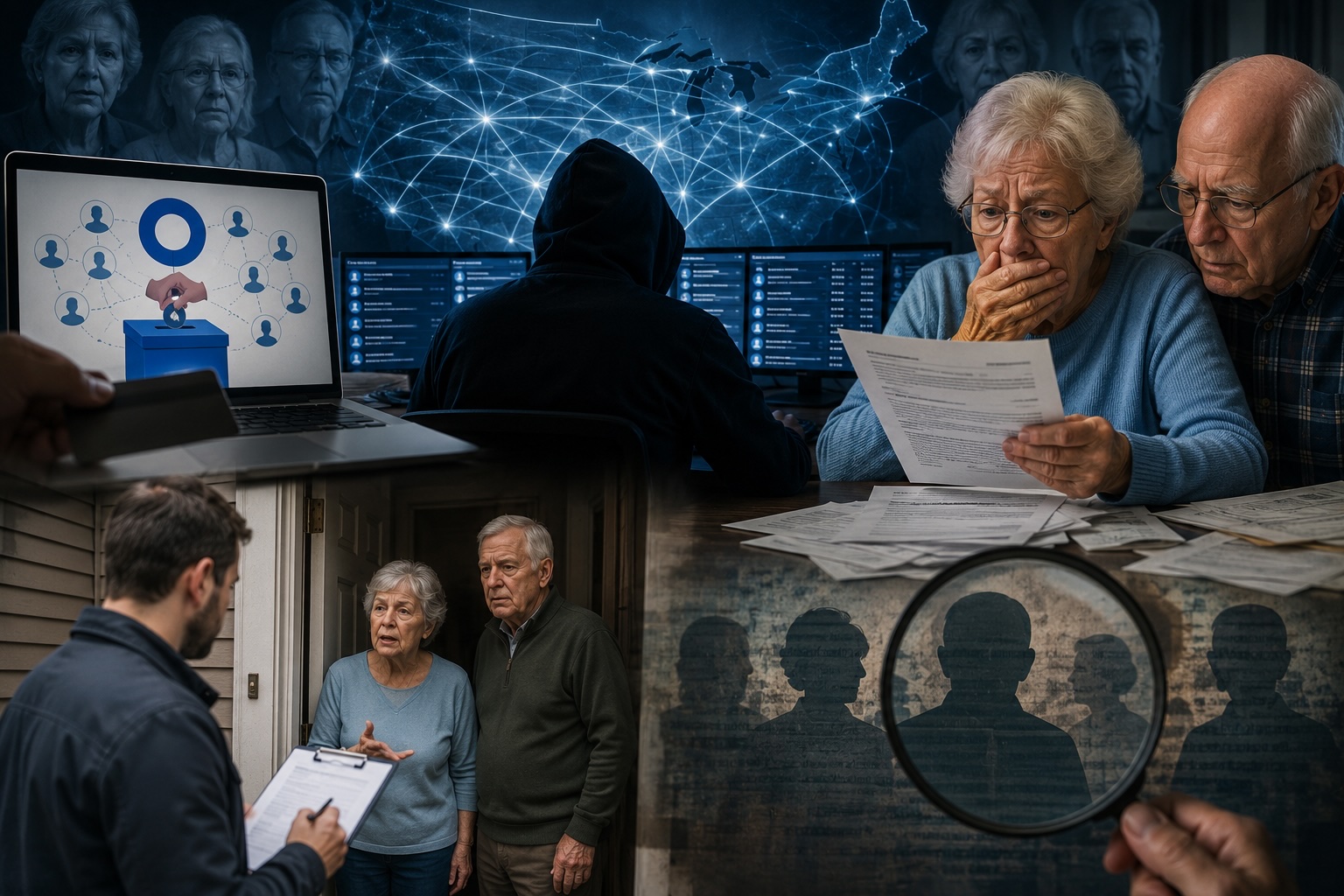
ActBlue is once again facing multiple probes across several states over large volumes of small phantom donations that continue to appear on the platform. These contributions are routinely listed under the names of ordinary Americans who later say they never gave a dime.
The money essentially never leaves the donors’ accounts, only their names and addresses are used, and because almost no one reviews FEC reports, the scheme is extremely difficult to detect.
This same issue has now surfaced in Wisconsin. These latest findings are based on door-to-door interviews first conducted in 2023 and updated in 2025, and were shared this week with media outlets including The Center Square.
Private investigators with Brightline Investigations, led by Kyle Corrigan, found high volumes of small ActBlue payments listed under local seniors’ names in FEC records. Most of those interviewed stated that the totals far exceeded anything they actually contributed.
FEC filings list thousands of small ActBlue payments under Mark Jennerjohn’s name totaling more than $90,000 over roughly seven years. Jennerjohn, of Appleton, WI, rejected the figures, saying he occasionally gives $5 but could never afford the reported sums.
Other seniors gave similar statements, saying they had never donated or had given only a few times around major elections.
Henry Timm, a playwright in Sister Bay, was listed as having nearly $20,000 in ActBlue transfers under his name through repeated small payments. Timm told investigators he had never contributed to political causes.
When approached, elderly citizens expressed surprise or anger upon learning the scale of activity listed in the filings, often noting that no corresponding bank transactions appeared in their accounts.
The same discrepancies were reported weeks earlier in Michigan.
Federal records list nearly $150,000 in payments over five years under the name of 88-year-old Elizabeth Waffle of rural Milan, a woman living in a trailer after her house burned down. The money arrived in thousands of tiny, high-frequency payments, often multiple times in a single day.
When confronted on camera by reporter Charlie LeDuff, Waffle rejected the figures, saying she lacked the money and that “something in there that’s off.” She owns no computer and has only intermittent phone internet.
Corrigan and his team call it “smurfing.” Corrigan has said the activity, under state law, could amount to identity theft or money laundering.
Kyle Corrigan of Brightline Investigations and his team call the practice “smurfing.” Corrigan has said the activity, under state law, could amount to identity theft or money laundering. He noted that earlier versions of the reports were shared with the Door County Sheriff’s Office in 2023, election-integrity groups, and congressional staff, and stressed that the underlying FEC data is public and independently verifiable.
No formal investigation or inquiry followed from those referrals.
The platform faced House Administration Committee reviews of its verification practices and alleged foreign-linked activity from at least 2023. In a related congressional hearing, CEO Regina Wallace-Jones invoked the Fifth Amendment on June 10, 2026.
ActBlue has long maintained that it processes only legitimate small-dollar support and has improved its verification tools, the same defense it has offered for years.
There is absolutely no denying it, the evidence is repetitive and damning. Each case is defined by the seniors’ consistent denials, and those denials are what will continue to keep this issue alive.
So far, the matter remains in the hands of private investigators and congressional oversight. No formal probes have been opened, no charges have been filed, and neither the FEC nor the DOJ has taken action.

