

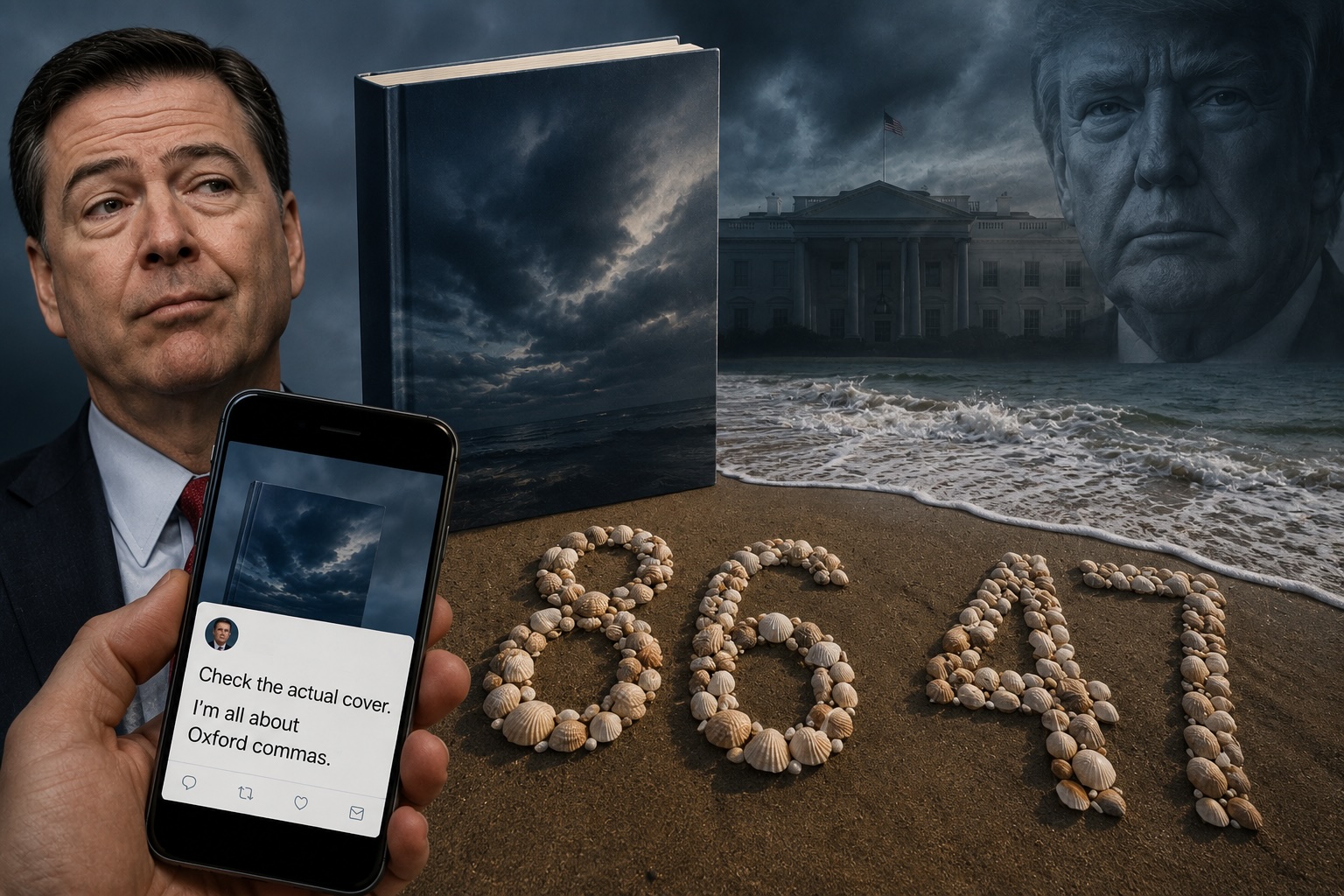
On November 2, 2017, nearly six months after President Donald J. Trump fired him, former FBI Director James Comey tweeted about the cover of his forthcoming book and then added:
“Check the actual cover. I’m all about Oxford commas.”
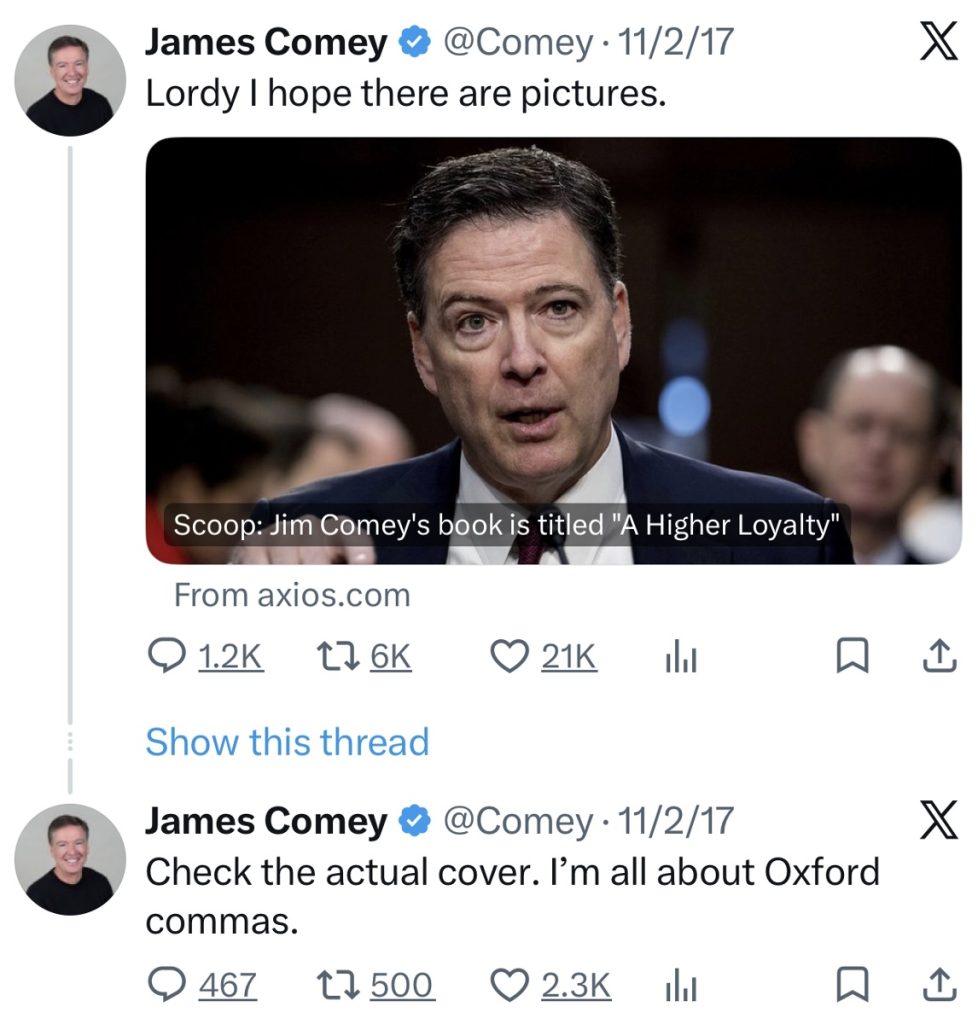
At the time it looked like a corny sentiment from the former Director.
In light of this week’s declassified documents, it looks like something else entirely.
Those documents reveal that one week after the firing, the FBI opened a full criminal and counterintelligence investigation into whether the President of the United States had removed his FBI Director because he was acting as a Russian asset.
The code name chosen for that probe was Oxferd Comma, a deliberate misspelling of the Oxford comma, the very stylistic preference for which Comey was already known inside the building.
But once an FBI Director is fired, the briefings stop. Access ends. The secure systems are locked. The Director’s Brief disappears. The need-to-know is extinguished along with the badge.
A former Director does not receive ongoing operational updates on sensitive internal investigations, especially one opened in direct response to his own removal.
No private citizen would have had legitimate knowledge of, let alone any reason to share with James Comey, the code name of a highly compartmentalized probe.
Yet nearly six months later he is publicly invoking the very phrase the Bureau had used. This would not be the last time Comey reached for coded or layered public messaging. That is where the psychology and the culture of the FBI matter.
For most who make a career at the Bureau, the FBI is not a job. It is an identity. Agents and senior officials often serve for decades; the institution becomes family, tribe, and moral compass. Loyalty runs deep, and it runs inward.
Comey was fired over his handling of the Hillary Clinton email investigation. That is the stated fact. Yet when the 45th President, an outsider who had never spent a day inside the building and who openly mocked the Bureau’s leadership, removed the Director, it was not experienced inside the institution as a routine personnel action. It was experienced as an attack.
In that environment the formal rules of access can bend. Information that should remain confidential still finds its way through informal channels of loyalty and resentment.
The most plausible reading is that someone still inside, who viewed Comey as one of their own, made sure the former Director understood the name the Bureau had chosen for its response.
Comey’s November tweet is not proof of a grand conspiracy. It is evidence of how tenaciously the FBI’s internal culture, what many now call the deep state, can outlast the badge.
When an outsider fires the Director, the Bureau’s tribal defenses activate. And sometimes that system still finds a way to speak to the man it lost.
The only question left is not whether Comey knew, it is how he came to know, and how many people inside the building made sure he did.
Nearly eight years later, the same man arranged seashells on a beach to spell 86 47.
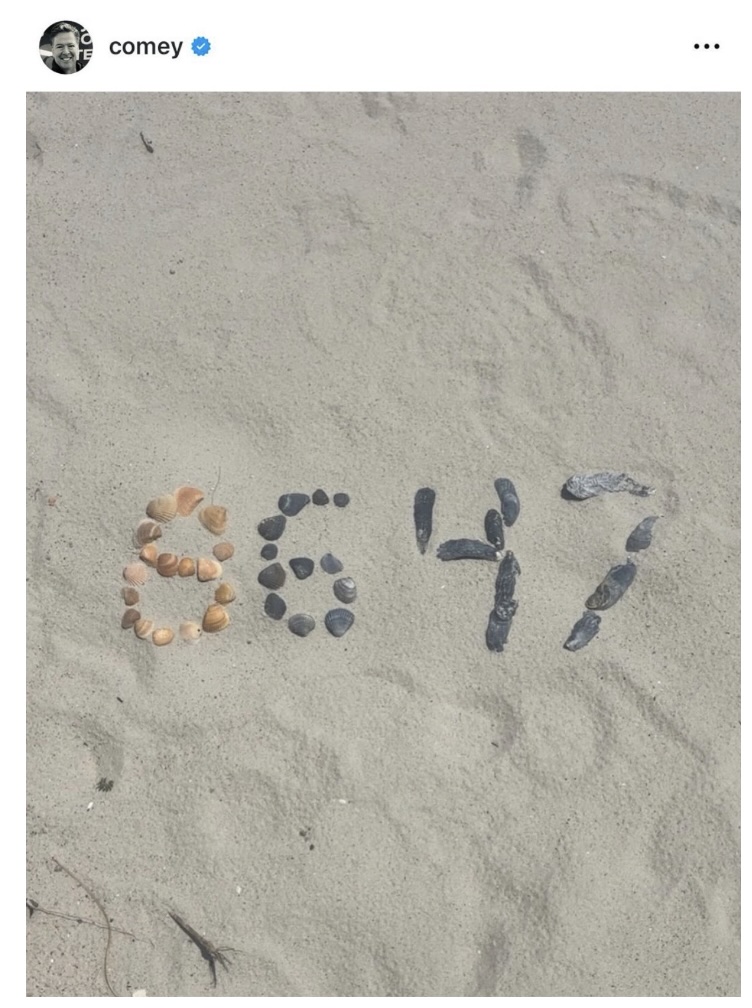
The message was no longer subliminal.
It was just the same impulse, this time, written in the sand.

