

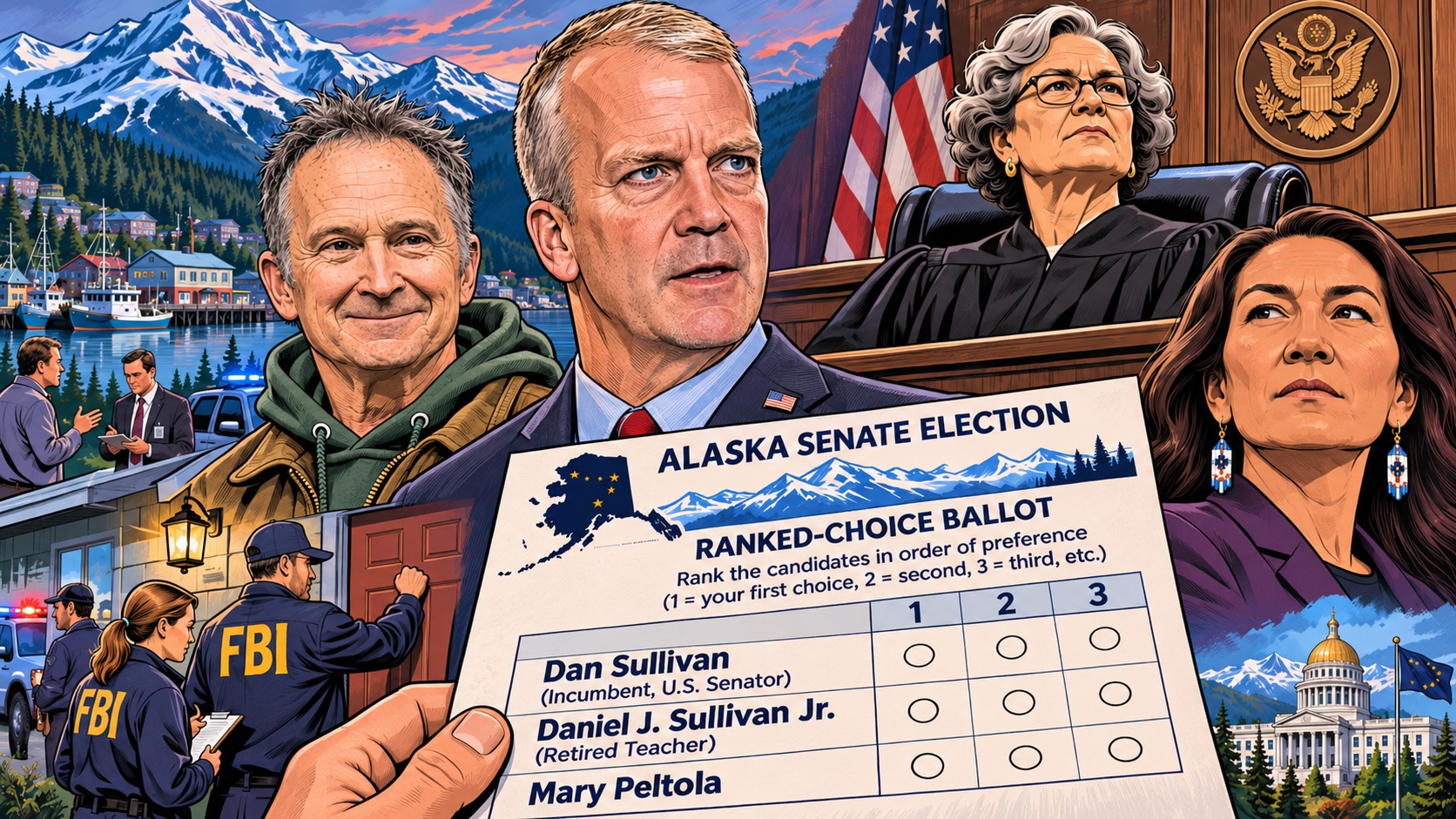
Meet Decoy Dan. He’s the second Dan Sullivan on Tuesday’s Alaska ballot, the retired teacher who filed days before the deadline last spring. Now, days before Election Day, federal agents are knocking on doors and contacting his donors, asking whether they knew which Sullivan they were funding.
The visits come as the Justice Department vows to keep fighting an Obama-appointed judge who on Sunday tossed its bid to protect the integrity of one of the most closely watched Senate races in the country.
FBI agents have contacted contributors to retired Petersburg teacher Daniel J. Sullivan Jr. in Petersburg and Sitka, Alaska, and in Groton, Massachusetts.
Those visits come after Alaska U.S. Attorney Michael Heyman told reporters the criminal probe has been underway for months, and that a New York Times report indicating Democrat Mary Peltola’s campaign appeared involved in recruiting the second Sullivan triggered a “significant surge of law enforcement assets to Alaska.” Daniel J. Sullivan remains on Tuesday’s ranked-choice ballot alongside Republican incumbent Sen. Dan S. Sullivan, Democrat Peltola, and another Republican, and he has not withdrawn.
President Donald Trump, asked about the scheme, called it “voter fraud at the highest level.” Sen. Sullivan has labeled the episode the “scandal of the highest order” and accused Peltola of still lying about what her campaign knew. Peltola, for her part, has denied any role, calling, calling the allegations nonsense and smears intended to distract. “I know I can beat Dan Sullivan. I do not need any help winning this race,” she said.
On the civil side, the Justice Department pushed Friday for a court order isolating ballots that ranked Daniel J. Sullivan, and for a pathway to halt certification if the alleged name confusion flipped the outcome. U.S. District Judge Sharon Gleason, nominated by Barack Obama, dismissed that suit Sunday, ruling the government lacked standing and offered no workable remedy that preserved the secret ballot. She also blocked the department from amending and refiling in her court.
The DOJ is not walking away. In a statement carried on Fox News and posted by DOJ Rapid Response, the department said the dismissal rested on procedural grounds and did not dispute its core argument that “Daniel J. Sullivan (a/k/a Decoy Dan) entered the race as a frivolous candidate to confuse voters.” “DOJ plans to file a notice of appeal. Alaskan voters deserve a fair election, not to be misled in an attempt to rig outcomes,” the department said.
Alaska’s ranked-choice system makes the name collision especially dangerous. Voters rank candidates, and if no one clears 50% on first preferences, the lowest finisher is eliminated and those ballots are redistributed. A handful of confused first-choice marks for the wrong Sullivan could matter in a race that may decide control of the United States Senate for the final two years of Trump’s term.
Sen. Dan Sullivan has said publicly he expects the second Sullivan to cost him votes.
The pieces fit together. A second Dan Sullivan landed on the ballot, with reports that Democratic operatives helped put him there, and a months-long federal probe is now surging with FBI donor interviews stretching from Southeast Alaska to Massachusetts. The Justice Department moved to wall off the contested ballots, but an Obama-appointed judge shut the case down on standing, and the DOJ now plans to take the fight to the Ninth Circuit.
Alaskans cast their ranked ballots on Tuesday, November 3, and many have already voted. For those who marked Sullivan near the top of their list, one question remains: did they vote for the right candidate?

