

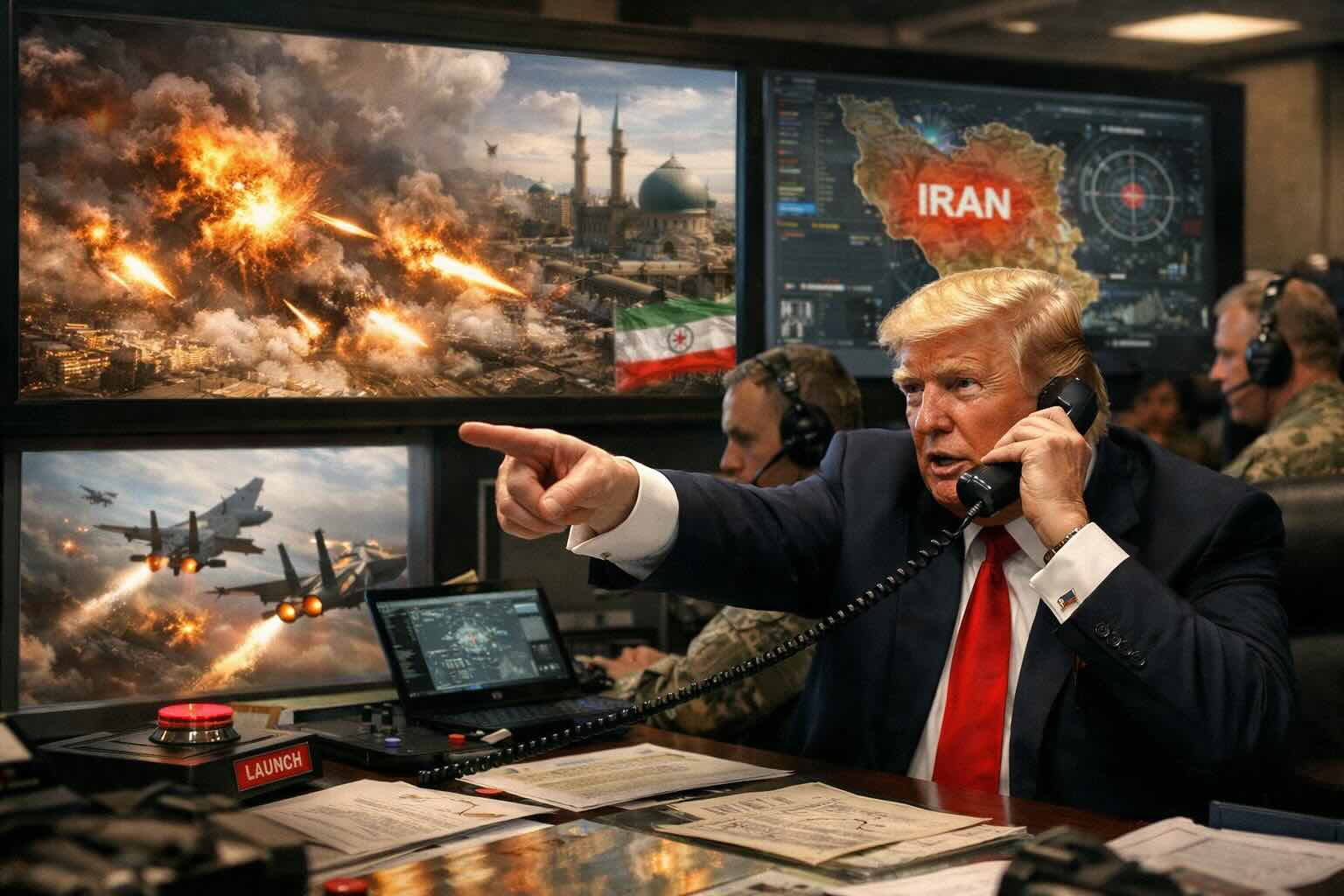
In his State of the Union address on February 24, 2026, President Donald J. Trump devoted a portion of his nearly two-hour speech to Iran, framing it as a persistent threat while emphasizing his administration’s prior actions and ongoing diplomatic efforts. For nearly five decades, the ayatollah-led regime has imposed strict Sharia law, oppressing its own people and sponsoring terror worldwide.
On February 28, around 2:30 AM EST, after 47 years under the dictatorship of the ayatollah, in a historic address delivered via video posted to Truth Social, President Donald Trump announced the commencement of “major combat operations” against the Iranian regime, partnering with Israel in a series of precision strikes aimed at dismantling the nuclear and missile programs (along with naval forces and terrorist proxy networks). This historic military operation marks the beginning of the freedom process for Iranians, paving the way for civil uprisings and the restoration of Iran after years of tyranny.
The strikes were a part of a joint U.S.-Israel operation named Operation Epic Fury, which began on February 28, 2026. This massive and ongoing effort targeted Iranian military and regime infrastructure, including leadership compounds, missile sites, air defenses, naval assets, and nuclear-related facilities. U.S. Central Command confirmed the launch at approximately 1:15 AM ET, with reports indicating hundreds of strikes, hundreds within the first 12 hours, conducted by U.S. and partner forces.
President Trump confirmed the action in a video message, stating the objective was to eliminate imminent threats from the regime, destroy missile capabilities, annihilate the navy, and prevent nuclear weapon development. Reports indicate targets included missile sites, naval assets, and leadership elements, with Trump later posting on Truth Social that Supreme Leader Ayatollah Ali Khamenei was killed.
This decisive action comes after 47 years of Iranian aggression, including attacks on U.S. allies and sponsorship of terrorism across the Middle East. Trump’s move is seen as a long-overdue response to a regime that has oppressed its people and threatened global stability for decades.
President Trump declared that the U.S. and Israel are targeting key military installations and leadership figures in Iran, pledging to end the mass terror inflicted by the mullahs. “It’s been mass terror, and we’re not going to put up with it any longer,” Trump stated emphatically.
This operation, dubbed “Operation Epic Fury” by some sources, represents a shift from the weak-kneed policies of prior administrations, particularly under Biden, which allowed Iran to enrich uranium and fund proxy wars.
Of course, we cannot forget the Obama administration’s approach, which exemplified overly lenient policies that emboldened the Iranian regime. The 2015 Joint Comprehensive Plan of Action, or JCPOA, also known as the Iran nuclear deal, allowed Iran to continue uranium enrichment capped at 3.67 percent with a limited stockpile and centrifuge numbers for a temporary period rather than fully dismantling its nuclear infrastructure. Sunset clauses phased out major restrictions after 10 to 15 years, potentially shortening breakout time to mere weeks or days once key limits expired.
The agreement notably excluded curbs on Iran’s ballistic missile program and its sponsorship of proxy groups like Hezbollah, Hamas, the Houthis, and Shia militias in Iraq and Syria. This enabled continued regional aggression and terrorism. Sanctions relief unlocked tens of billions in frozen funds, with estimates of accessible amounts ranging from 50 to 150 billion dollars. U.S. officials have reported that Iran directed much of this toward military buildup, proxy funding, and destabilizing activities across the Middle East rather than primarily to domestic welfare. This only enriched the regime and its malign networks without addressing broader threats.
President Trump has repeatedly denounced this as the “worst deal ever negotiated,” arguing it legitimized Iran’s nuclear path, provided a massive financial windfall for terror sponsorship, and failed to deliver lasting security, issues that contributed to unchecked Iranian advances until President Trump took decisive action by exiting the JCPOA and reimposing, and intensifying, sanctions as part of his maximum pressure strategy.
Encouraging the Iranian people directly, Trump proclaimed that “the hour of your freedom is at hand,” urging them to rise up and reclaim their nation once the strikes conclude.
Praise for the president’s actions has poured in from across the aisle, including strong support from Democratic Senator John Fetterman, who applauded Trump for being “willing to do what’s right.” Former House Judiciary chief counsel Julian Epstein described the strikes as “heroic” and “long overdue,” underscoring the consensus among legal and political experts that this is a necessary step for peace.
In wake of the first strikes of Operation Epic Fury, heavy pinpoint bombing is set to continue uninterrupted throughout the week or longer, as President Trump has vowed. The path forward lies in the hands of the Iranian people themselves.
Early reports from Iranian sources indicate around 200 deaths and over 700 injuries from the first day of Operation Epic Fury. The path forward lies in the hands of the Iranian people themselves. With Supreme Leader Ayatollah Ali Khamenei reportedly killed in the strikes, a profound leadership crisis now exists in Tehran, exposing the fragility of a regime long sustained by repression and terror.
This moment represents what President Trump has called the single greatest chance for Iranians to seize control of their destiny, rise against the remaining mullahs and IRGC enforcers, and forge a future free from tyranny.
The situation remains ongoing, with outcomes still unfolding and uncertainties ahead. Yet the strikes of Operation Epic Fury have severely degraded, if not eliminated, Iran’s nuclear breakout capability and much of its missile arsenal. This paves the way for a dramatically reduced threat environment for the United States and the wider Middle East, while empowering internal Iranian forces to pursue genuine reform or regime change from within and usher in an era of greater regional stability and security.
President Trump’s unwavering commitment to American strength and the universal yearning for liberty may well prove the turning point after 47 years of oppression. The hour of freedom is truly at hand. May the Iranian people answer the call, and may peace through strength prevail.

