

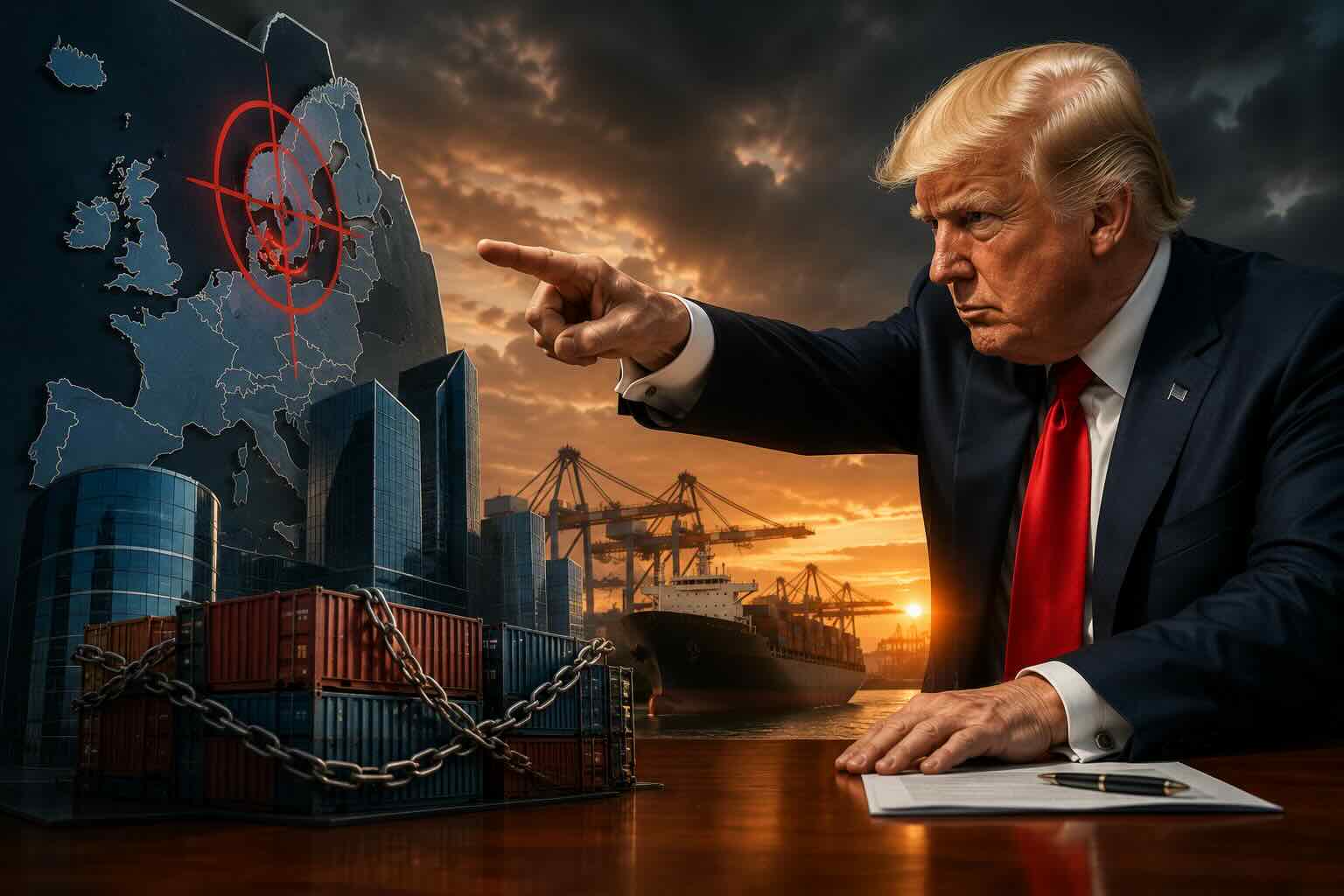
President Trump issued a warning to France and Europe this morning on Truth Social, stating: “Numerous European Countries have been discussing the imminent implementation of a Digital Services Tax on American Companies. Some of these Countries are close to actually doing this.
Please let this statement serve to represent that any Country that imposes such a Tax will immediately be met with a 100% TARIFF on any and all Goods sent to the United States of America.”
This builds directly on the President’s long-standing commitment to ensuring other countries pay their fair share. In an exclusive June 15 interview with the New York Post, Trump recounted telling French leaders he had no choice but to respond forcefully if they continued targeting U.S. tech firms. “I asked him not to charge American companies, and if they do, I have no choice but to charge a 100% tariff on all champagnes and all wines coming out of France,” he said. He added that all Macron had to do was get rid of the sales tax (the digital levy), and he wouldn’t have that kind of pressure.
Trump has issued strong warnings on the issue before. He previously threatened 200% tariffs on wine and related products from the European Union in January of this year and March of last year. With courts having struck down certain prior tariff measures, he has now escalated to a blanket 100% threat against any country imposing digital services taxes, explicitly including France.
Importantly, this latest warning connects the tariffs to broader trade negotiations, making clear that no agreements will shield countries from retaliation if they impose digital services taxes. This aligns with his August 25, 2025 Truth Social post, in which he placed countries imposing digital taxes “on notice” of “substantial additional Tariffs” on their exports to the U.S., along with potential restrictions on American tech and chips, unless they dropped the discriminatory rules.
These taxes are in place in countries such as France, Britain, Italy, and Spain, among others. These levies typically target online advertising, apps, and user data.
Many have described the taxes as a way to make Big Tech pay its fair share.
President Trump has long regarded these taxes on American social media platform companies as unfair attacks on U.S. innovation and success, punishing companies built through American risk-taking and ingenuity.
His strategy embodies a business-oriented America First framework, using tariffs on cars, wine, luxury goods, and other imports to drive policy changes and push back against what he calls economic bullying.
The Commander in Chief has successfully used tariffs on steel, aluminum, and Chinese goods to secure better deals and protect domestic industries. For example, Section 232 steel tariffs rose from the original 25% (imposed in 2018 and reinstated at 25% in early 2025) to 50% on most imports by June 2025, while aluminum tariffs increased from 10% to 25% and then to 50%.
Here, however, the objective is to safeguard the U.S. tech sector, a vital employer, an engine of growth, innovation, and exports. U.S. tech companies have spent years navigating fragmented foreign rules and rising compliance costs, and many in Silicon Valley quietly support this firm stance.
These decisive actions aim to protect American jobs, encourage American progress and deliver fairer trade.
Strong negotiations typically yield better agreements rather than full-blown trade wars, ultimately strengthening the economy and prosperity for American families.
Early results are already evident. Canada rescinded its planned digital services tax after U.S. pressure linked it to broader trade talks, demonstrating how direct leverage can influence leaders concerned about their exporters.
European officials have pushed back, defending the taxes as essential for their digital economies. A new tariff threat could nevertheless complicate ongoing U.S.-Europe discussions.
Trump’s goal has been to prioritize American interests above all else. With courts striking down key tariff measures, it is not surprising that he has pursued other avenues to recoup revenues owed to the United States.
American companies dominate global digital innovation, and this latest commitment places technology at the center of global trade disputes. How nations respond, whether by easing taxes, negotiating exemptions, or holding firm, will define the operating environment for American tech platforms for years to come. The move exemplifies Trump’s signature, Art of the Deal approach, demonstrating his willingness to deploy every available tool to prevent the playing field from tilting against U.S. companies.

