

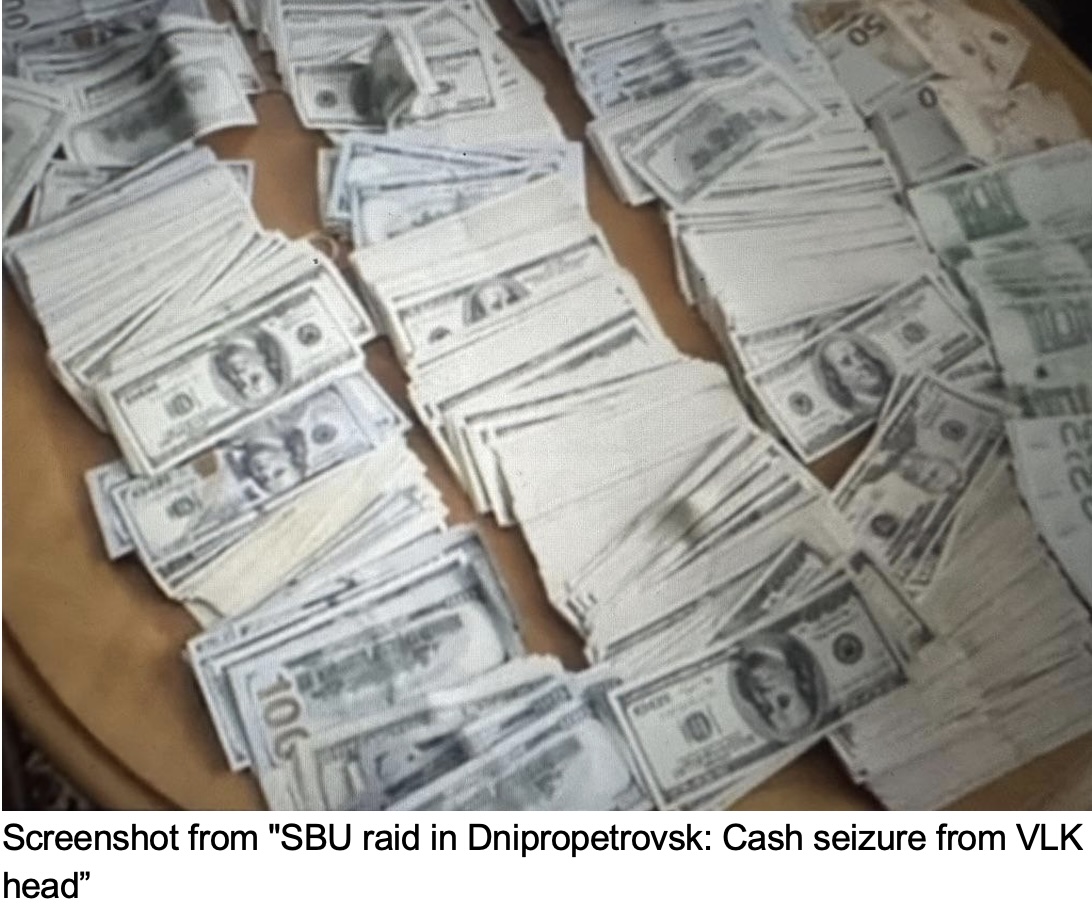
Adding to the mounting scandals plaguing Ukraine, authorities have uncovered yet another significant bribery scheme; this one involving the recruitment and evasion of soldiers into the armed forces. The scandal, emerging from the Dnipropetrovsk region, reveals yet another thread in the ever-growing spool of corruption amid the ongoing war.
On January 16, 2026, the Security Service of Ukraine (SBU) conducted searches at the home of the head of a district military medical commission (VLK), part of a local Territorial Recruitment and Social Support Center (TCC).
They uncovered over $307,000 in cash, with an additional ~$90,000 seized from a civilian intermediary, bringing the total haul close to $400,000. The money was reportedly stashed in everyday locations, underscoring the brazen nature of the scheme.
The operation was allegedly orchestrated by the VLK head, who, along with accomplices, issued fictitious medical certificates declaring conscripts unfit for service in exchange for bribes starting at around $2,500 per certificate (with prices varying based on diagnosis complexity and urgency).
A TCC employee assisted by sourcing clients and updating military records, while a 58-year-old local resident acted as the go-between, facilitating bribe transfers. Investigators documented more than 20 instances of such transactions.
The suspects, including the VLK head and at least one accomplice, were swiftly notified of suspicions under several articles of Ukraine’s Criminal Code, including obstructing the lawful activities of the Armed Forces, receiving unlawful benefits by a group in conspiracy, and abuse of influence.
If convicted, they face up to 10 years in prison along with property confiscation. The case is under the procedural supervision of the Dniprov Specialized Prosecutor’s Office for Defense in the Eastern Region.
This incident is not isolated. It fits into a well-documented, persistent pattern of corruption that has plagued Ukraine’s military recruitment and mobilization system—primarily through TCCs and military medical commissions—since Russia’s full-scale invasion began in February 2022.
Key Timeline of Scandals and Responses
- Mid-2023: Widespread scandals exposed systematic bribe-taking for fake “white tickets” (medical exemptions), with prices ranging from $3,000 to $15,000 (up to $20,000 in some regions). This led to a reported ten-fold increase in unfitness declarations compared to pre-invasion levels, enabling thousands to flee abroad unlawfully. President Zelenskyy publicly condemned it as “treason” during wartime.
- August 2023: Triggered by the Odesa scandal involving Yevhen Borysov (former regional TCC head), whose family amassed millions in Spanish real estate and luxury assets allegedly from bribes and embezzlement. Zelenskyy fired all ~24 regional TCC heads and opened over 100 criminal cases for illegal enrichment, falsifying documents, and more.
- 2024–2025: Authorities investigated dozens of fake disability certification cases (e.g., nearly 2,400 probed in reports from SBU/NACP audits in late 2024–2025, with cancellations of thousands of fraudulent documents and some convictions). Schemes often involved doctors, TCC employees, and intermediaries charging thousands per certificate.
- Khmelnytskyi: Nearly $6 million in cash (various currencies), jewelry, and valuables was seized from Tetiana Krupa (head of the Regional Medical-Social Expertise Center) and her son (a Pension Fund official), who were accused of issuing fraudulent disabilities to help draft dodgers.
- Bucha: $350,000 in cash was found along with undeclared properties (including a house under
construction), leading to charges of illegal enrichment exceeding 21 million Ukrainian hryvnia.
- Khmelnytskyi: Nearly $6 million in cash (various currencies), jewelry, and valuables was seized from Tetiana Krupa (head of the Regional Medical-Social Expertise Center) and her son (a Pension Fund official), who were accused of issuing fraudulent disabilities to help draft dodgers.
- Early 2026: Ongoing SBU operations continue to uncover fake neurology certificates, deferments ($700–$900+), and large cash seizures from draft-dodging networks.
Arrests have included cases of extortion, illegal detentions, and massive cash hauls from draft-dodging scams. As of early 2026, millions of men are wanted for draft violations, with corruption eroding public trust and complicating mobilization amid acute manpower shortages.
Ukrainian officials have repeatedly attempted to combat the issue through mass firings, high-profile investigations, criminal cases, and legal reforms. Yet the problem endures, fueled by the immense pressures of the ongoing war, with similar schemes involving fake medical exemptions, disability fraud, and draft-evasion assistance continuing to surface across regions.
Public reaction to the latest Dnipropetrovsk discovery has been swift and severe. Ukrainians on social media are sharing viral photos of the cash piles, expressing outrage over the contrast between frontline soldiers risking their lives and officials amassing fortunes through corruption.
Discussions highlight how hundreds of thousands of dollars hidden in modest settings further erodes trust in local authorities. The case serves as a stark reminder that even as Ukraine fights an existential war, internal graft continues to undermine morale and national unity.
While investigations show authorities are actively pursuing corrupt officials, the frequency and scale of these scandals indicate that deeper structural changes are needed, stronger oversight, greater transparency in medical exemptions, and swift, severe penalties. Until then, incidents like the $307,000 cash discovery will remain a painful symbol of the challenges Ukraine faces both on and off the battlefield.

