

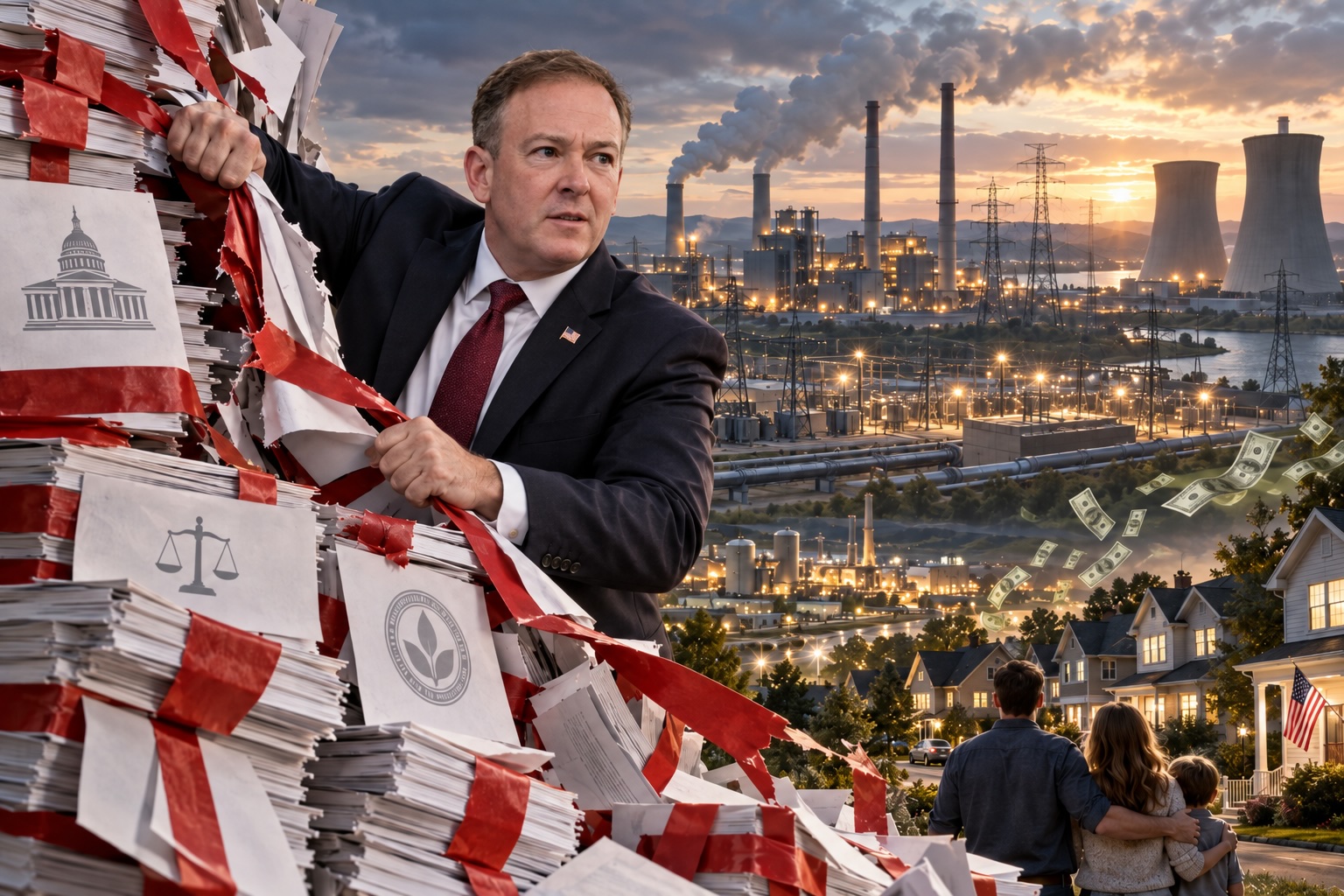
On Sept. 14, 2026, at the G20 Energy Abundance Ministerial in Houston, EPA Administrator Lee Zeldin announced the final repeal of nearly all of the Biden-Harris administration’s 2024 Carbon Pollution Standards for coal- and gas-fired power plants.
The EPA estimates this move will save $310 billion through 2047 by ending compliance rules that are legally flawed and technically unworkable.
Officials also frame the repeal as a way to avoid wasted spending on controls that have not proven commercially viable. The follow-on proposal’s goal is to make it much harder for the next administration to put federal power-plant climate rules back in place.
Both Republicans and people with hands-on experience in oil, gas, and coal have made the same case for years. Biden’s climate rules made it harder to keep old coal plants running, build new natural gas plants, and sell U.S. energy overseas, even as America produced record amounts of oil and gas. They call the 2024 rules the newest part of a 15-year “war on coal.” In their view, those rules shut down plants without putting something just as reliable in their place.
Zeldin called it the “largest power-sector deregulatory action in U.S. history” and a step toward affordable, reliable electricity. Officials say the 2024 rules exceeded EPA authority under the Clean Air Act by treating carbon capture as the “best system of emission reduction.”
The Supreme Court struck down the Obama-era Clean Power Plan in West Virginia v. EPA (2022). The plan did more than require plants to cut pollution; it tried to shift the electricity system away from coal toward gas and renewables.
The Court said that kind of “generation shifting” was a major policy choice Congress had not clearly given EPA. Under Section 111, the agency can require plants to run cleaner. It cannot use the statute to redesign the national power mix.
EPA also proposed wiping out the rest of the power-sector greenhouse gas standards. That is the lock if it is finalized and survives court. If it holds, the next EPA cannot just flip the 2024 rule back on. It would have to convince a court that Section 111 still covers climate rules for this sector.
According to EPA, U.S. power plants are only a small, shrinking slice of the greenhouse gases in the air worldwide.
China’s power sector alone emits about four times as much CO2 as America’s. In 2024 it accounted for roughly 39% of global power-plant emissions; the United States was about 12%.
So officials argue the 2024 rules would have done little for the climate while costing Americans billions.
Deputy Administrator David Fotouhi said the Trump EPA has a simple rule. “If Congress hasn’t authorized it, then we’re not doing it. We’re not requiring it.” He has also said the Obama and Biden power plant rules “would have increased the cost of operating power plants by over $1 billion a year, which would have led directly to higher energy bills for consumers and a less stable grid.” The administration says the rollback will keep electricity affordable and reliable as demand grows from data centers, manufacturing, and electrification.
Officials project coal production for power-sector use could rise more than tenfold. They say winter demand is why reliability cannot wait.
Environmental groups have already sued. On Sept. 17, NRDC, EDF, the American Lung Association, and other health groups asked the D.C. Circuit to vacate the repeal. They say more power-plant pollution will mean more deaths and worse climate damage.
How long the rollback lasts will turn on whether Section 111 can be used for climate rules in this sector. The final repeal takes effect Nov. 16 unless a court blocks it. Comments on the leftover-standards proposal are due Nov. 2. The Trump EPA remains committed to common sense cost savings, unleashing American energy, and keeping electricity affordable and reliable.

