

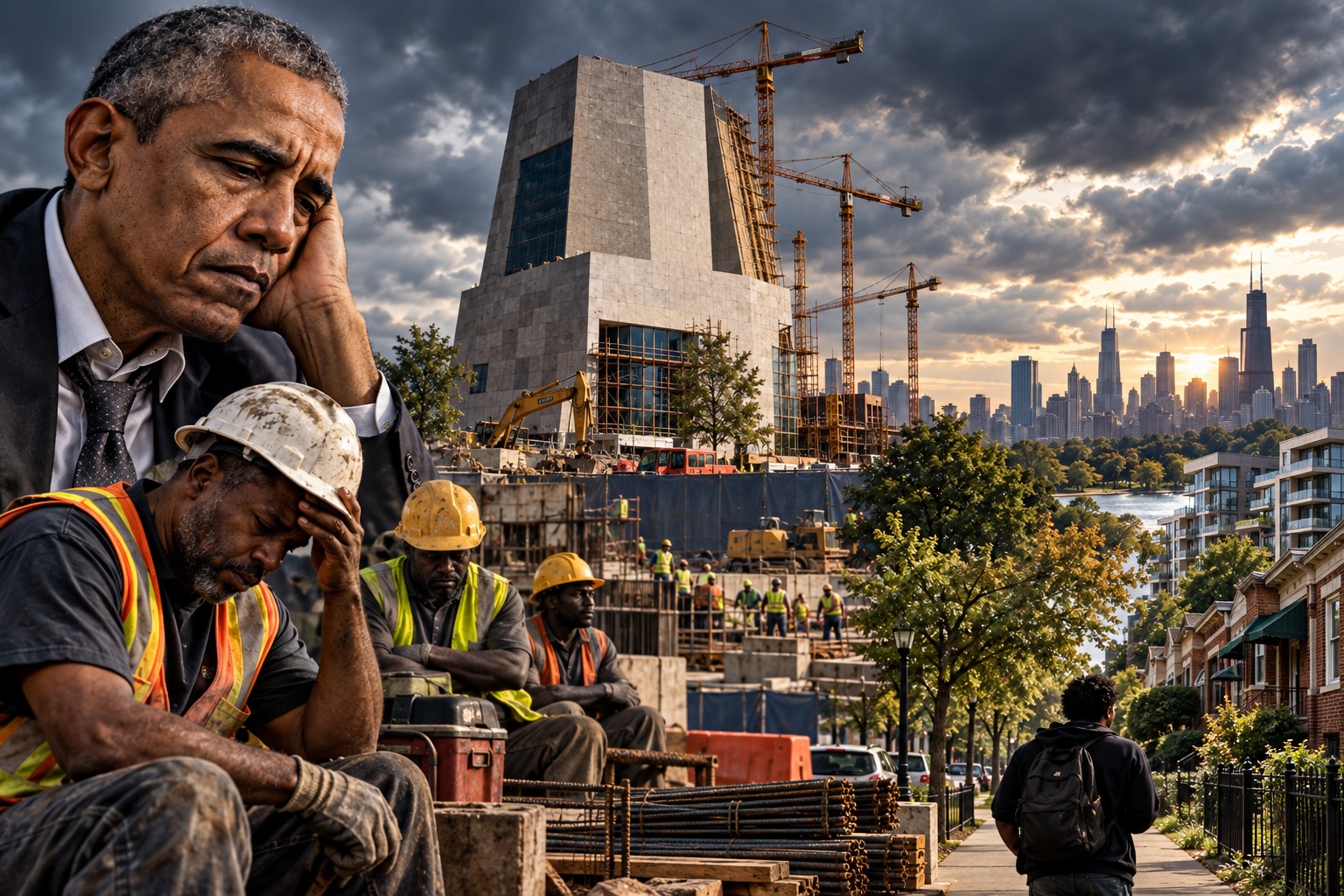
The Obama Presidential Center on Chicago’s South Side has seen costs rise from early estimates of $300–500 million to $909 million by the end of 2025, exceeding the previously cited $850 million estimate by $59 million. The projected cost was raised significantly several times throughout the project.
The Obama Foundation gained control of public land in Jackson Park for just $10 under a 99-year agreement. In return, it promised a major endowment to protect taxpayers from future costs.
Foundation CEO Valerie Jarrett attributed the latest rise to “additional amenities” that made the campus “extraordinary beyond what we had originally intended,” raising the question of why a project tied to Barack Hussein Obama needed to grow this far beyond its original scope.
But, by mid-October 2026, the Obama Foundation indicated that the total cost of constructing the campus is anticipated to reach a price tag of $1 billion. Foundation officials described this as reflecting continued cost reconciliation along with additional investments in public art, insurance, scope changes, project management, and exhibit installation.
Early estimates were far lower, starting around $300 to $350 million and rising to a widely reported $500 million while Obama was still in office, 2016. After years of legal challenges and a federal review, construction began in 2021. Roughly five years after the Jackson Park site was selected, documents showed the cost had climbed to roughly $830 million.
The project was marketed with ambitious diversity goals, including a commitment that at least 50% of subcontracts would go to “diverse firms” owned by minorities, women, and what the Foundation called other underrepresented groups. Those pledges were central to the foundation’s portrayal of the campus as an economic engine for Chicago’s South Side and a model for minority business participation.
Yet, several firms have claimed they are owed significant sums for work performed. An earlier federal lawsuit filed in January 2025 by Robert McGee, owner of Black-owned II in One Contractors, against structural engineering firm Thornton Tomasetti alleged racial discrimination and sought about $40.8 million over disputed concrete work on the Obama Presidential Center.
Subcontractor complaints include those from Adamson Plumbing Company president Mike Owen, who said the firm is owed roughly $4 million out of about $12 million in work. The company later filed a mechanic’s lien, suspended operations, and laid off about 25 workers.
Omar Shareef, president of the African American Contractors Association, stated that multiple Black-owned subcontractors contacted his organization about unpaid or underpaid invoices, some in the seven-figure range, with many bound by nondisclosure agreements and reluctant to speak publicly.
Some of the firms reportedly indicated they would accept deep discounts simply to survive, while others faced risks to their bonding capacity and ongoing viability. The project’s stated minority-participation goals and the payment disputes involving Black-owned businesses have drawn particular attention.
The Obama Presidential Center has contributed to gentrification in the surrounding South Side neighborhood, with rising housing costs pricing out some longtime residents and making the area substantially more expensive. Years of legal fights over the use of public Jackson Park land for the private project delayed construction, and once built the campus required cutting down trees and redesigning the historic Women’s Garden even as it added limited new park acreage.
This vanity project for the former president, despite its publicized endowment meant to protect taxpayers, left some of the minority contractors it claimed to uplift fighting for payment and made surrounding neighborhoods more expensive for the minority residents it was supposed to benefit, all while climbing a steep hill of price increases from $300 million to nearly $1 billion.
For a project pitched by a former president who ran on hope, this was a poor representation of its core focus. Sold as a model of equity, empowerment, and community investment, the outcome has been cost overruns, unpaid invoices, and displacement. The campus is open. The bills, the disputes, and the longtime minority residents being priced out are still waiting.

